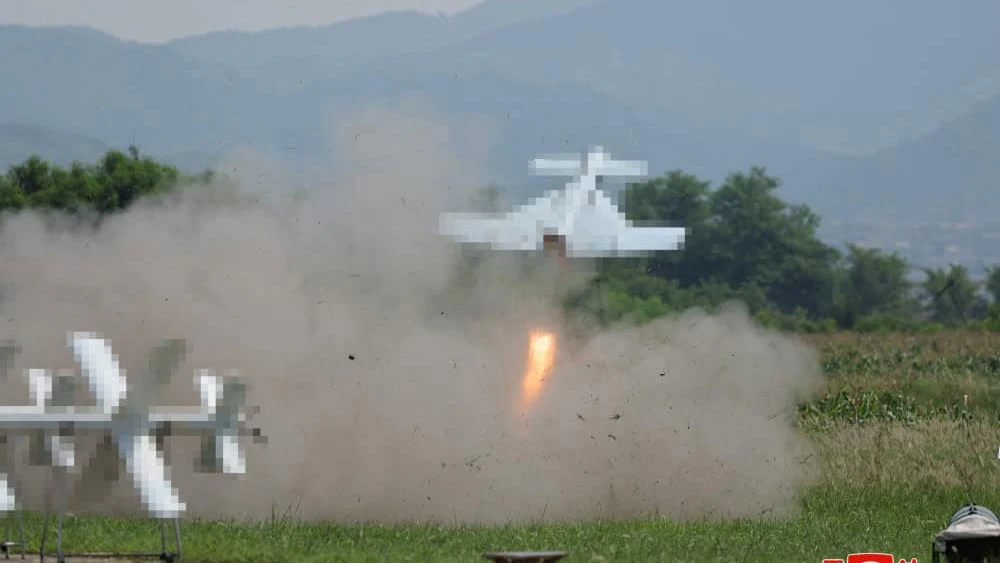
North Korea last week conducted tests of various domestically developed “suicide drones"—which, according to experts, closely resemble Israeli-made Harop and Hero-30 drones—along with Russian-made Lancet-3s.
The Harop is a loitering munition developed by the Missiles (MBT) Division of Israel Aerospace Industries. It’s built to destroy “high-value targets,” such as unmanned surface vessels, command posts, supply depots, tanks and air-defense systems, IAI states on its website.
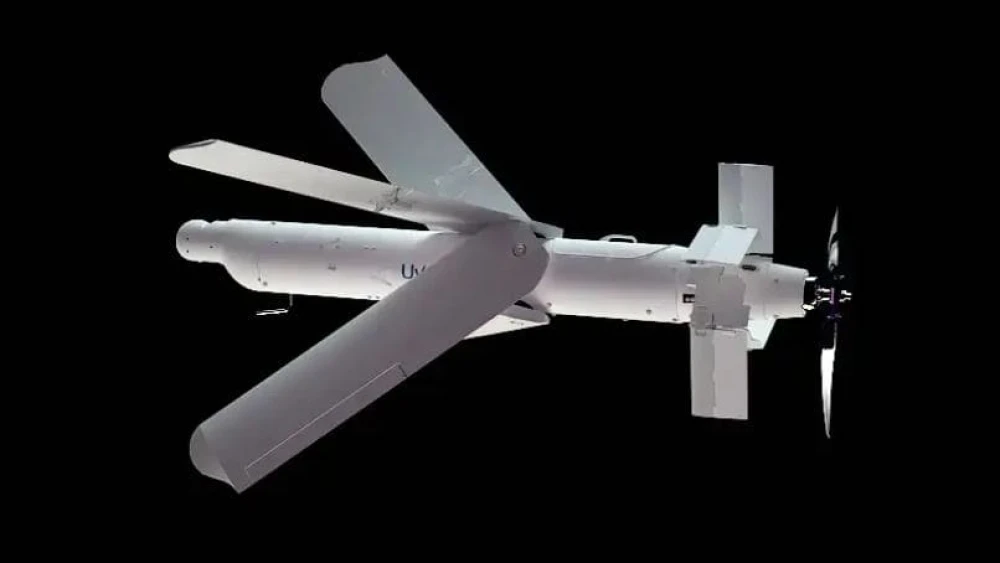
The Hero-30 is made by UVision Air Ltd., an Israeli company focused on loitering munition systems. It’s the smallest system among the Hero family of smart loitering systems and designed for soft targets (anti-personnel) and light-skinned vehicles, according to the company’s website.

According to AFP, North Korea may have obtained these technologies from Russia, which, in turn, likely received them from Iran that is suspected of stealing them from Israel.
North Korea’s leader, Kim Jong Un, attended the test at the Drone Institute of the Academy of Defense Science on Aug. 24.
“The drones of various types correctly identified and destroyed the designated targets after flying along different preset routes,” according to a statement by the Democratic People’s Republic of Korea (DPRK).
Expressing satisfaction with the newly developed drones, Kim Jong Un stressed the need to conduct more intensive tests and equip the units of the Korean People’s Army with them as early as possible, according to the DPRK statement.
The North Korean leader added that it’s necessary to develop and produce more suicide drones of various types for use in “tactical infantry and special operation units, as well as strategic reconnaissance and multi-purpose attack drones.”
He also called for the development of underwater suicide craft, given the country’s characteristics as a maritime nation.