


Back in the heyday of colonialism, Europeans used to refer to Africa as the “dark continent.” Originally, the phrase was intended to convey a sense of Africa’s impenetrability for colonial explorers, but over time it acquired a pejorative meaning, conjuring up images of savage, hostile natives.
The irony is that if there is a place deserving of such a description, it’s Europe itself. We know well the history of the Jewish people on that continent. From the pogrom-scarred shtetls of Ukraine to the spectacle of affluent Parisians pretending not to notice as thousands of Jews were deported by the Nazis in 1942, we Jews have good reason to remember Europe as the “dark continent.”
But wait, we are told, since 1945 everything has changed! Europe is now an oasis of tolerance. Its constituent nations are satisfyingly multi-ethnic. The European Union is a guarantor that European nations will never make war on each other again. Europe has atoned for the crimes of the past, as demonstrated by its numerous Holocaust memorials and the fact that Holocaust denial is illegal in many countries. Its Jewish communities live as equals, where the law protects them rather than discriminating against them.
On one level, all that is true. Yet in Europe, anti-Semitism in various forms survives—even flourishes—to disturbing degrees. At the same time, many Europeans are tired of recalling the past. The grumbling that the damn, stubborn Jews won’t move on is getting louder.
To understand European anti-Semitism today, one has to look beyond the myriad laws that guarantee the civil rights of Jews and other minorities. The observation of the Zionist leader Max Nordau in 1897—“The nations which emancipated the Jews have mistaken their own feelings. In order to produce its full effect, emancipation should first have been completed in sentiment before it was declared by law”—rings as true today as it did back then.
Now, many American and Israeli Jews, when searching for the most toxic forms of European anti-Semitism, naturally hone in on France. Over the last couple of months, our media has been filled with reports about the antics of the anti-Semitic French comedian, Dieudonne, and his inverted Nazi salute, the quenelle. In mid-January, around 17,000 protestors marched through Paris in a “Day of Rage,” chanting slogans like, “Piss off Jew, France is not for you!”
What France demonstrates (along with other countries like Hungary, where the anti-Semitic and anti-Zionist Jobbik party is a growing menace) is that many Europeans are viscerally hostile to manifestations of Jewish identity. They loathe the culture of Holocaust commemoration, they deeply resent Jewish identification with Israel, and more and more, they regard Jews as privileged interlopers undisturbed by the economic blight that has descended upon much of Europe.
Will these ugly sentiments become enshrined in law? If we move northeast to Scandinavia, the indication, unbelievably, is that they may well be.
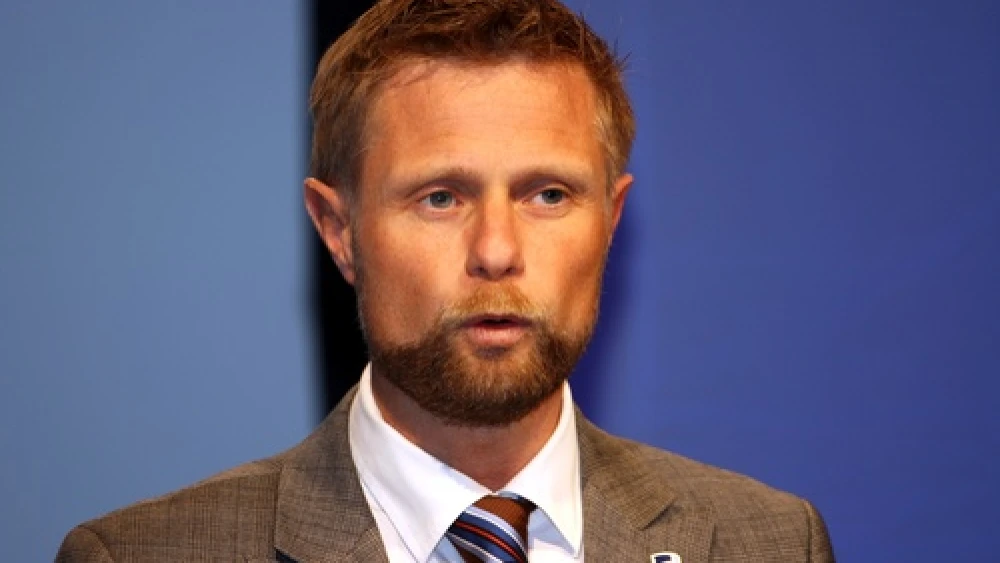
As I and others have been reporting for some time now, Scandinavia has emerged as the epicenter of a movement that stigmatizes one of Judaism’s most precious and intimate rituals: the circumcision of 8-day-old male infants as a symbol of the Jewish covenant with God. Last November, Norway’s health minister, Bent Hoie, announced that new legislation is in the pipeline to “regulate ritual circumcision.” And last week, the major medical associations in Sweden and Denmark recommended a ban on “non-medical”—i.e. religious—circumcision. Swedish doctors argue that circumcision should be prevented until a child reaches a minimum age—12, in this case—where he can give his consent to the procedure. Their Danish counterparts equate circumcision with abuse and mutilation, thereby encouraging comparisons with the barbaric and unrelated practice of female genital mutilation, and want to tighten the legal screws as a consequence.
Writing in the Copenhagen Post, Morten Frisch, a Danish doctor, approvingly cited recent opinion polls in his country in support of a circumcision ban. Clearly irritated by the Israeli government’s opposition to such a ban, Frisch portrayed the issue as a human rights concern, citing the violation of a boy’s “sexual autonomy.” This argument might be persuasive if a vast number of those who have been ritually circumcised presented themselves as akin to rape victims, but the fact remains that a mass movement of aggrieved circumcised men chanting “No More!” remains a fantasy.
Circumcision’s opponents want to create victims where there are none. This is a devious and dishonest tactic, in that it presents discrimination as liberation, prejudice as enlightenment. Mind you, anti-Semites have never considered themselves bigots, but rather as the bearers of a message of love—their core belief is that our world will be a better place without Jews and Jewish influence. And Europe, where these sinister ideas took root in the 19th Century, remains fertile soil for them in the 21st.
Ben Cohen is the Shillman Analyst for JNS.org. His writings on Jewish affairs and Middle Eastern politics have been published in Commentary, the New York Post, Ha’aretz, Jewish Ideas Daily and many other publications.


