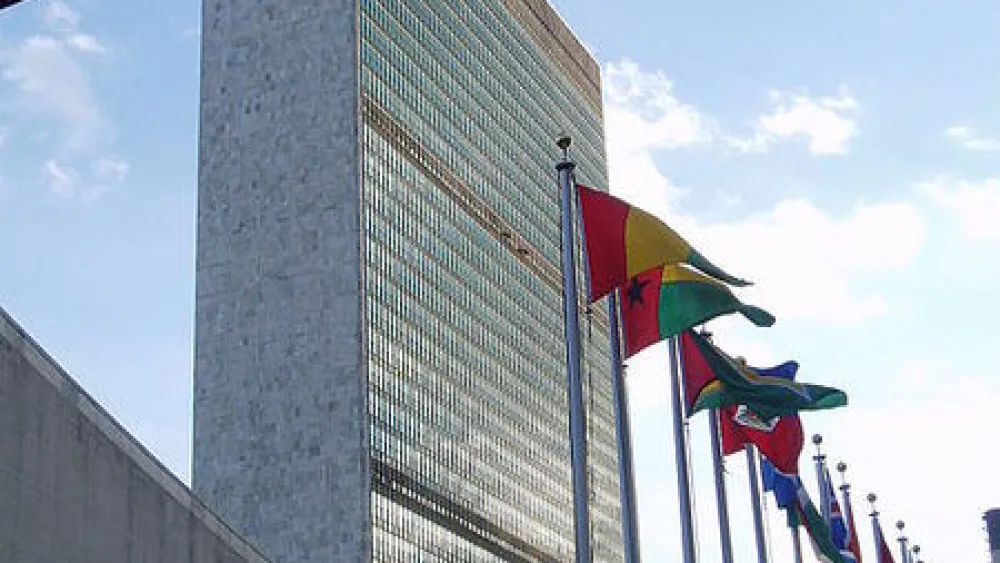
As part of his five-day visit to the United States, Israeli Prime Minister Benjamin Netanyahu will stop at the headquarters of the United Nations in New York on Thursday to check out a special exhibit aimed at providing archaeological proof of the continuous Jewish history in Jerusalem.
The exhibit—a joint effort by the Jerusalem Affairs and Heritage Ministry, and the Israeli Mission to the United Nations—follows a series of resolutions passed by the international governing body denying Jewish ties to the city.
Ambassadors, diplomats and senior U.N. officials have all been invited to view the exhibit, which presents authentic archaeological findings unearthed in Israel alongside replicas of other historical items that serve to illustrate the connection between the Jewish people and Israel’s capital.
Among the findings on display are a 2,700-year-old seal impression inscribed in ancient Hebrew, which was discovered in January, and an inscription from the seal of biblical King Hezekiah, who ruled from 727-698 BCE and helped build Jerusalem into an ancient metropolis.
Danny Danon, Israel’s Ambassador to the United Nations, said: “The historical truth is the best answer to the attempts to dispute the eternal connection between the Jewish people and their capital.”