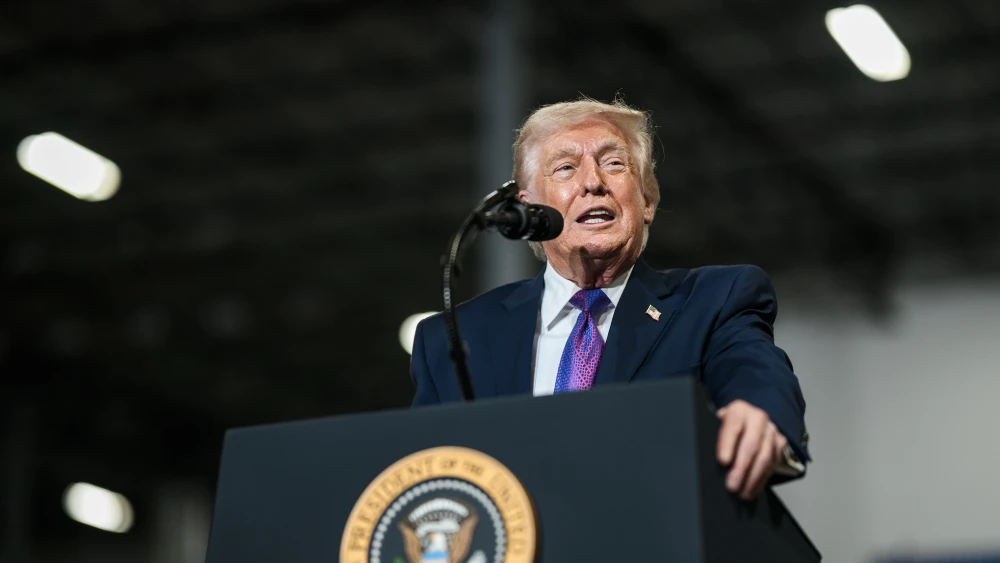
U.S. President Donald Trump criticized NATO allies on Tuesday for refusing to participate in the U.S. military campaign against the Iranian regime, calling their decision a “very foolish mistake” and saying the U.S. does not need their support.
“I always considered NATO, where we spend hundreds of billions of dollars per year protecting these same countries, to be a one-way street,” Trump wrote. “We will protect them, but they will do nothing for us, in particular, in a time of need.”
Trump stated that most NATO members had agreed with Washington’s aims but declined to contribute forces to the campaign, known in the United States as “Operation Epic Fury,” which is now in its third week. The strikes, which were conducted primarily by U.S. and Israeli forces, were launched to degrade Tehran’s nuclear and military capabilities after negotiations failed.
Trump claimed the United States has “decimated Iran’s military,” writing that, “Their navy is gone, their air force is gone, their anti-aircraft and radar is gone, and perhaps most importantly, their leaders, at virtually every level, are gone, never to threaten us, our Middle Eastern allies, or the world again.”
He added that the U.S. does not “need or desire” assistance from NATO, Japan, Australia or South Korea. “We do not need the help of anyone,” he stated.
During a White House press conference, Trump called the allies’ refusal to help “a very foolish mistake,” saying NATO had failed a test of solidarity. He reiterated past requests for allied assistance in securing the Strait of Hormuz, a vital oil transit route disrupted by Iranian attacks. “We don’t need them, but they should have been there,” the president said.