Newsletter
Newsletter Support JNS

Abbas signals postponement of Palestinian elections, provoking rival Hamas

Hamas said it “will not be party to any postponement or cancellation, and will not provide cover” for Mahmoud Abbas and his Fatah Party.

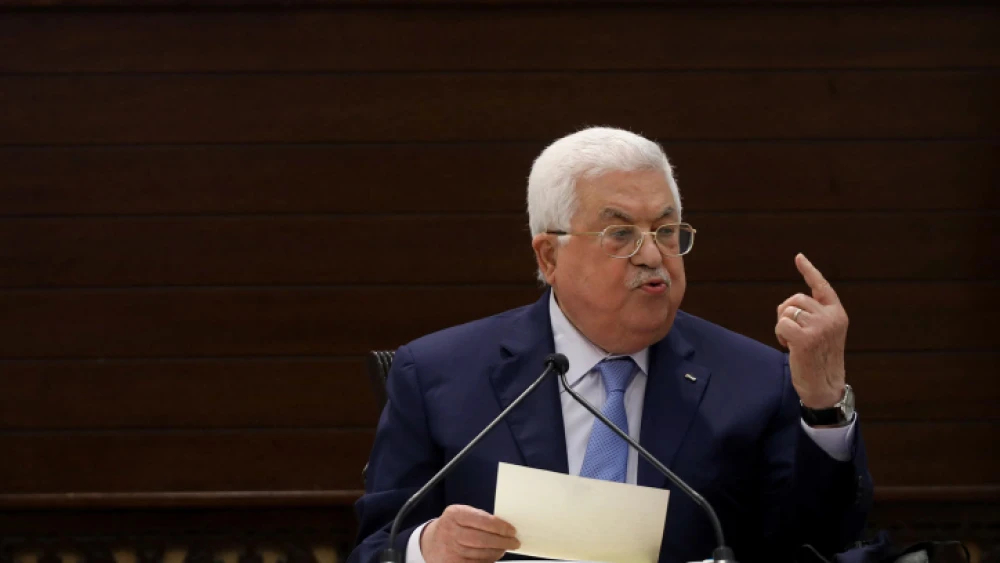
Palestinian Authority leader Mahmoud Abbas speaks during a meeting of the Palestinian leadership in the West Bank city of Ramallah, Sept. 3, 2020. Photo by Flash90.

Palestinian Authority leader Mahmoud Abbas signaled on Thursday that Palestinian elections, which were scheduled for May 22, would be indefinitely delayed, a move that has angered the Hamas terror group that was preparing to gain from the results.

Abbas seemed to blame Israel for not being able to hold elections in eastern Jerusalem, which has seen clashes between Arabs and Jews in the past week.

“We will take the proper decision to preserve all our rights in east[ern] Jerusalem, our eternal capital, including the right to hold parliamentary elections there,” said Abbas, reported the AP.

Palestinian elections have not been held since January 2006. Postponement seems to be a pretext since ways to get around the issue exist, according to several candidates. Mail-in balloting has also been mentioned as a solution that has been done before.

Hamas opposes delaying the elections, saying Palestinians should find ways of “forcing the elections in Jerusalem without the permission of or coordination with the occupation.”

According to the report, Hamas said it “will not be a party to any postponement or cancellation, and will not provide cover.” The responsibility “will rest with those who take it in response to the veto of the occupation,” it charged.

Hamas, which rules the Gaza Strip with about 2 million residents, was expected to do well because of internal strife and division within Abbas’s Fatah Party.

“Vang is currently riding a wave of progressive energy that has been deciding Democratic primaries across the country,” Dan Schnur, a political science lecturer, told JNS.
Preliminary data for 2026 suggests a volume of antisemitism that is second only to 2023, during which the Oct. 7 attacks occurred, B’nai Brith Canada said.
Only 93 members of the Democratic caucus opposed an amendment to end aid Israel in a vote that split the Democratic leadership and further revealed one of the sharpest divides in politics on the American left.
The law negates the binding nature of legal opinions and grants the government the authority to represent its own position in court even if it differs from that of the AG.
Republican lawmakers on the House Committee on Education and Workforce grilled the leaders of three public medical schools over their past diversity, equity and inclusion efforts.
Despite ongoing security concerns, families across the United States chose to send their children on the four-week educational trip to strengthen their connection to Israel.