


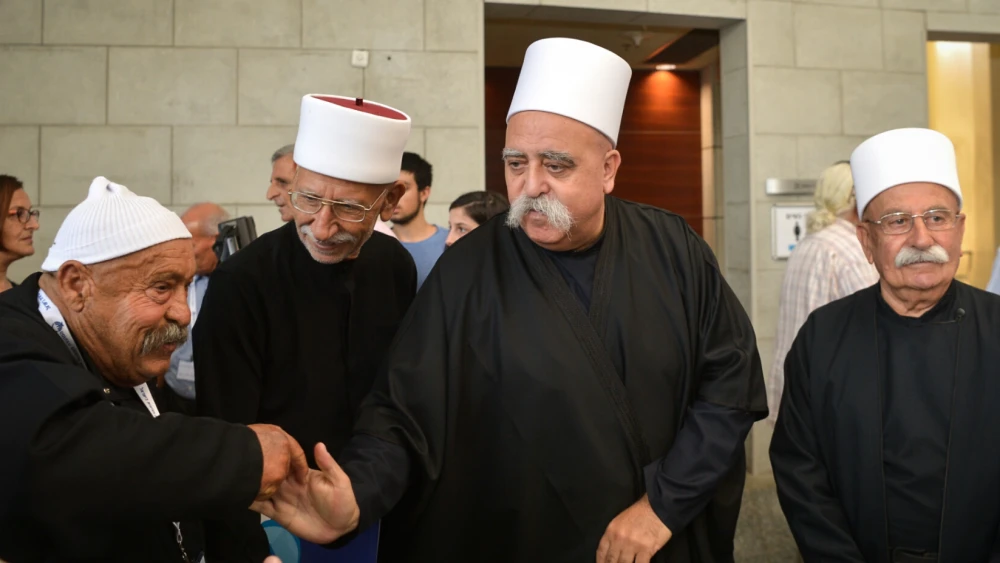
IDF Chief of Staff Lt. Gen. Gadi Eizenkot visited the tomb of Sheikh Amin Tarif in the Druze village of Julis in Israel’s north on Friday, in honor of the upcoming Eid al-Adha holiday. He was accompanied by senior officers in the Israel Defense Forces, including the military’s highest-ranking Druze officer, Brig. Gen. Ghassan Alian, who was recently appointed head of the Central Command Staff.
The top military officials met with representatives of Israel’s Druze community and its spiritual leader, Sheikh Mowafaq Tarif, as well as representatives of the Bedouin community, and spoke with them about the integration of minority populations in Israel into the IDF.
Eizenkot’s meeting comes as many in the Druze and other non-Jewish ethnic minorities have expressed anger over Israel’s recently enacted nation-state law, which enshrines Israel’s Jewish character and downgrades the status of Arabic from an official to a “special” language in Israel.
According to IDF findings, this past year has seen a 30 percent increase in enlistment to the army among members of the Bedouin community, and the Druze population continues to serve in an ever wider variety of military roles.
“In order for the military to realize its mission, high-caliber people who are committed to action are required,” Eizenkot said at the meeting. “I recognize this commitment to action in the members of the Bedouin community and the Druze community in every IDF visit. I see the partnership before my eyes, every day and every hour.”
According to Eizenkot, this partnership and responsibility is an integral part of an army that represents everyone who grew up in Israel and do their part for the country.
“We need to look back 70 years with pride and 70 years ahead toward a shared future,” Eizenkot emphasized. “This is not integration; it is shared responsibility, this is mutual commitment.”
He said the proof was the number of Druze officers who climb the ranks, in addition to the increase in the number of Bedouin recruits.
“The IDF provides equal opportunity, regardless of where you come from,” he said, “and will continue to act to realize the tenets of the people’s army and integrate all soldiers of various ethnic groups.”



