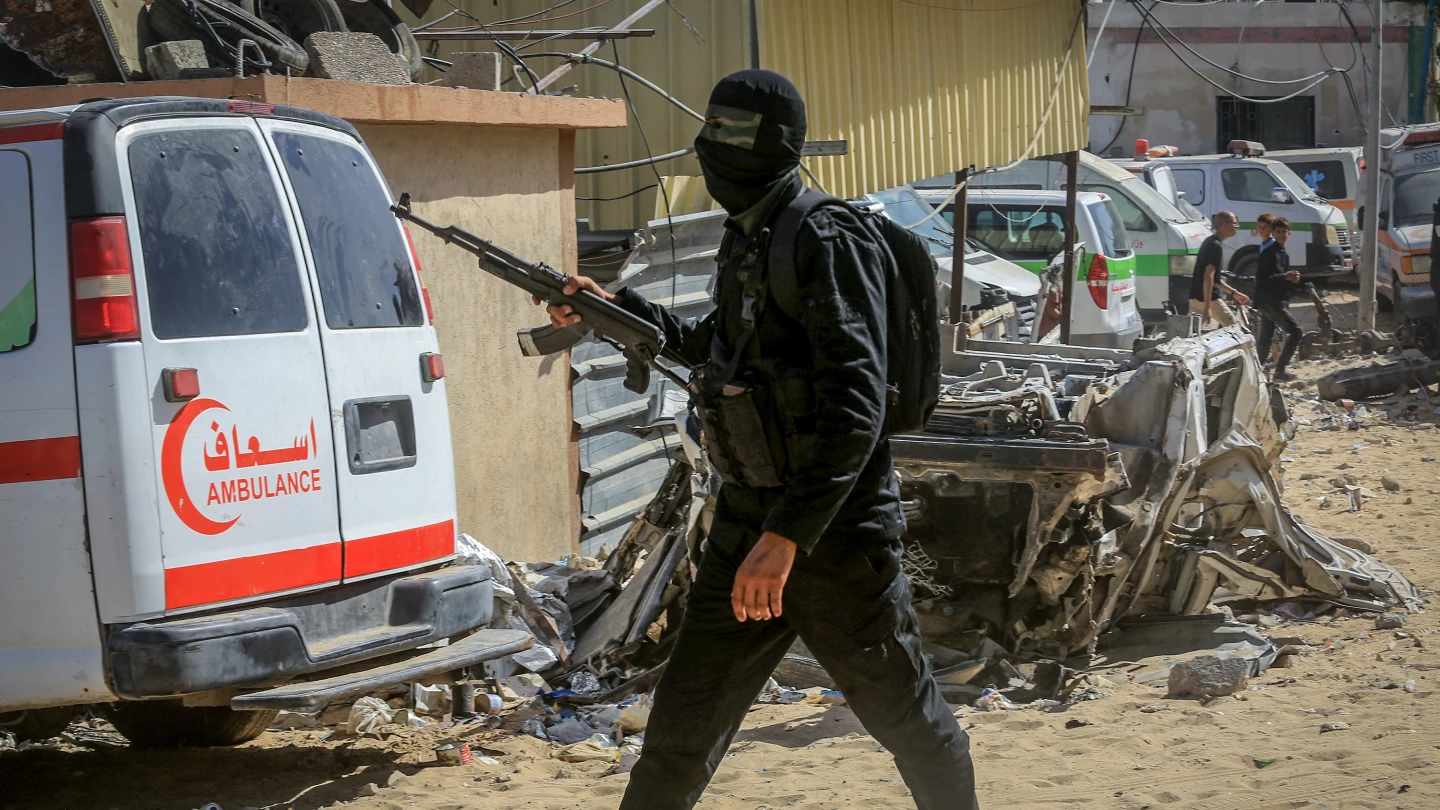
Hezbollah, the Lebanese Shi’ite terrorist organization, is not neutral, nor has it ever been. It is an organic component of the Iranian axis, dependent on Tehran both ideologically and militarily, and it views itself as a central pillar in the deterrence architecture against Israel.
The real question, therefore, is not whether Hezbollah identifies with Iran, but whether, as of 2026, it is prepared to bear the costs of entering a full-scale war in support of the Islamic Republic.
At this stage, all indications suggest it is not. Even after the joint U.S.-Israeli aerial campaign against Iran and the targeted killing of the Iranian ruler Ali Khamenei, Hezbollah is more likely to choose calibrated restraint, controlled threats, and, at most, and still unlikely, limited responses, rather than open a broad front.
The first reason lies in the organization’s own condition. Israel dealt Hezbollah a severe blow in the 2024 war, killing its leader Hassan Nasrallah, eliminating thousands of operatives, and destroying substantial portions of its military infrastructure. Even after the ceasefire, Israeli strikes in Lebanon have continued.
Reports indicate that Hezbollah is conducting a deep internal strategic review of its role, its weapons, and its future. An unnamed senior official familiar with the organization’s internal deliberations has pointed to this reassessment.
In July 2025, media outlets described these discussions by noting that the organization’s very strength “had turned into a point of weakness.” That phrase captures the core dynamic—Hezbollah remains dangerous, but it no longer operates with a sense of immunity.
At the leadership level, Naim Qassem is no Nasrallah. Many in Lebanon view him as lacking the charisma and public authority of his predecessor.
Nasrallah had the ability to transform each confrontation into a mobilizing moment—rallying the Shi’ite street, framing sacrifice as mission, and sustaining confidence even under sustained fire.
Qassem is a veteran apparatchik, a longstanding organizational figure, but not a leader with comparable appeal. For a movement that may again have to justify dragging Lebanon into a devastating conflict, this is not merely a stylistic shortcoming; it is a strategic liability.
Hezbollah is not measured only against Israel. It is also measured against the society that sustains it. Southern Lebanon, the Dahiyeh suburbs, and the broader Shi’ite community are still recovering from successive rounds of fighting with Israel.
Many supporters are coping with destroyed homes, partial compensation, economic hardship, and reconstruction that is slow—if not altogether stalled. Even when the Shi’ite base does not abandon Hezbollah, it expects the organization to weigh the costs carefully.
At the same time, Lebanese Prime Minister Nawaf Salam, in remarks cited by the newspaper Nidaa al-Watan, warned against “another adventure” that could impose a devastating price on Lebanon. The importance of that statement lies not only in its content but in the fact that it was conveyed through a Lebanese media platform, underscoring that this debate is not merely regional but deeply domestic.
This is where the relationship between Hezbollah’s commitments to Iran and its Lebanese-Shi’ite interests must be understood with precision. The correct argument is not that Hezbollah consistently prioritizes Lebanon over Iran, or vice versa.
The key variable is overlap. When Tehran’s interests and Hezbollah’s organizational interests converge, the movement acts decisively.
Syria’s civil war provides the clearest example. Hezbollah’s intervention advanced Iran’s regional posture, but it also directly served Hezbollah’s own strategic imperatives by preserving supply routes, land corridors, and the strategic depth upon which its power in Lebanon depends.
Analysts at the Carnegie Endowment for International Peace have stated this plainly: Hezbollah intervened in Syria to secure its own survival by defending its military supply lines. Syria was therefore not a case of sacrificing Lebanese interests solely for Iran’s benefit; it was a case in which Iran’s agenda and Hezbollah’s institutional interests aligned.
The present moment differs because that overlap is only partial. Iran may seek escalation or military signaling from its proxies, particularly from Hezbollah, to counter Israel’s aerial campaign, relieve pressure on Tehran, and strain Israel’s home front and war effort. In that sense, Hezbollah remains loyal to the axis.
Yet it has grown markedly more cautious when the immediate costs are likely to be borne first and foremost by its own Shi’ite heartland. The broader Lebanese system is also trending against escalation. The Lebanese state and army are working to reinforce the state’s monopoly on arms in the south, and the official message from Beirut is increasingly unambiguous: Lebanon’s interests come first.
The regional environment has shifted as well. Iran did not limit its strikes to Israel; it also launched missiles toward Gulf states, reinforcing Sunni Arab perceptions of Iran as a destabilizing force. This does not mean Arab governments will openly align with the United States and Israel, but it increases the likelihood of critical scrutiny in leading Arab media outlets such as Qatar’s Al Jazeera, Saudi Arabia’s MBC and the UAE’s Al Arabiya.
The most plausible assessment, therefore, is that Hezbollah will continue to speak in the language of threats while acting in the language of caution.
Not because it has lost its capabilities altogether, but because it understands the constraints on its power. Not because it has distanced itself from Iran, but because it recognizes that, this time, the price would fall first and foremost on southern Lebanon, on its Shi’ite base, and on its own organizational survival.
In the Middle East, militant rhetoric is not always a precursor to war. At times, it is the clearest indication that the actor behind it is seeking a way to avoid one.
Originally published by the Jerusalem Center for Security and Foreign Affairs.