Archaeology
News and features about archaeological finds linking stories from the Torah and Prophets, or other historical events to the State of Israel

The carnelian amulet may be evidence of an Assyrian presence in the citadel of Tel Rekhesh, according to Israel Antiquities Authority archaeologist Itzik Paz.

“If the work of art does not belong to the museum rightfully then, in our opinion, the only thing to do is to return it to its rightful owners,” said Katie Ziglar, director of the Ackland Art Museum in North Carolina.

The excavation also exposed a building from the First Temple Period, with even earlier evidence for commerce in the form of a shekel weight.

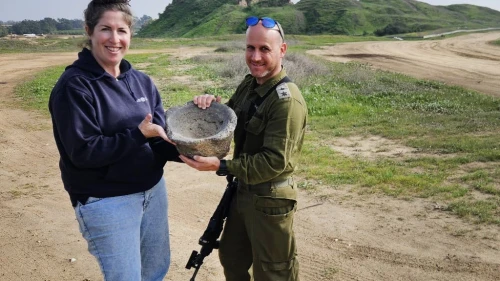
Mortars and pestles were usually used for grinding and grinding dry products such as grains and lentils.

“Only the fixed Jewish presence of a farm or town will prevent further damage or destruction,” activist group says.
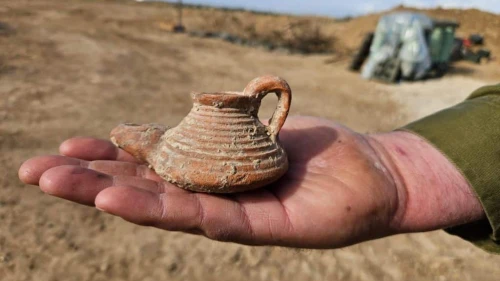
The artifact, a “sandal candle” dating from the Byzantine period, was found in a field, partially buried in mud.
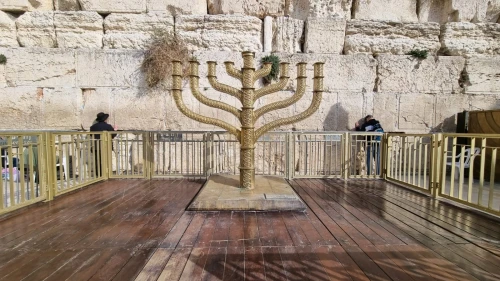
Was it looted by the Romans and taken to Rome to be depicted on the Arch of Titus? If so, is it still kept in the cellars of the Vatican?

“It’s very exciting to encounter the Seleucid ruler Antiochus IV ‘face-to-face’, almost 2,200 years after the events of Hanukkah,” says IAA researcher.

The 424 slingstones from the Early Chalcolithic period point to organized preparation for battle.
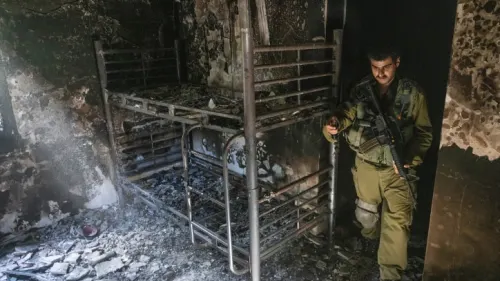
The small desert kibbutz of Nir Oz, within sight of the Gaza border, was among the hardest hit on Oct. 7 assault: One in every four residents was either killed or kidnapped.

Teams of archaeologists from the state-run Israel Antiquities Authority have so far identified 10 victims of Hamas’s massacre in southern Israel.