Archaeology
News and features about archaeological finds linking stories from the Torah and Prophets, or other historical events to the State of Israel
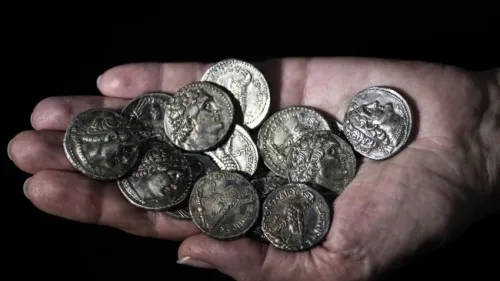
The latest coin in the hoard dates to 170 BCE, the year it was hidden and the year the Maccabean rebellion began.
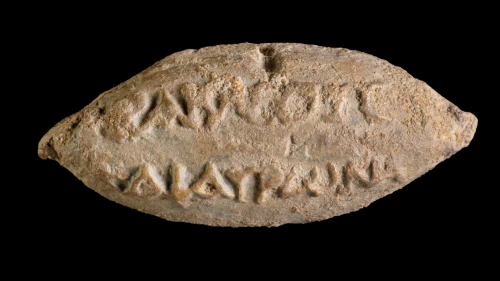
The lead projectile bears the Greek inscription, “Victory for Heracles and Hauron.”
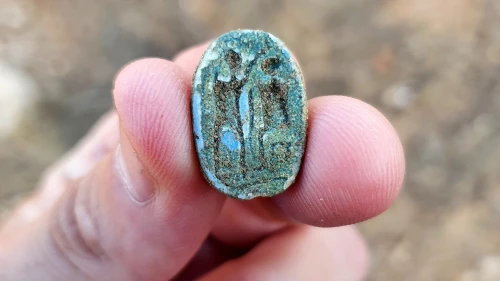
The seal appears to depict the bestowing of legitimacy on a local ruler, a scene experts say matches the geopolitical reality in the area during the Late Bronze Age, when the Canaanites were ruled by Egypt.
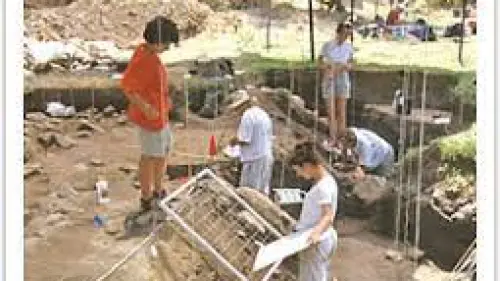
Fish remains discovered at Israel’s Gesher Benot Yaakov archaeological site indicate that humans were cooking food as long ago as 780,000 years.
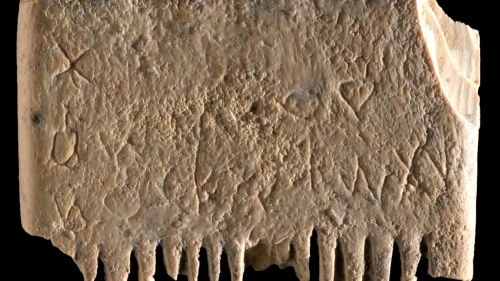
Written on an ivory comb unearthed in 2017, the sentence comprises seven words—a spell against lice.
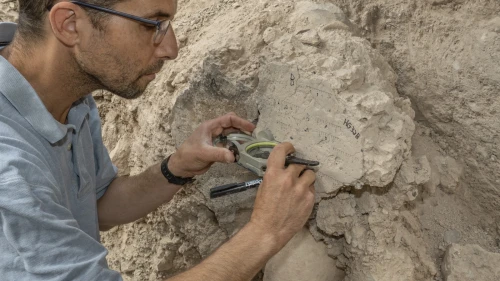
Magnetic field reconstruction matched battle sites to Egyptian, Aramean, Assyrian and Babylonian military campaigns recounted in the Bible against the kingdoms of Israel and Judah.
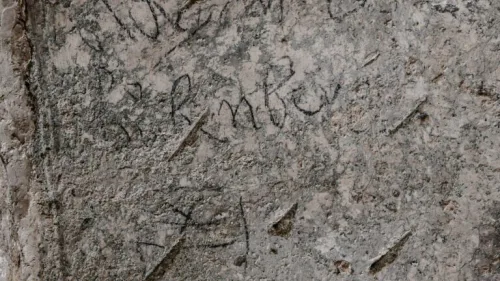
Archeologists discover charcoal inscription by Swiss noble Adrian von Bubenberg on a wall on Mount Zion.
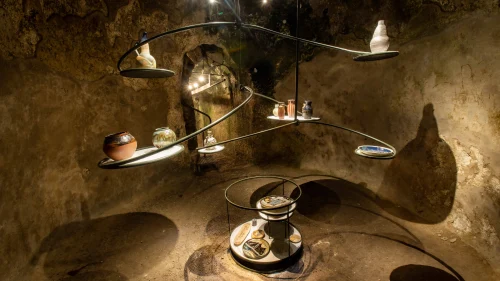
“Arteology: The Power of the Ancients in Contemporary Form” is on display in an underground cistern next to the 2,000-year-old foundation stones of the Western Wall.
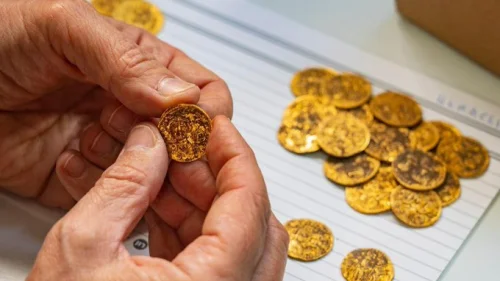
The 1,400 year old cache was uncovered hidden in a wall during an archaeological excavation at the site of the ancient city of Banias.
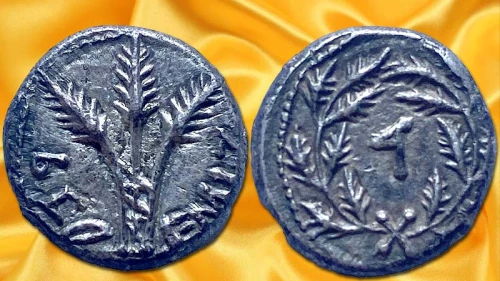
The coin, minted in 69 C.E. during the Great Jewish Revolt against Rome, is valued at more than $1 million • “This coin is evidence of the eternal bond between the Jewish people and the Land of Israel,” says Israeli ambassador to the United Nations.

The “Ishmael Papyrus,” which had been in Montana since 1965, was tracked down by the Israel Antiquities Authority
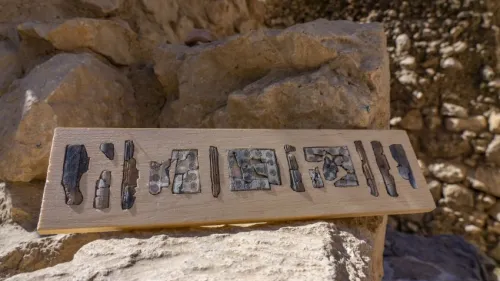
Also found was a seal impression, some 2,700 years old, reading, “Natan-Melech servant of the king.”