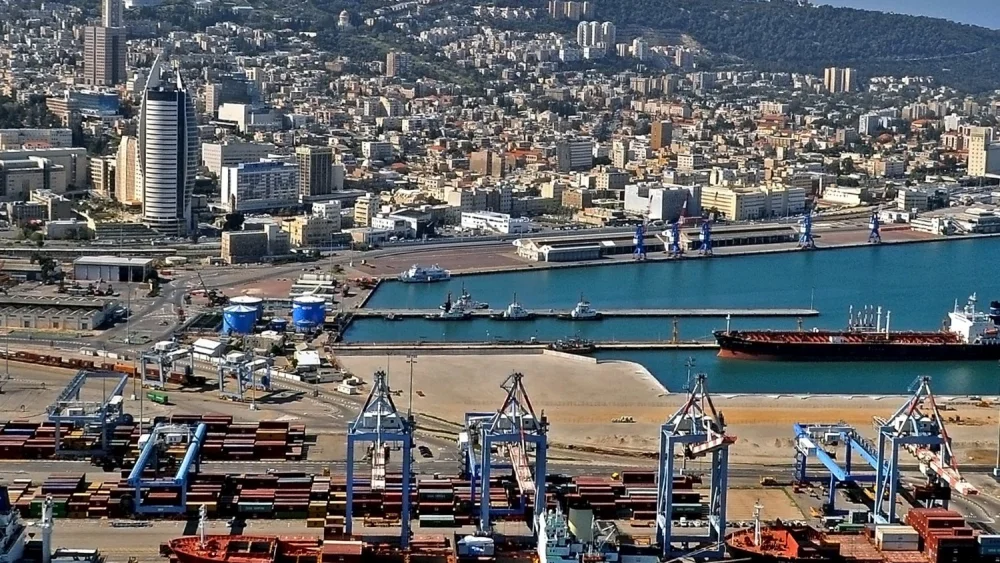
China blasted the United States over concerns regarding an agreement between Israel and China to allow the latter to manage the Haifa port, calling the pushback “ridiculous.”
Chinese Foreign Ministry spokesperson Hua Chunying said America “has been abusing ‘national security’ to smear and strike down normal business activities of Chinese enterprises.”
She added that the United States has “consistently ignoring facts and seeing enemies wherever it looks.”
U.S. concerns over the Haifa port deal have come from National Security Advisor John Bolton and U.S. Deputy Secretary of Energy Dan Brouillette.
During a state trip to Israel this month, Brouillette expressed concerns regarding “certain Chinese foreign investment in Israel,” an Energy spokesperson told Israeli business news outlet Calcalist on Wednesday.
Even Israeli Ambassador to China Matan Vilna’i called on Israel this month to scrap the deal: “We need to rethink the whole deal, and see how to go in reverse and move everything backwards.”
“There is no doubt that we need to deal with the Chinese on infrastructure, up to the point where there are Israeli security interests involved—and the classic example of this is the Haifa port because it is a national security asset,” he added.