


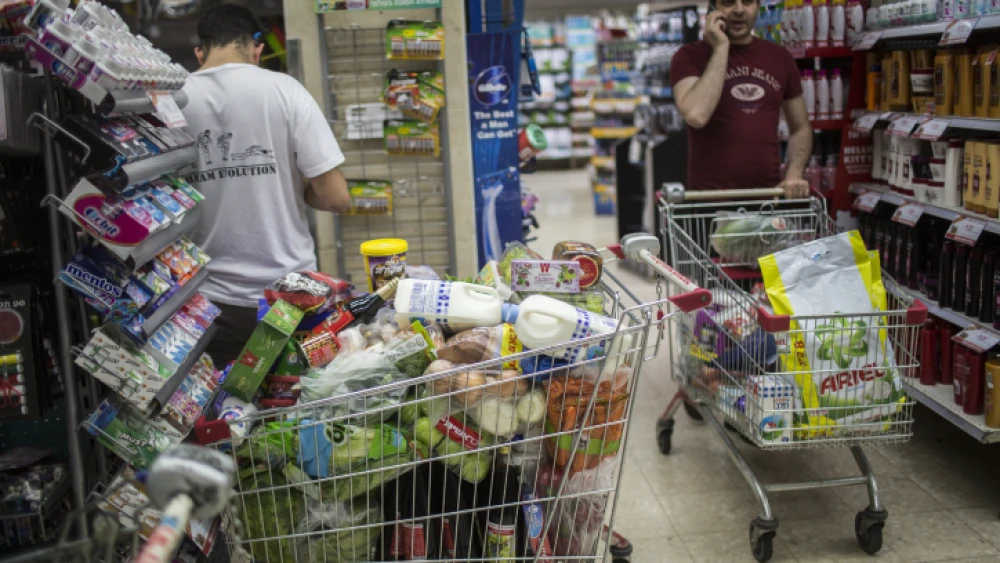
A survey by Leket Israel, Israel’s National Food Bank, found that Israelis threw away a staggering 2.5 million tons of food in 2018—almost half of which could have been salvaged.
According to Leket Israel, a total of $5.5 billion in food was thrown away in Israel last year, with 1.2 million tons of food still edible. Households were responsible for $2.2 billion in waste, with the average Israeli family chucking NIS 3,200 ($884) in groceries, representing approximately a month-and-a-half of the average Israeli food budget.
Research found that fruits and vegetables were the most wasted, but that Israel wasted less food (23 percent) than America (28 percent) and more than Europe (19 percent). Leket Israel called on the government to develop a national plan for food rescue, an initiative that has been taken on by some countries around the world.
According to The Jerusalem Post, Leket Israel CEO Gidi Kroch said Israel’s food-insecurity gap would be closed if just 20 percent of wasted food was rescued, and that it would take $230 million to do it—less than a third of the cost of the food itself.
Kroch told the newspaper that Israel’s annual food waste would take up the same amount of space as the 50,000-square-meter, 20-meter-high Expo Tel Aviv Pavilion 2, the grounds for the upcoming Eurovision Song competition. Lobbying by Leket resulted in the October 2018 passage of the Food Donation Act, which protects food donors and food associations from legal liability for donated foodstuffs, opening the door to more contributions.
According to the organization, 15,500 tons of agricultural produce were salvaged last year, as well as 2.2 million Israel Defense Forces, hotel catering and restaurant cooked meals, which were distributed to 175,000 needy individuals.



