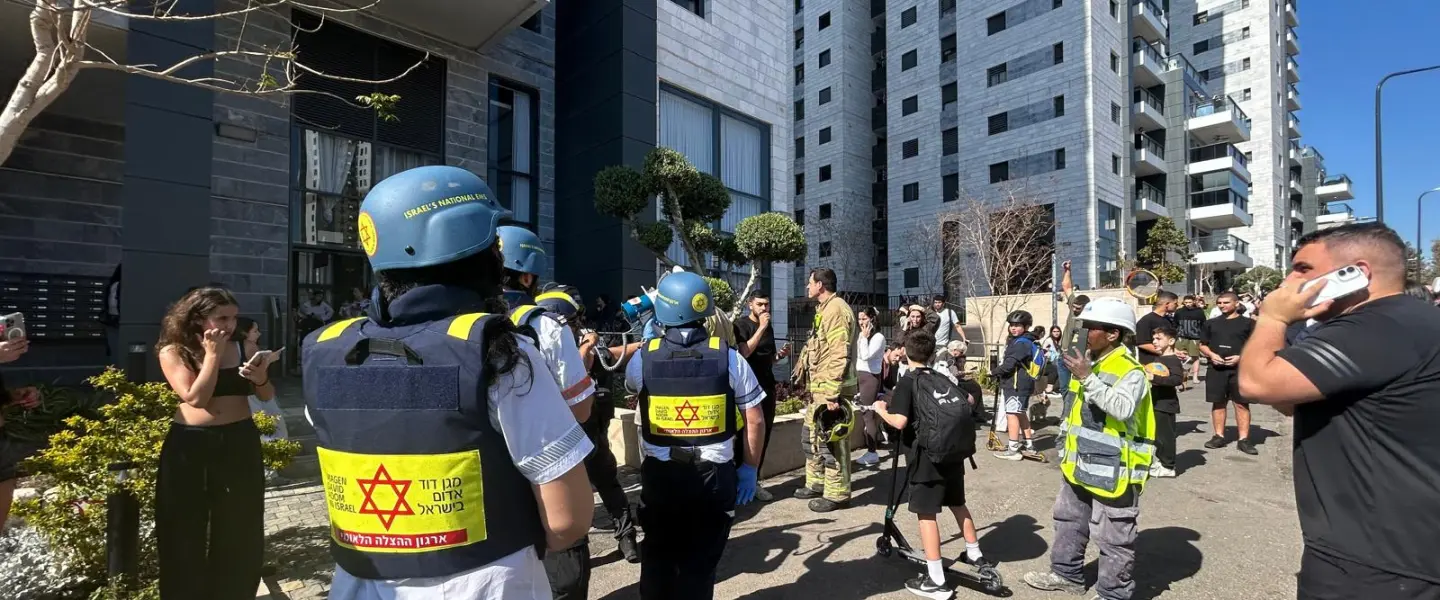
Magen David Adom, Israel’s national emergency medical service, operates with 36,000 volunteers, 3,000 employees, nearly 2,000 ambulances, and 650 motorcycles. The organization’s stations are divided by geographic region. The Ayalon area spans from Bat Yam in the west to Rishon LeZion in the east and Gedera in the south, with Holon and Rishon LeZion serving as its two major cities. Rishon LeZion, the largest city in the region, along with Holon, has sustained more missile alerts and impacts than any other area within the district.
At the MDA station in Rishon LeZion, JNS met the team responsible for responding to war-related emergencies. Paramedic Yedidya Meir, senior EMT Gad Yair Mimran and EMT Keren Mesika operate one of MDA’s mobile intensive care units. All three have been living at the station since the start of “Operation Roaring Lion” on Feb. 28, serving as IDF reservists deployed by the Home Front Command.
While this is Meir’s first rotation at the station as a paramedic, both Mimran and Mesika served with MDA during the previous conflict with Iran, June 2025’s “Operation Rising Lion.”
Mimran was stationed in Rehovot at the time, when an Iranian missile struck just 100 meters from the local MDA station.
“Our shelter started trembling,” he recalled.
When missile alerts sound across Israel, MDA emergency teams immediately deploy as calls begin flooding in. “We went out to the site. It was chaos. We started evacuating the wounded. As more alarms were heard, we would seek shelter, then return and continue the evacuations,” he said.
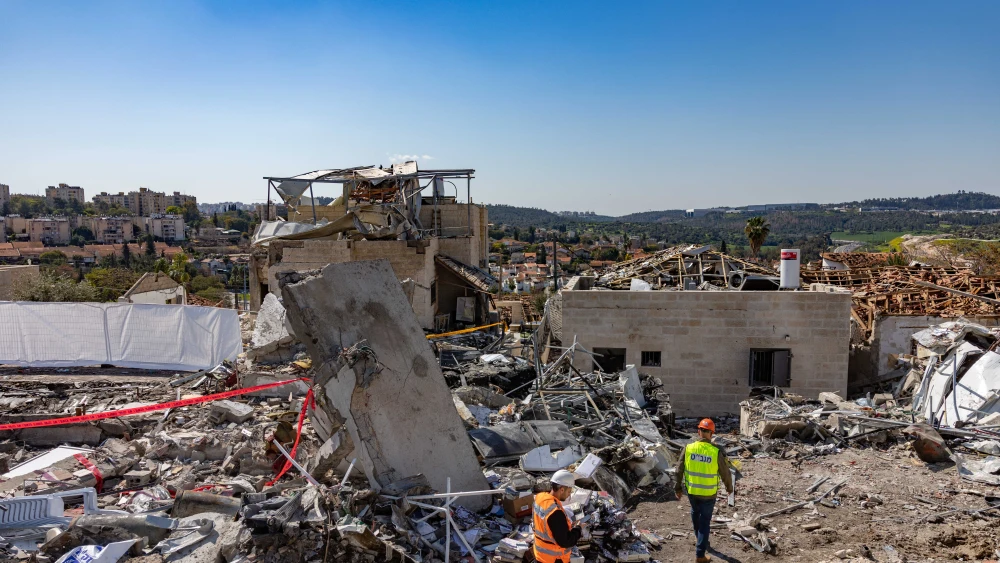
While missiles have scored direct hits on cities including Beit Shemesh—where nine people were killed—as well as Dimona and Arad, where hundreds were wounded, Mimran noted that many recent attacks have involved salvos of missiles with cluster warheads. Ordinary ballistic missiles carry a single warhead with hundreds of kilograms of explosives, while cluster warheads disperse into 10 to 20 smaller bombs, each containing between 2.5 and 10 kilograms of explosives. Iran has alternated between missile types in its attacks on Israel.
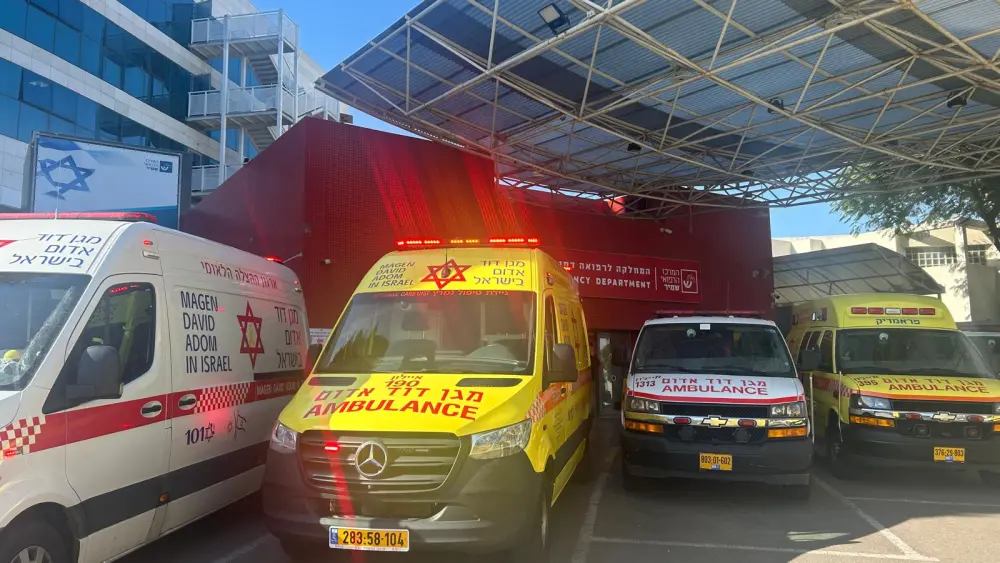
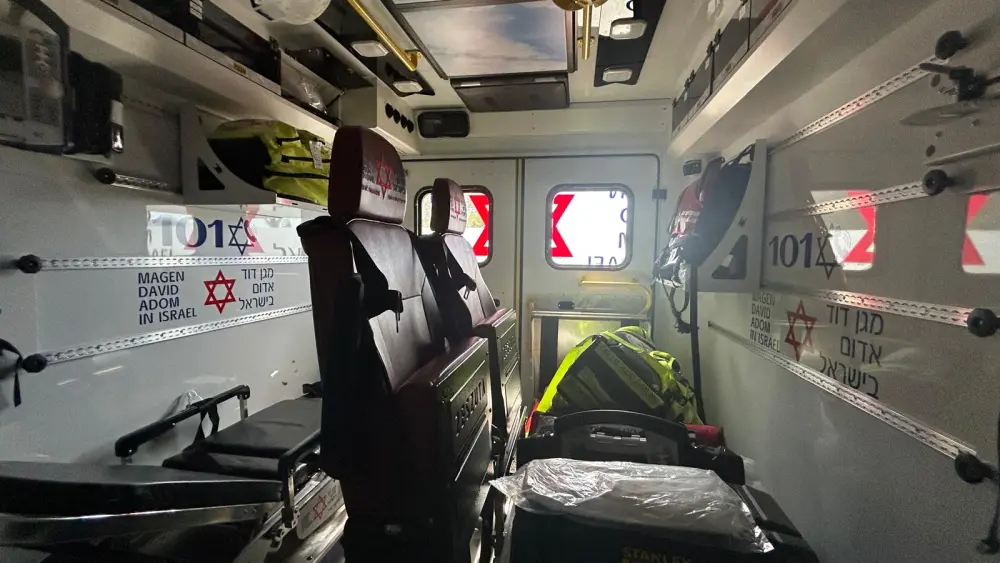
The team’s yellow mobile intensive care unit is used to treat severe injuries, while standard white ambulances handle lighter wounds and anxiety-related cases.
With no clear end to the war, the reservists deployed to the station have no indication of when they will return to civilian life.
Spending a full day at the station—from 8 a.m. to 4 p.m.—and taking shelter alongside MDA personnel during multiple missile alerts, JNS observed that nearly every siren results in a dispatch to the site of a strike or falling debris. Whether responding to injuries caused by the attacks, falls while rushing to protected spaces, or reports of nearby explosions, MDA personnel are on the road.
The team relies on these reports to locate impact sites and scan areas for potential casualties.
At missile impact sites, Mimran explained, most injuries result from the blast. These can include limb amputations, requiring immediate first aid and rapid evacuation to hospital.
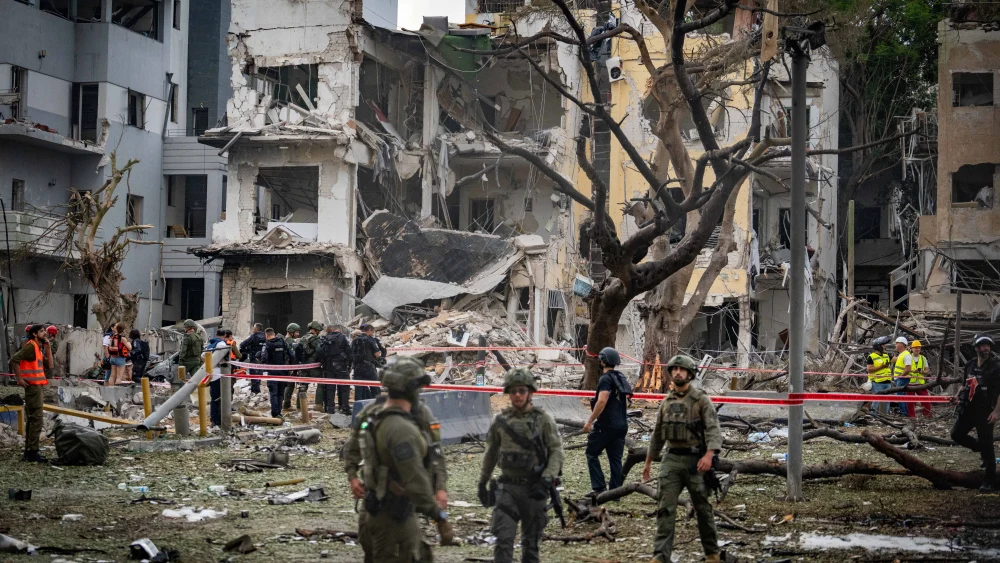
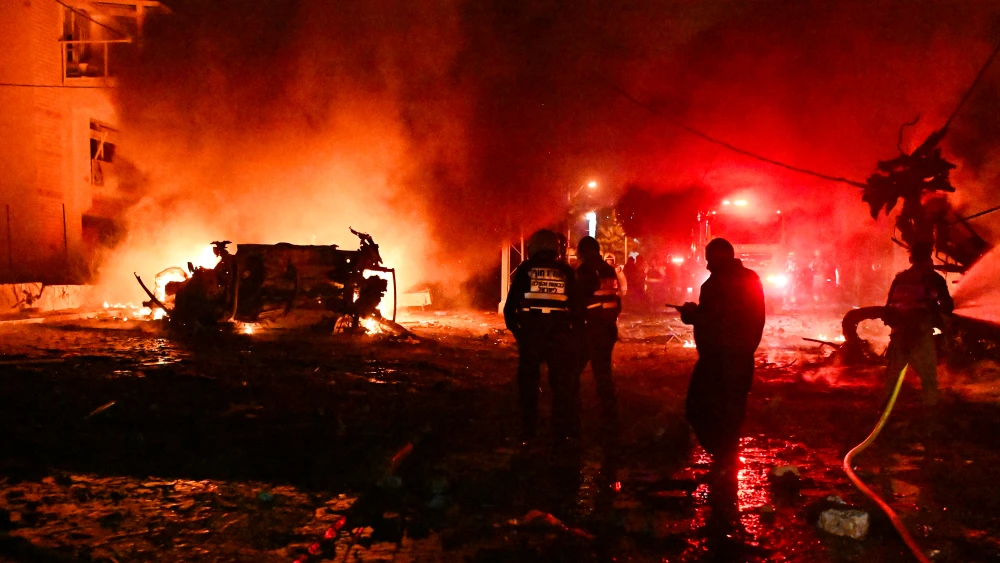
At smaller impact sites caused by cluster munitions, Meir noted, fires often break out, leading to cases of smoke inhalation.
Most people in protected spaces are unlikely to be injured if a missile strikes the area, unless there is a direct hit on the protected room—an event that would have devastating consequences.
MDA personnel also treat victims of anxiety—Israelis who were not physically injured but witnessed explosions and, in some cases, lost their homes or possessions.
“The point is to give that person back a sense of control over what happens around them,” Meir explained. “When someone is overtaken by anxiety, they feel helpless, unable to cope with the situation. What we try to do is remind them who they are, where they are, and encourage them to act independently.”
“We introduce ourselves, explain that they are being evacuated, and ask whether they want to take anything from their home or notify someone,” he added. “Restoring that sense of control helps them emerge from the situation with strength.”
At every alert, the team must be ready to jump into its yellow ambulance and rush to the scene—day or night—often resulting in sleepless nights.
Mesika, an army nurse recently assigned to the unit, lives in Bat Yam. In June 2025, she helped evacuate residents after an Iranian ballistic missile struck the city.
“About 25 buildings surrounding the one that was hit will have to be demolished because their infrastructure was compromised,” she said.
A Ukrainian family of five who had fled the war in their home country was killed in the attack.
During her military service, Mesika was accustomed to treating gunshot wounds. She was deployed along Israel’s borders with Egypt and Jordan before joining the Home Front Command rescue unit. The first conflict in which she applied her training on a large scale was “Operation Rising Lion.”
“I am familiar with ruins and rubble. I was trained to operate in that environment,” she said. “I am not afraid to enter a damaged building. It depends on the site—if the structure is still standing, we can go in. If not, the wounded are brought to us.”
In quieter times, Meir, Mimran and Mesika lead ordinary civilian lives. Meir is a civil engineer, Mimran a software developer and Mesika an economist in a high-tech company. Their professional expertise can prove critical in the field. Meir’s background in structural engineering, for example, helps assess buildings struck by missiles.
“Every building is supported by pillars that anchor it to the ground,” he said. “If a pillar is damaged, an engineer must determine whether the structure can be rehabilitated or must be demolished and rebuilt. Until that decision is made, everyone must be evacuated due to the risk of collapse.”
Israel, Meir noted, experiences major earthquakes roughly every 100 years.
“We are approaching that interval since the last one,” he said. “Buildings here are designed with that in mind, which also means they can better withstand the shockwaves from missile blasts.”
Most newer buildings meet these standards, while older structures are less stable.
In Israel, more apartments are now built with reinforced safe rooms, and in some older buildings such rooms were added later.
“When safe rooms are added retroactively, after a missile strike you may see a vertical column of them still standing,” Meir said. “In newer buildings, where they are part of the original design, an entire side of the structure may remain intact because it is reinforced with more concrete.”
While underground shelters are generally more secure than in-apartment safe rooms, Meir cautioned that people rushing to shelters face a higher risk of injury en route. Some also take cover in underground parking lots that do not meet official safety standards.
“A proper shelter must be located at a certain depth—typically level minus two or minus three—and meet specific requirements for entry and exit points, according to Home Front Command guidelines,” he said.
Meir noted that in previous conflicts with Hamas and Hezbollah, Israel primarily faced missiles and rockets of far less destructive power than those Iran is using.
As the team prepared to depart to scan impact sites in real time, Mesika described the yellow ambulance’s capabilities. The vehicle is equipped with two beds, two vital-sign monitors, and supplies for rapid life-saving treatment, allowing it to handle more patients than a standard ambulance.
Mesika sits in the back with patients, Mimran drives and Meir administers treatment en route.
At the first site in Rishon LeZion, the area had not yet been cordoned off. A family in the building remained in shock. A missile fragment had struck the roof, but no injuries were reported. After scanning several locations in Rishon LeZion and Holon, the ambulance was redirected to pick up a patient unrelated to the war who required transport to the nearest hospital.
At the hospital, JNS met Sarit, 53, from Rishon LeZion, who had been brought in by another MDA team after a fragment landed near her garden.
“There was an alarm and we entered the safe room in my house. I was with my daughters—my eldest doesn’t live with us—and my brother joined us,” she said. “About 30 seconds later, we heard a huge explosion and realized it was very close.”
“We called the police and went outside to find our garden destroyed. The damage was caused by the blast,” she added.
Sarit was taken to the hospital as a precaution due to high blood pressure.
“Safe rooms save lives. Don’t take it lightly—enter protected spaces when there is an alarm,” she said. “It saves lives, and it saved ours.”