More than two years after Hamas’s Oct. 7, 2023, attacks shattered Israel and reverberated globally in rising antisemitism and anti-Zionism, international trauma expert Gina Ross believes that even the worst tragedy in Israeli history carries the potential for healing for Israel, the Jewish people and the wider world.
“Israel has an opportunity for repair and redemption,” Ross told JNS before a studio interview in Jerusalem on Tuesday, echoing the title of her new book. “There is also an opportunity for moral clarity and renewal that never existed before for the Jewish people and the world.”
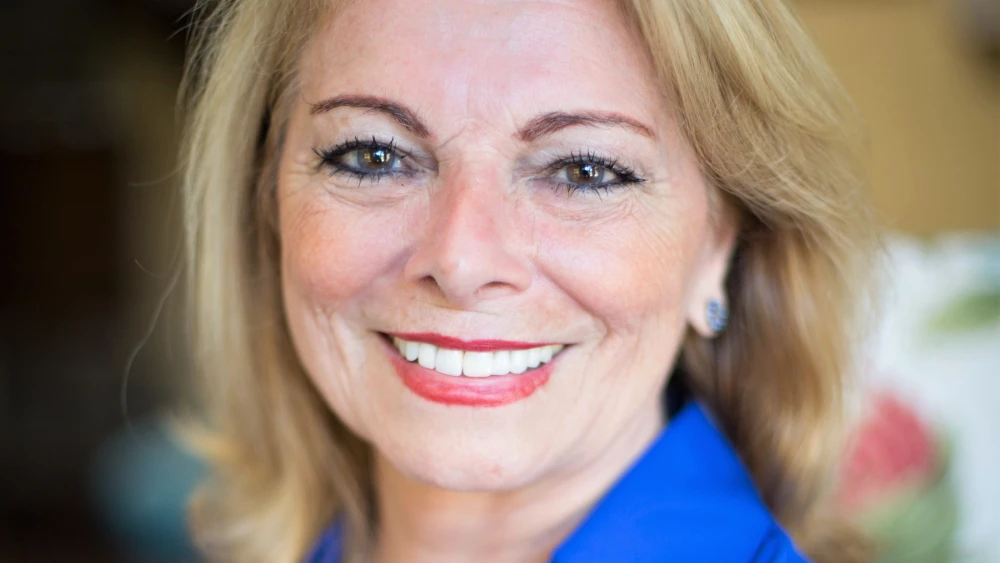
Ross, founder and president of the International Trauma-Healing Institute in the United States and Israel, is a psychotherapist specializing in individual and collective trauma. She has spent decades working across conflict zones, training thousands of practitioners and developing tools to address the psychological wounds of large-scale conflict.
“The antisemitism that we’re seeing right now is very much like the antisemitism of the pre-Holocaust era,” Ross said. “Trauma repeats itself until it gets healed. But this time, there are transformations in the world that give us an opportunity to do something different.”
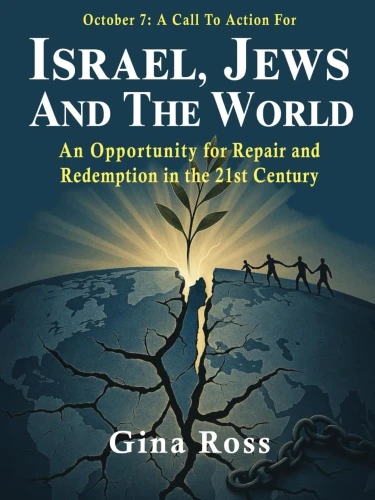
Ross was visiting Israel from the United States to promote her new book, October 7: A Call to Action for Israel, Jews and the World: An Opportunity for Repair and Redemption in the 21st Century, which draws directly on her trauma work.
In the book, she outlines eight major shifts she believes are already reshaping the global landscape—from renewed Jewish self-defense and changing Arab-Israeli dynamics to evolving interfaith alliances.
One of Ross’s central arguments is that trauma, including collective trauma, is not only real but curable.
“We know what trauma does to the nervous system, and we have tools today that didn’t exist 100 years ago,” she said. “The first message I want to give is that trauma is curable. Even something as painful and monstrous as Oct. 7.”
Ross’s trauma-healing techniques
Ross has been coming to Israel regularly for more than 25 years, introducing somatic-based trauma-healing techniques and training professionals across multiple sectors. Since Oct. 7, demand for these tools has grown significantly, she said, as Israelis confront prolonged stress, grief and uncertainty.
One such method, Emotion Aid, is designed for public use and self-regulation during moments of acute stress—from missile sirens to everyday anxiety. Ross described it as a way to prevent cumulative trauma in a country living under constant pressure.
“We can prevent people from going into what we call the trauma vortex,” she said. “People can learn how to discharge that activation right on the spot.”
Ross recounted a striking example involving an Israeli soldier with whom she had worked years earlier. Two weeks after Oct. 7, he contacted her from the field.
“He told me that his unit had been fighting Hamas in Kibbutz Be’eri and was completely overwhelmed by what they had seen,” Ross said. “He stopped the unit, taught them the technique, and they were able to clear themselves from the trauma and continue fighting.”
Ross believes the resurgence of antisemitism following Oct. 7 is not solely a Jewish issue but a warning sign for the world.
“Whenever antisemitism explodes in a society, you know something is very wrong in that culture,” she said. “The Jews become the scapegoat when systems are disordered and people are afraid.”
At the same time, she sees new possibilities emerging, particularly in the realm of interfaith relations. Ross points to developments in the Catholic Church, growing openness in parts of the Arab world, and the Abraham Accords as evidence of broader shifts.
“There is a recognition that extremism is a threat to everyone,” she said. “And that’s what creates room for cooperation and dialogue that simply wasn’t possible before.”
Born in Aleppo, Syria, Ross left as an infant on one of the last planes carrying Jews out of the country. Her family later fled Lebanon, lived in Europe and South America, and eventually made aliyah before she settled in the United States—an experience that shaped her refusal to take Jewish security for granted.
“I never believed that history was over,” she said. “We trusted too much that this could never happen again. But now we’re much better prepared—psychologically, politically and spiritually.”
With the approach of Chanukah, Ross framed her message in terms of light emerging from darkness. “We call it the healing vortex,” she said. “Once you focus on it, it grows. Balance and hope really are the middle names of the Jewish people.”
For Ross, the challenge extends beyond Israel itself. “The call now is to the nations that failed during the Holocaust,” she said. “This is their opportunity to do it right. If they take the right actions now—against antisemitism, against terror—they redeem themselves forever.”