One year after a direct Iranian ballistic missile struck Soroka Medical Center during “Operation Rising Lion,” the largest hospital in southern Israel is emerging not only repaired, but transformed.
The June 19, 2025, attack on the Clalit-operated hospital in Beersheva caused extensive damage to the medical campus and underscored the vulnerability of civilian infrastructure during wartime. Yet hospital officials say the crisis has become a catalyst for one of the most ambitious healthcare development projects in Israel’s history.
“What began as a devastating attack has evolved into an opportunity to build a stronger, safer and more advanced medical center for future generations,” hospital officials said in marking the anniversary of the strike.
Serving more than one million residents across the Negev, Soroka is the region’s primary tertiary-care medical center and a critical component of Israel’s healthcare system.

Care continued despite the damage
The missile struck the Northern Surgical Inpatient Building, the first structure built when Soroka opened in 1959. The building housed inpatient wards, operating rooms, clinical and research laboratories, allied health services and administrative offices.
Nearby buildings and critical infrastructure also sustained significant damage.
Despite the destruction, hospital officials said medical services continued uninterrupted throughout the crisis.
In the months following the strike, crews completed extensive restoration work across the campus, repairing damaged infrastructure, ceilings, windows, doors, medical systems and equipment affected by the blast.
The hospital’s Internal Medicine Building is now approaching full operational capacity after undergoing major renovations during the war.
Rebuilding and fortifying
A major reconstruction effort is underway across the campus.
The Northern Operating Room Complex, which was completely destroyed in the attack, is being rebuilt and fortified, with damaged operating rooms expected to reopen by the end of the year.
At the same time, three new protected operating rooms are being constructed elsewhere on campus, expanding Soroka’s surgical capabilities.
In March, the eastern section of the damaged Northern Surgical Inpatient Building was safely demolished. Planning has already been completed for rebuilding the western section.
Hospital officials say the reconstruction effort is designed not merely to restore lost capacity, but to create a more resilient medical center capable of operating during future emergencies.
A vision for the future
Soroka and the Beersheva Municipality are also advancing a landmark development plan expected to double the hospital’s built area.
The project will cover approximately 45 dunams (4.5 hectares, or 11.2 acres) along Rager Boulevard and include three mixed-use towers, approximately 300 housing units for healthcare professionals, hotel accommodations, outpatient facilities, commercial space and expanded parking infrastructure.
Plans are also moving forward for an 11-story protected inpatient tower that will house medical departments, a comprehensive Heart Center, a Neuroscience and Brain Center, operating rooms and catheterization laboratories.
An underground parking facility beneath the tower will be designed for rapid conversion into an emergency underground hospital during wartime or other crises.
The hospital is also preparing to open four major facilities in the coming months: a new protected Neonatal Intensive Care Unit, a research building, a rehabilitation center for adults and children, and an expanded Emergency Department and Trauma Center.
The rehabilitation center will include Soroka’s first-ever pediatric rehabilitation facility.
‘The next generation of healthcare’
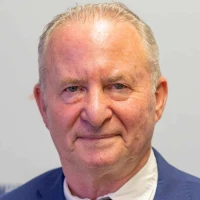
Professor Shlomi Codish, director-general of Clalit-Soroka Medical Center, said the hospital’s focus extends far beyond replacing what was lost.
“One year after the attack, we are not simply restoring what was damaged,” Codish said. “We are building the next generation of healthcare in Israel—a larger, safer, more innovative and stronger medical center.
“As the healthcare hub for more than one million residents of the Negev and a strategic pillar of Israel’s national resilience, Soroka continues to demonstrate that even from an unprecedented crisis, it is possible to grow, innovate and lead,” he added.
Codish said the rebuilding effort has been supported through cooperation among the Israeli government, Clalit Health Services and donors from Israel and abroad.
Among those backing the recovery and expansion are philanthropist Sylvan Adams, the Koum Foundation and other international partners.
For Soroka, hospital officials say, the anniversary marks more than recovery from a missile strike. It represents a broader commitment to strengthening healthcare in southern Israel while ensuring that future generations receive care in facilities designed to withstand the challenges of an increasingly uncertain region.