The Jerusalem Affairs and Heritage Ministry has announced plans to allocate approximately 10 million shekels ($3.2 million) to the preservation, rehabilitation, and rescue of heritage sites in Judea and Samaria.
Dozens of heritage and archaeological sites in Judea and Samaria and the Jordan Valley have been damaged in recent years by authorities in Ramallah as well as antiquities thieves in the Palestinian territories.
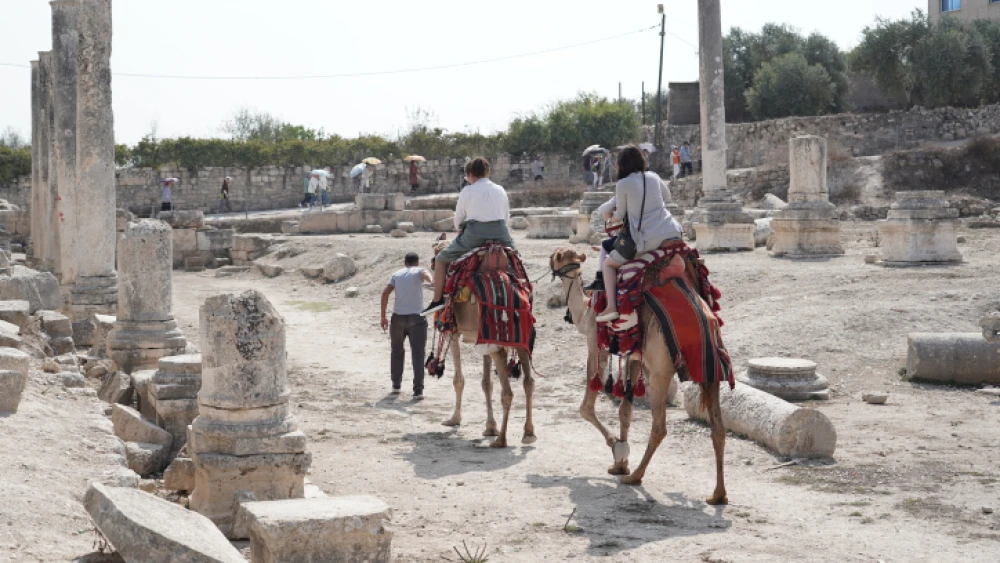
Last month, Israel Hayom reported that thieves had caused significant damage to an ancient Roman amphitheater in Samaria. Palestinian roadwork destroyed portions of a 3,200-year-old wall on the biblical site of Joshua’s altar on Mount Ebal, near Nablus, last year. In an effort to combat the issue, the Jerusalem Affairs and Heritage Ministry will allocate around five million shekels (around $1.57 million) toward reconstruction work at Sebastia upon approval from the Civil Administration. Another 2.5 million shekels (around $787,000) will go toward the rehabilitation of additional sites in Judea and Samaria. An additional 2.5 million shekels (around $470,000) will go toward the Civil Administration’s efforts to better protect archaeological sites in Judea and Samaria. A further 1.5 million shekels will be allocated in 2022 toward reconstruction work at the Hasmonean royal winter palaces, a complex of Hasmonean and Herodian buildings near Jericho from the Second Temple period, after local Arab vandals damaged the site. Another one million shekels will go toward surveying the Judean Desert for archaeological sites.
The ministry is also funding a conservation team recently established by the Israel Nature and Parks Authority to locate and rehabilitate heritage sites targeted by vandals in recent years.
“The destruction of the sites, which is being carried out under the auspices of the P.A., is destroying the history of the entire region, and I will make every effort to fight it. The conservation of heritage sites in Judea and Samaria is a national mission,” said Jerusalem Affairs and Heritage Minister Ze’ev Elkin.
In addition to these efforts, the Knesset Education, Culture and Sports Committee will hold an urgent meeting on the issue of the destruction of archaeological and heritage sites in Judea and Samaria.
“In recent years, we are witness to the abandonment of and damage to heritage sites in Judea and Samaria,” said committee chairwoman New Hope MK Sharren Haskel. “We must protect and defend the places that tell our history, and to this end, I have decided to convene the education committee for an urgent discussion on the issue.”
This article first appeared in Israel Hayom.