Newsletter
Newsletter Support JNS

IAEA: Iran lacks sufficient uranium for nuclear bomb

Meanwhile, the rial fell to a new low against the dollar as its economy struggles under the coronavirus and new U.S. sanctions.

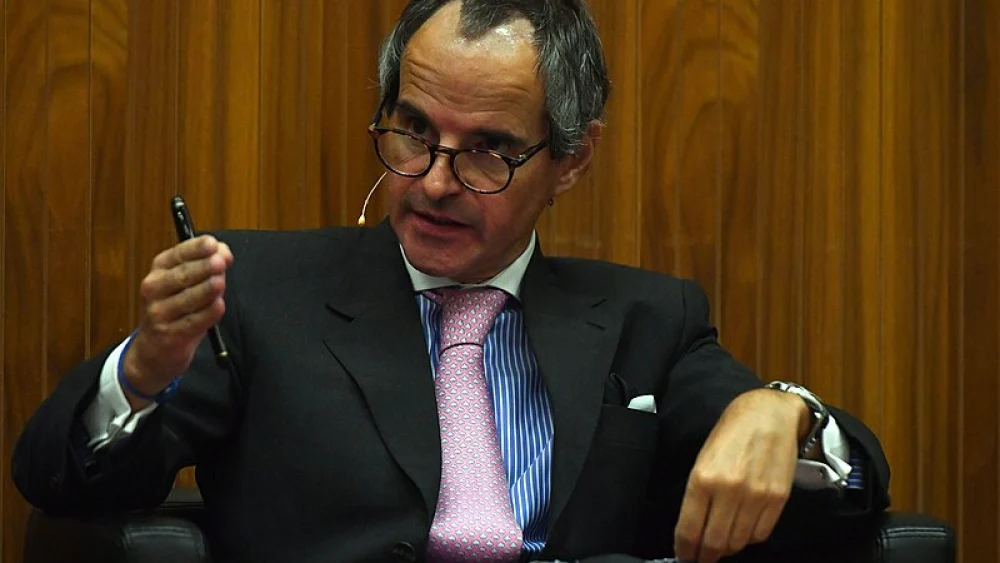
International Atomic Energy Agency Director-General Rafael Grossi in Vienna on Oct. 2, 2019. Credit: Dean Calma/IAEA via Wikimedia Commons.

International Atomic Energy Agency (IAEA) director-general Rafael Grossi told the Austrian daily Die Presse on Saturday that Iran still lacks enough enriched uranium to produce a nuclear bomb.

This, said Grossi, is in spite of the fact that “the Iranians continue to enrich uranium, and to a much higher degree than they have committed themselves to. And this amount is growing by the month,” according to Reuters.

Regarding how long it would take for Tehran to produce a nuclear weapon, Grossi said, “In the IAEA, we do not talk about breakout time. We look at the significant quantity, the minimum amount of enriched uranium or plutonium needed to make an atomic bomb. Iran does not have this significant quantity at the moment.”

Meanwhile, Reuters reported, the Iranian rial fell to a new low against the dollar on Saturday as its economy struggles under the coronavirus and new U.S. sanctions.

The dollar was selling for 304,300 rials on the unofficial market, according to the foreign-exchange site Bonbast.com.

The Israeli defense minister first unveiled the plan in late December 2025.
The contested text describes Israel’s military campaign in Gaza following the Hamas-led Oct. 7, 2023, attack as a “genocide” and states that Israel is a “colonial enterprise built on racism.”
Israel does not have a formal written constitution and Basic Laws have quasi-constitutional status.
The Board of Deputies said that the action “will better enable the authorities to protect our community and others from the threats this organization presents.”
European foreign ministers had gathered in Brussels to discuss a possible ban on imports of goods.
A group led by Rear Adm. Guy Levy met with American and global counterparts, and visited Annapolis to advance cooperation and cadet exchanges.