Newsletter
Newsletter Support JNS

IDF soldier lightly wounded by gunfire in Egypt border incident

The shot was fired during clashes between Egyptian military forces and armed smugglers, reported Arab media.

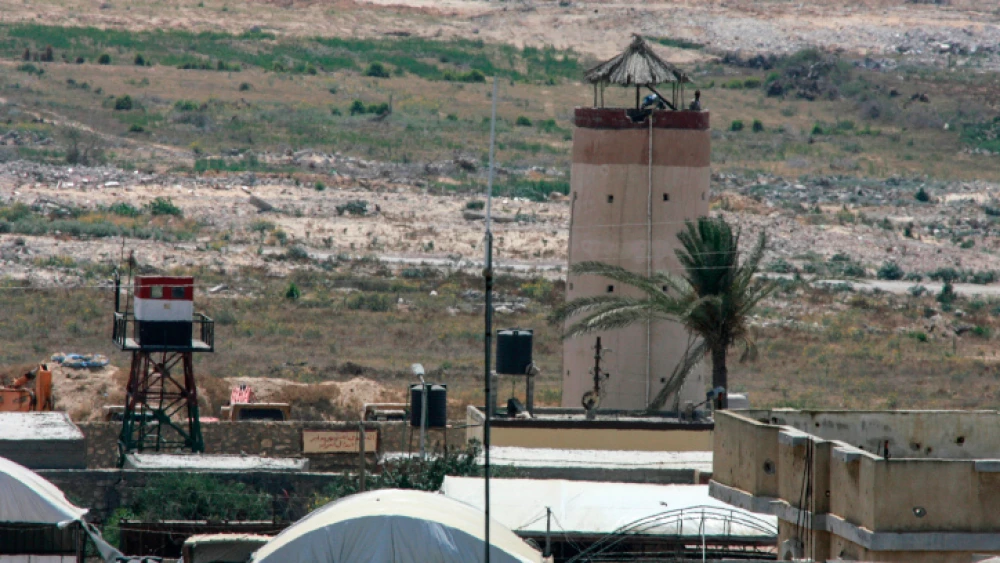
An Egyptian military watchtower, seen from the southern Gaza Strip, on July 2, 2015. Photo by Abed Rahim Khatib/Flash90.

An Israel Defense Forces officer was lightly wounded overnight Monday by a shot fired from Egypt at an Israeli outpost near Mount Harif. The officer was treated on the scene.

At approximately 2 a.m., a contingent from the IDF’s Caracal Battalion received a report about a company commander who had sustained wounds to his hand. Arab media outlets reported that the bullet was fired during clashes between the Egyptian military and armed smugglers.

Al-Arabiyya quoted sources in the Egyptian defense establishment in Sinai who said that smugglers had tried to attack Egyptian forces near the border, and that Egypt’s military has recently been working to locate and destroy smuggling tunnels in the area where the borders of Sinai, the Gaza Strip and Israel converge.

The incident is under investigation, and as of Tuesday morning, the IDF believed that the shot had been fired in error.

This article first appeared in Israel Hayom.

“At a time when some would isolate Israeli academia, UCLA has chosen collaboration,” Eveline Shekhman of the American Jewish Medical Association told JNS.
“The juxtaposition of us being at the United Nations, and all those people walking out while literally their employees helped to perpetuate Oct. 7 was put in a certain frame,” Rabbi Steven Burg of Aish told JNS.
“I want you to listen to my words carefully: One day, and it may not be far away, the Iranian people will be free. Their murderous regime will be toppled by its lies, by its corruption, by its cruelty,” the Israeli prime minister said.
Jason Brodsky, of United Against Nuclear Iran, told JNS that the address carried messages to “the international community, antisemites abroad, state threats against Israel and most especially the Iranian people.”