“Make (Armenia) Great Again—MAGA!”
U.S. President Donald Trump offered his “COMPLETE and TOTAL Endorsement” of Armenian Prime Minister Nikol Pashinyan’s re-election on Truth Social on May 27.
“Nikol completely shares my vision of PEACE and PROSPERITY for Armenia and the entire South Caucasus region,” Trump added.
Why is the leader of the free world concerning himself with a tiny country whose population is just under 3 million—roughly the same as Greater Baltimore—and whose national GDP is smaller than that of every single American state?
It’s because Armenia’s parliamentary election on Sunday will decide whether it continues to pivot towards a geopolitical alignment with the West, benefiting the United States and its allies, or backtracks towards Russian suzerainty.
Opponents of Pashinyan’s Civil Contract Party include the Strong Armenia Party, led by the Russian-Armenian billionaire Samvel Karapetyan, and the Armenia Alliance, led by former President Robert Kocharyan. Both opponents seek to align Armenia more closely with Russia, highlighting extensive trade, a significant Armenian diaspora in Russia and historical ties.
The most recent poll suggested that Pashinyan’s party is on track to secure a victory and even expand its mandate in parliament. But the Kremlin, unhappy at Yerevan’s pro-Western trajectory, is pursuing its playbook of election interference.
“I think there’s evidence that they would like the current [prime minister] to lose his election as a result of this growing relationship with the United States,” U.S. Secretary of State Marco Rubio told the Senate Foreign Relations Committee last week.
Since Armenia’s independence from the Soviet Union in 1991, its relationship with Moscow has been among the closest in the post-Soviet world. Its leaders had all but handed the Kremlin the keys to their country. Russian troops patrolled Armenia’s border, handled customs and operated several military bases, the largest of which remains in Gyumri.
In Armenia, the issue of Nagorno-Karabakh, a mountainous enclave inside its eastern neighbor, Azerbaijan, looms large over politics. Both states claim the region as their historic territory. As the Soviet Union began to dissolve in 1988, ethnic Armenian separatists inside Nagorno-Karabakh pushed for unification with Armenia, despite the territory being officially part of Azerbaijan. Armenia backed the separatists, leading to a full-scale war between the newly independent states of Armenia and Azerbaijan in 1992. When the First Nagorno-Karabakh War ended two years later, Armenia held de facto control of Nagorno-Karabakh and approximately 9% of additional Azerbaijani territory.

Pashinyan came to power in 2018, ousting his predecessor in the bloodless “Velvet Revolution.” Then, his concerns were largely domestic, focusing on reforms, fighting corruption, dismantling monopolies, and establishing fair elections. Russia was less of a concern.
The full-scale conflict with Azerbaijan may have ended, but not the tensions. Baku seethed at its defeat and the expulsion of Azerbaijanis from Nagorno-Karabakh, and plotted revenge. Both countries spent heavily on their militaries, but Azerbaijan, with its significantly greater resource wealth, was able to significantly modernize its military with the latest technologies.
According to the Stockholm International Peace Research Institute (SIPRI), Russia was the largest supplier of weapons to both sides between 2011 and 2020—making up approximately 94% of Armenia’s arms imports and 60% of Azerbaijan’s.
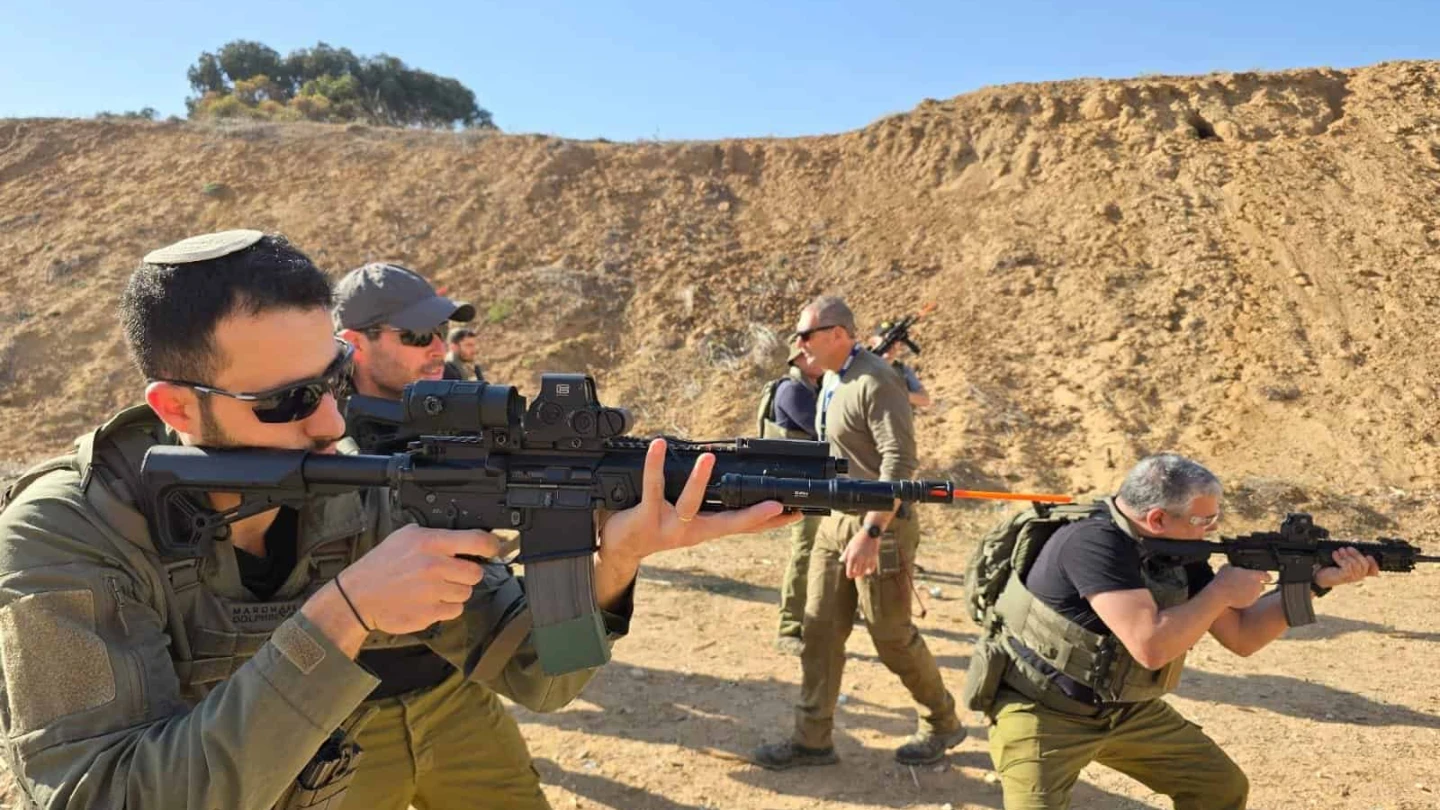
Azerbaijan’s second-largest arms supplier was Israel, accounting for 27% of its arms imports from 2011-2020 and nearly 70% from 2016-2020. This unlikely cooperation between the Jewish state and a post-Soviet Shia Muslim republic did not go unnoticed, especially by the Armenians, and Armenia’s relationship with Israel suffered as a result.
Fighting reignited again in 2020 and 2023. Now, Azerbaijan had the military edge and regained control of the entire Nagorno-Karabakh region and its Armenian-held territories. Pashinyan tried to get Russia and the Russia-led Collective Security Treaty Organization to intervene, but received only “concern” and “condolences.”
By 2023, Russia was preoccupied with its invasion of Ukraine, leaving it in no position to respond to a conflict in the Caucasus.
While Pashinyan’s rhetoric toward Russia had already begun to change, after 2023, he began openly questioning Armenia’s alliance with Russia, calling it a “strategic mistake” and building a rapport with the United States and Europe. Soon, Russia’s international prestige would suffer further blows as it failed to stop the downfalls of Syrian President Bashar Assad and Venezuelan President Nicolás Maduro, or meaningfully defend its ally Iran from attack by Israel and the United States.
Seeing both Armenia and Azerbaijan seeking to distance themselves from Russia, Trump invited Pashinyan and Azerbaijan’s President Ilham Aliyev to the White House in August. With Trump proudly presiding, the two leaders initialed a joint declaration of peace and agreed to establish the Trump Route of International Peace and Prosperity (TRIPP), a transit corridor linking Azerbaijan to its Nakhchivan exclave through southern Armenia.
Trump rightfully touts his accomplishment of bringing peace to the region after nearly 40 years of conflict, but the peace agreement was only initialed, not signed—a diplomatic step short of ratification. According to the 2026 Annual Threat Assessment of the U.S. Intelligence Community, Aliyev demanded that Armenia amend part of its constitution “to remove a reference that he characterizes as claiming Nagorno-Karabakh is part of Armenia” before he would sign the agreement.
Pashinyan has expressed support for revamping the Armenian constitution, but it would require a parliamentary vote that could only occur if he wins re-election.
In a politically risky move, he has sought to decouple the fate of Nagorno-Karabakh from Armenian national ambitions, seeing it as an impediment to economic progress. In his campaign, he describes “Real Armenia,” which excludes Nagorno-Karabakh. His rhetoric on the campaign toward the Artsakh Republic—the name given to the government of Nagorno-Karabakh by Armenian separatists—has been dismissive, often hostile. Videos of him sparring with Karabakh refugees have proliferated online.
“Abandoning Karabakh was my greatest service to Armenia … we were put in a trap, and if we continued on that path, we would lose Armenia and Armenian statehood,” Pashinyan said at a recent rally. “We have no right to pass this bleeding wound from generation to generation; we must pass peace on to our children.”
As Rubio described, Russia has been displeased by Pashinyan’s direction. Citing interviews with five Western intelligence officials, Reuters reported that Russia had stepped up online disinformation campaigns to discredit Pashinyan’s government. Overseen by the Kremlin’s Directorate for Strategic Cooperation and Partnership, it includes the Social Design Agency, which is sanctioned in Europe, the United Kingdom and the United States for spreading disinformation about Ukraine; and the Kremlin-affiliated bot network “Storm-1516,” a group tied to spreading fake news and disinformation in U.S. elections.
Media watchdog organization NewsGuard reported on May 28 that the Russian-linked Matryoshka campaign—named after the Russian nesting doll—created at least 31 false claims about Pashinyan designed to look like reputable news websites in a span of one week.
The Kremlin has also ratcheted up the pressure on Armenia—banning imports, and threatening to cut off gas deliveries and suspend its membership within the Russia-led Eurasian Economic Union.
“We are currently living through everything that is happening in respect of Ukraine,” Russian President Vladimir Putin said of Armenia during a May 9 press conference, implying a potential Russian invasion. “And how did it start? It started with Ukraine’s joining or attempting to join the European Union.”
Trump is correct to watch the election closely. A significant victory for Pashinyan would have wide-ranging effects, including for his legacy as a peacemaker.
The White House’s efforts to finally bring peace to the region and to integrate Armenia as a crossroads for international trade would not only benefit the South Caucasus but also the United States and its allies, allowing them to access the vast natural wealth of the republics of Western and Central Asia. This is significant during a time when U.S. allies are striving to break their dependence on Russian and Iranian oil and protect themselves from the disruptions caused by Iran’s actions in the Strait of Hormuz.
Israel, too, would benefit, as 46% of its oil imports come from Azerbaijan and 25% from Kazakhstan, and a more direct route through Armenia, which until now has been impossible due to the political situation, could eventually be used.
The United States and Europe are closely monitoring the election, not to tip the scales toward Pashinyan but to ensure that Russia’s nefarious election interference tactics are unsuccessful.
Likewise, Europe and the United States must take Putin’s threats against Armenia seriously, and provide credible security and economic guarantees to Armenia and the South Caucasus.