


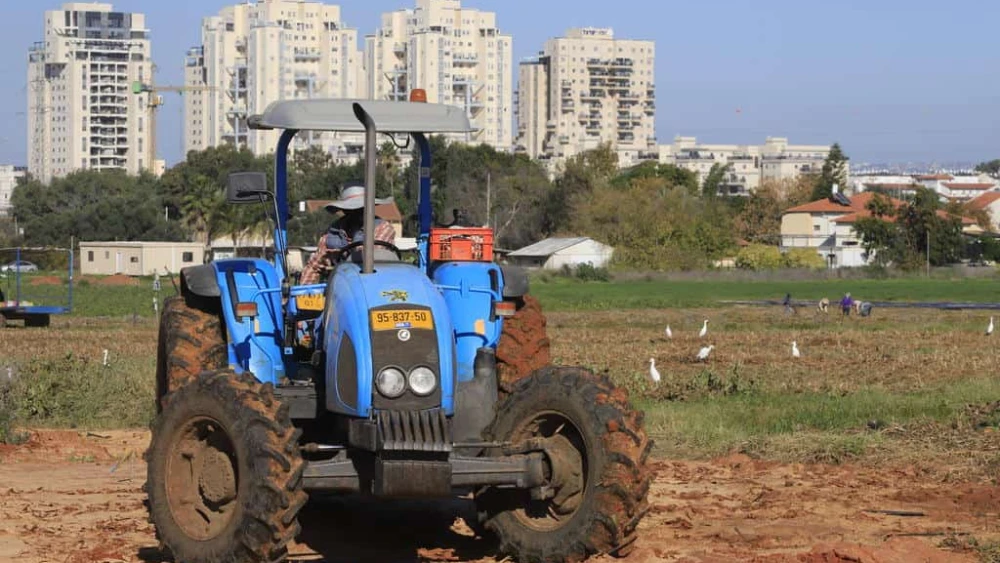
Despite the war in Gaza, some 12,000 foreign workers have returned to Israel, an Interior Ministry official told Knesset lawmakers on Tuesday.
Inbal Mashash, the director of the Population and Immigration Authority’s Foreign Workers Administration, testified to the Knesset Committee on Foreign Workers that the 12,000 are made up of new laborers as well as workers who had returned to their homelands after Hamas’s Oct. 7 massacre in the northwestern Negev.
Mashash said that the first 100 of an eventual 10,000 workers had arrived from Sri Lanka and that Israeli officials are in talks with other countries to attract more laborers, primarily in construction and agriculture. Among the countries Israel has reached out to are India, Kenya, Moldova, Ecuador and Malawi.
Before the war, the majority of the foreign laborers working in agriculture were from Thailand. But 10,000 working on farms near Gaza and the Lebanese border went home. Others working in safer areas such as the Jordan Valley and central Israel also opted to return to Thailand after Hamas terrorists killed 39 Thai workers and took 32 hostage.
Israeli agriculture is facing staggering losses in production and manpower. Before October 7, Israel had 29,900 foreigners, mostly Thais, working in farms, orchards, greenhouses and packing plants. Nearly all returned to Thailand.
Farmers also employed 10,000-20,000 Palestinians depending on the season, but they are currently denied entry into Green Line Israel.
Israeli workers who might have filled the gaps have been called up for military reserve duty.
A survey of 389 farmers conducted by the MIGAL Galilee Research Institute from Oct. 26-Nov. 5 found that 89% of Israeli farmers had experienced some form of damage, and 96% expect more during the next three months. While farmers in the Gaza and northern regions saw the greatest disruption, all areas were severely affected, and the impact was expected to continue for months to come.
When asked to estimate their expected losses, farmers on average predicted a 35% drop in both production and revenue. But farmers in the area near the Gaza border—regarded as Israel’s breadbasket—projected on average a 70% loss of produce and 69% loss of income.



