An Israeli military investigation into two anti-tank missiles that detonated near Ghajar on the Lebanon border last month has determined that their target was an Israeli military patrol.
According to Kan News, which reported the finding on Tuesday, the attack was carried out by a Palestinian organization in Lebanon, not Hezbollah.
פרסום ראשון: ירי הנ"ט לפני חודש בגבול בצפון: שני טילי הנ"ט כוונו לעבר סיור רכוב של לוחמי צה"ל שנע סמוך לכפר רג'ר | הדיווח של @roysharon11 ב-#חדשותהערב pic.twitter.com/gpZ2vzENc3
— כאן חדשות (@kann_news) August 8, 2023
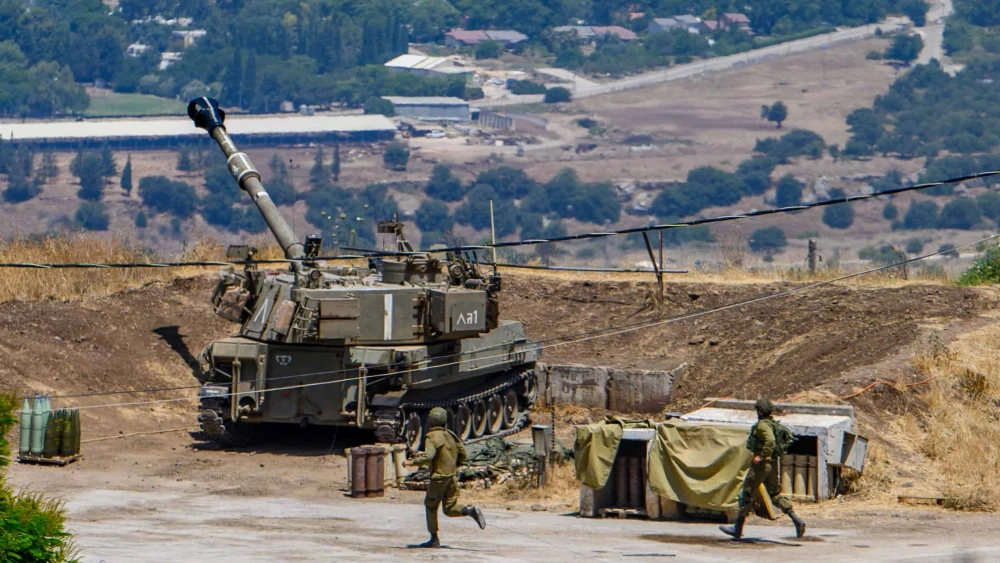
IDF soldiers arrived near the border town of Ghajar on July 6 after reports of an explosion in the area. The military, which originally believed the cause was mortar fire, responded by shelling the area from which the attack had originated.
However, after studying fragments of the projectiles, some of which were in Israeli and some in Lebanese territory, the IDF determined that they were from two guided anti-tank missiles. An IDF mounted patrol, comprising some 10 soldiers in three vehicles, was the target of the attack, according to Kan.
Had the missiles hit the patrol, the incident would likely have triggered a serious escalation, according to the report. Tensions at the border have been high in recent months following an ongoing series of Hezbollah provocations.
During a visit to the border with Lebanon on Tuesday, Israeli Defense Minister Yoav Gallant warned Hezbollah not to test the Jewish state.
Gallant toured the Mount Dov region with IDF Northern Command head Maj. Gen. Ori Gordin and other senior officers, where he was updated on “defensive efforts being made along the border and the progress of the construction of the barrier,” according to a statement from his office.
In a Hebrew-language video statement, Gallant issued a stark warning to Hezbollah Secretary-General Hassan Nasrallah, telling him “not to make a mistake.”
“If ... an escalation or conflict develops here, we will send Lebanon back to the Stone Age,” said Gallant. “We will not hesitate to use all our power and erode every inch of Hezbollah and Lebanon if we have to,” he added.
“Make no mistake: We don’t want war, but we are ready to protect our citizens, our soldiers and our sovereignty,” he said.