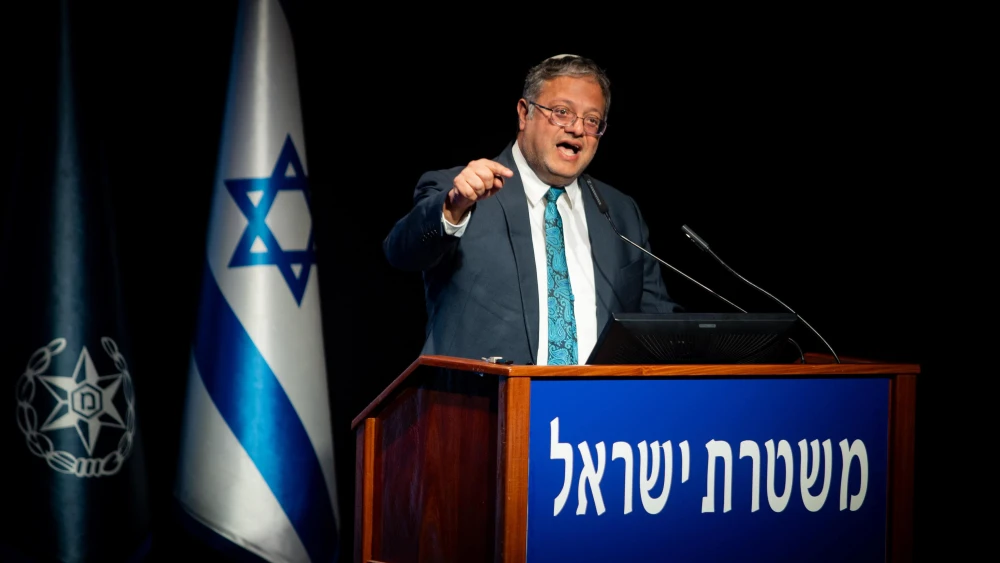
Israeli National Security Minister Itamar Ben-Gvir vowed on Thursday to suspend his role in Israeli Prime Minister Benjamin Netanyahu’s governing coalition if Jerusalem agrees to a temporary ceasefire with Hezbollah.
If a truce is signed, Ben-Gvir’s Otzma Yehudit Party would “relieve itself of any commitment to the coalition,” including voting in the Knesset and attending cabinet meetings, the right-wing leader warned.
“The most basic and understandable thing is that when your enemy is on his knees, you do not allow him to recover, but work to defeat him,” Ben-Gvir said.
He added that a truce “conveys weakness, endangers the security of your citizens and proves that you do not intend to win.”
Should a temporary ceasefire in Lebanon become permanent “as part of an ‘outline’ of some sort, all ministers and Knesset members from Otzma Yehudit will resign from the government and coalition,” Ben-Gvir added.
The United States, Australia, Canada, European Union, France, Germany, Italy, Japan, Saudi Arabia, United Arab Emirates and Qatar called jointly on Wednesday evening for an “immediate 21-day ceasefire across the Lebanon-Israel border to provide space for diplomacy towards the conclusion of a diplomatic settlement.”
Minutes before the announcement, U.S. President Joe Biden and French President Emmanuel Macron released a similar, joint statement.
On Thursday, other members of Israel’s coalition government rejected the proposal, which made no mention of Hezbollah terror.
Netanyahu has pushed back against reports that Jerusalem was about to agree to the ceasefire terms, saying that “this is an American-French proposal that the prime minister has not even responded to.”
In a call with reporters Wednesday night, two senior U.S. officials said that Israel and Lebanon “are familiar with the text, and we’ll let them speak with their actions of accepting the deal in the coming hours.”
“I can share that we have had this conversation with the parties and felt this was the right moment to issue the call based on our discussion,” one of the senior officials said.
Israel has escalated attacks on Hezbollah since adding the return of evacuated civilians to the north as an official war goal on Sept. 17.
Hezbollah has attacked the Jewish state nearly daily since Oct. 8, firing thousands of rockets, missiles and drones. The attacks have killed more than 40 people and caused widespread damage. Tens of thousands of civilians remain internally displaced due to the violence.