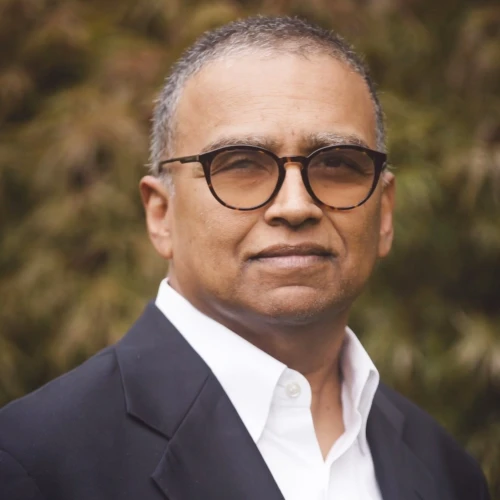
Minister of Economy and Industry Nir Barkat, who is responsible for Israeli trade, described himself as “extremely optimistic” about Israel’s economy at the JNS International Policy Summit in Jerusalem on Monday.
In conversation with JNS CEO Alex Traiman, Barkat predicted total trade to rise from its current $150 billion to $1 trillion in 15-to-20 years, an annual growth rate of about 10%.
“When we get there, Israel’s a superpower,” Barkat said.
The minister also discussed the economic impact of 18 months of war and the future of the Abraham Accords, saying that the framework is ready “to burst and expand” to include Saudi Arabia and other countries, specifically mentioning Indonesia.
As for the wartime economy, Barkat said that as in all conflicts, there is a “dip” in growth as military reservists are called up to fight and the country puts itself on a war footing. But Israel is “exiting” that phase and there are strong signs of economic growth and “high interest” from the global marketplace.
He pointed to recent positive comments from Mathias Cormann, the secretary-general of the Organization for Economic Co-operation and Development (OECD), who visited Israel in early April and praised the country’s economic resilience.
Asked how Israel will scale up to reach $1 trillion in annual trade given its limited manufacturing ability, Barkat acknowledged that most of Israel’s exports are services, namely software. But Israel knows how to leverage the manufacturing abilities of other countries to grow, he said.
Israel leads in areas such as health tech, agrotech, food tech, climate tech and advanced manufacturing, he said. “In health-tech sciences, we have 2,000 Israeli startups. That’s an absolute number, second to the U.S. alone,” Barkat said.
Asked by Traiman about the limitation on the entry of Palestinian workers from Judea and Samaria following the Oct. 7 war, and their replacement with labor from places such as India and China, Barkat said that Israel wants workers from peaceful countries.
The Palestinian Authority is paying people to murder Jews, and as long as its “pay-for-slay” policy continues, there’s no entry for Arabs from the P.A., he said.
Another reason Israel brings in foreign workers is that it wants to increase the proportion of Israel’s labor force in high-tech. Currently, it’s 10% of the workforce but it needs to rise to 25%.
“We need to dramatically upgrade the capabilities of the Israelis and complement that with a few hundred thousand low-skill employees,” Barkat said.
Of U.S. President Donald Trump’s tariff plan, Barkat expressed confidence the situation would resolve itself. “We’re fortunate to be very friendly, our team. Israel is very open and we feel very comfortable discussing the challenges we have with the American team,” he said.
He proposed to the U.S. administration that it look at Israel as the 51st state. To reach that “level of openness and collaboration” would signify a new level in the two countries’ economic relationship, Barkat said.