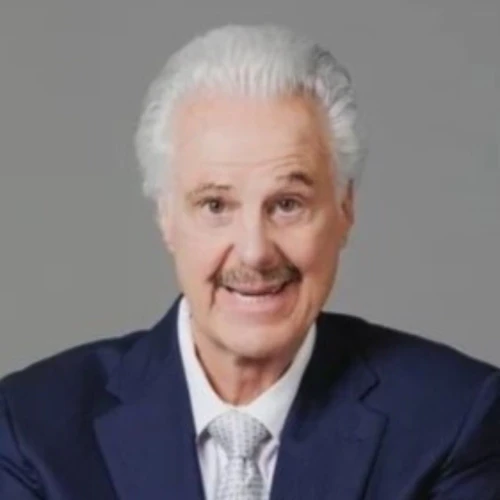
Hezbollah Secretary-General Naim Qassem declared on Monday that the Iranian-backed terror organization would reject any attempts to justify an extension of the timeline for the withdrawal of Israeli forces from Southern Lebanon.
“What comes after the period given for Israel’s withdrawal? Israel has to withdraw because the 60 days are over. We do not accept any justification to extend for one moment or one day,” he said in a recorded televised address.
The remarks follow a White House statement on Sunday that the U.S.-monitored arrangement between Lebanon and Israel will be extended until Feb. 18.
On Friday, Jerusalem announced that its military pullout would exceed the 60-day deadline set in the ceasefire agreement with the terrorist group that expired on Sunday.
The Israeli Prime Minister’s Office said in a statement: “The IDF’s withdrawal process is conditional on the Lebanese Army deploying in Southern Lebanon, and fully and effectively enforcing the agreement, while Hezbollah withdraws beyond the Litani [River].
“Since the ceasefire agreement has not yet been fully enforced by the State of Lebanon, the phased withdrawal process will continue, in full coordination with the United States,” the PMO statement continued.
Jerusalem “will not endanger its communities and citizens, and will insist on the full implementation of the objective of the fighting in the north, which is the safe return of residents to their homes,” it added.
Qassem claimed that the terror group had received information indicating that Washington initially proposed to Lebanese officials an extension of the ceasefire agreement with Israel to Feb. 28, a suggestion he said was rejected.
During a meeting with U.S. Ambassador to Lebanon Lisa Johnson, Lebanese caretaker Prime Minister Najib Mikati affirmed his country’s commitment to adhering to the ceasefire agreement until Feb. 18.
Qassem warned that any consequences arising from a delay in the withdrawal would fall on the United Nations, the United States, France and Israel. The terror leader also asserted that the “resistance” reserves the right to respond as it sees fit to what he described as the ongoing “occupation.”
However, he also claimed that Israel violated the agreement 1,350 times and that Hezbollah chose not to respond.
Hundreds of Lebanese, including Hezbollah supporters, attempted to return to the country’s south on Sunday.
IDF soldiers stationed in the area fired warning shots at the approach of the Hezbollah supporters, some of whom carried the group’s flag and banners of slain terror senior leader Hassan Nasrallah, the Israeli military confirmed in a statement on Sunday afternoon.
“Several suspects who posed a credible threat were detained near IDF forces. The suspects are currently being interrogated in the area,” it said. “The IDF will remove any threat to the State of Israel and IDF forces.”