


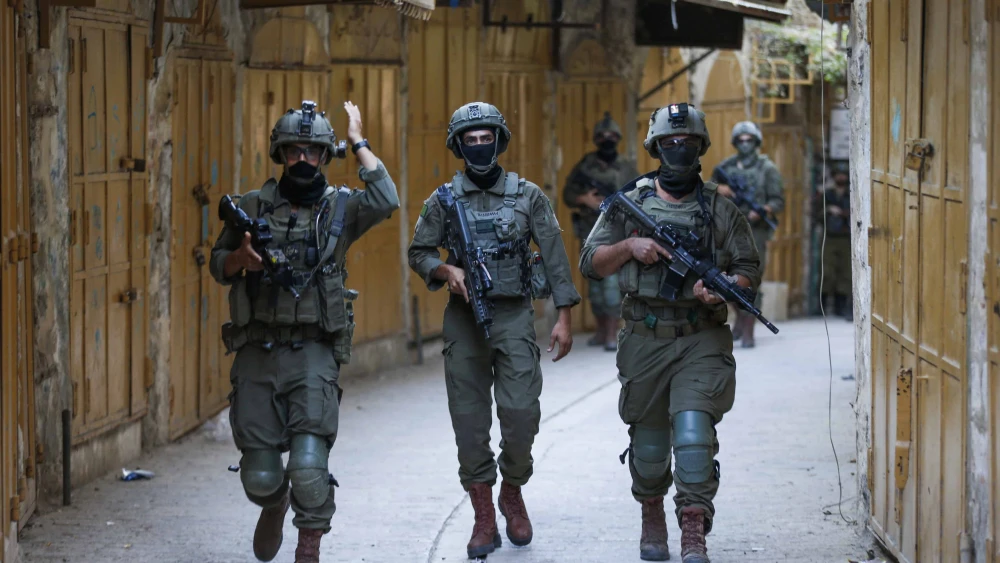
The Israel Defense Forces conducted a large-scale counter-terror operation in the Samaria city of Ramallah on Tuesday targeting a money exchange business that transferred funds to Hamas terrorists.
Five wanted terror suspects were arrested and hundreds of thousands of shekels identified as terror funds were seized during the morning raid, according to the military.
⭕️ IDF Targeted Raid on Money Exchange Business Funding Hamas
— Israel Defense Forces (@IDF) August 26, 2025
IDF and Israel Border Police forces, guided by IDF & ISA intelligence, conducted a targeted raid on a currency exchange in Ramallah transferring funds to Hamas.
During the activity, five wanted individuals suspected…
The purpose of the cash laundered through this currency exchange establishment was “to advance terrorist activity against the State of Israel and its civilians.”
Palestinian media reported that several people were wounded by gunfire during the operation.
הפלסטינים מדווחים שכוחות צה"ל החלו לשגת מרמאללה וכי בין העצורים חלפני כספים pic.twitter.com/9Fm5C39U49
— איתי בלומנטל 🇮🇱 Itay Blumental (@ItayBlumental) August 26, 2025
“This activity joins additional activities that the IDF carries out in the Judea and Samaria area, in order to degrade the terrorist organizations’ financial infrastructure and to disrupt their capabilities to fund and advance terrorist activities against the State of Israel and its civilians,” the IDF said.
Israeli Defense Minister Israel Katz stated earlier this month that the IDF will remain in Samaria camps through 2025, revealing that raids have cut terror alerts in Judea and Samaria by 80%.


