Newsletter
Newsletter Support JNS

IDF exposes, neutralizes explosives in southern Golan Heights

The devices were found during bomb sweeps of the demilitarized zone where an Israeli field clinic treated Syrian civilians wounded during their country’s seven-year civil war.

Israeli troops patrol the Israeli-Syrian border on Aug. 3, 2020. Photo by Basel Awidat/Flash90.

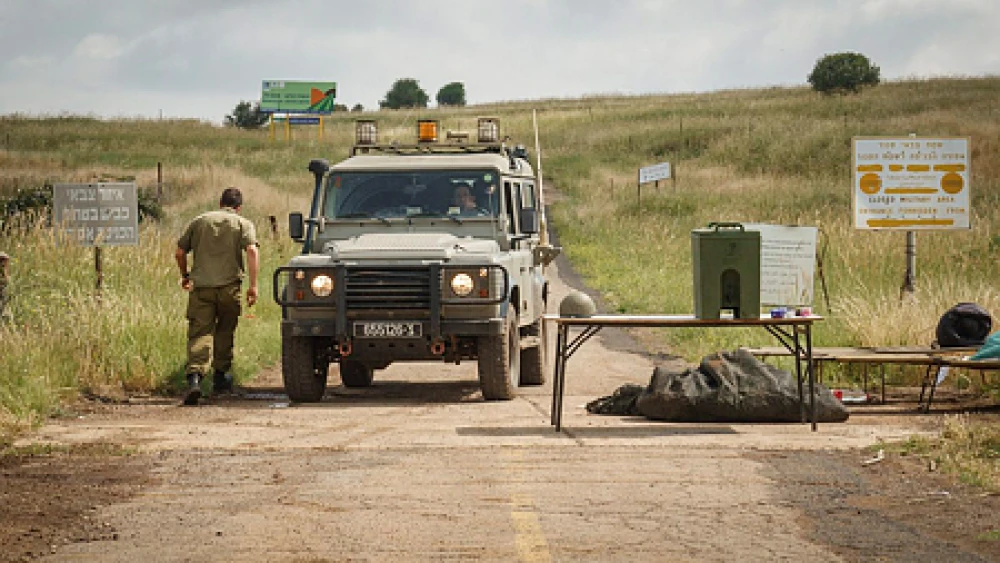
Israel Defense Forces troops on Tuesday discovered improvised explosive devices in the southern Golan Heights near the Syrian border, the military announced.

The bombs were exposed and neutralized during surveillance operations to locate explosives in the demilitarized zone where an IDF field clinic treated Syrian civilians wounded during their country’s seven-year civil war. The clinic, called Mazor Ladach (“relief for the suffering”), was launched in 2013 as part of the IDF’s “Operation Good Neighbor” and shut down in August 2018.

The IDF is currently investigating the possibility that Iran’s proxy terrorist organization, Hezbollah, which has infrastructure in the Syrian Golan and enjoys the protection of the Syrian military, played a role in placing the explosives, reported Ynet.

In August, the IDF thwarted an attempt by terrorists to plant bombs in the same area.

“Special forces carrying out an ambush near a military post in the southern Golan Heights identified a squad of several terrorists planting explosives near the border fence. An IDF force and IDF aircraft fired on the four-man squad simultaneously, hitting them,” the Israeli military revealed at the time.

Then, as now, it stated that it “considers the Syrian regime responsible for any action taken in its territory and will not allow any violation of the sovereignty of the State of Israel.”

“Even if any Arab or Palestinian thinks that injustice has befallen them because of the existence of the state of Israel, moving on and forgetting about the injustice is much more in their interest than looking backwards,” Hussain Abdul-Hussain, author of The Arab Case for Israel, told JNS.
A month after his father was killed in a Queens park, Tzvi Yonie Itzkowitz told JNS that his family believes that the still-unsolved killing was motivated by Jew-hatred.
“The gravity of the situation and its widespread impact on our school community make this not the right time for a celebration,” the school stated in an email to parents.
The department said New York may be unlawfully discriminating against religious organizations by requiring long-term care facilities to accommodate residents based on gender identity without providing comparable faith-based exemptions.
“We are demonstrating that we can transform moments of division into opportunities for connection, resilience and positive action,” organizer IMPACT CEO Aaron Herman said.
Sruly Meyer said he didn’t know what to expect, but figured that he could take the heat.
