Newsletter
Newsletter Support JNS

Woman shot in leg by IDF troops dies in Palestinian hospital

The Palestinian woman failed to heed warning shots and calls to stop, according to the Israeli military.

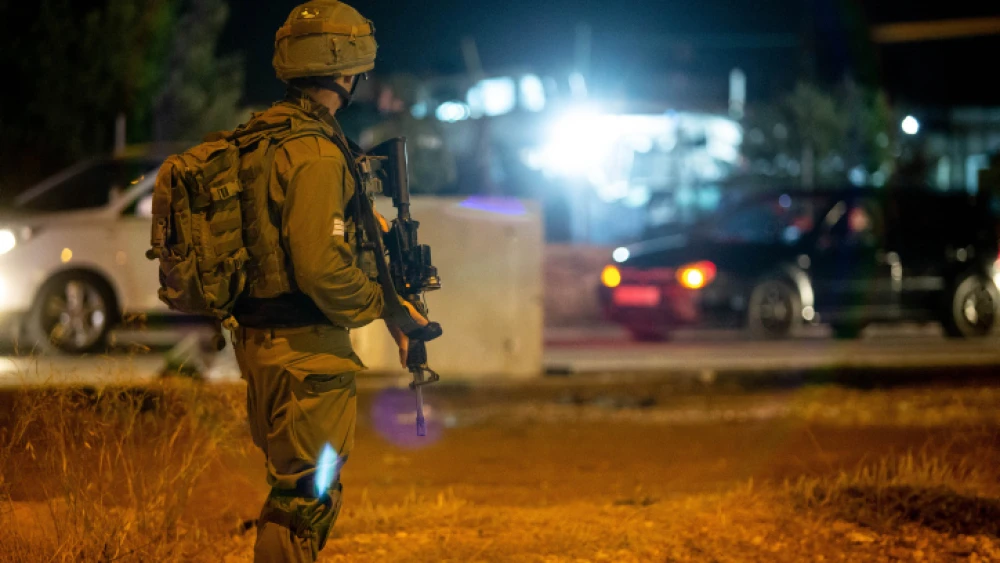
An Israeli soldiers near the scene of a suspected terror attack at the entrance to the village of Husan, west of Bethlehem, on June 23, 2018. Photo by Aharon Krohn/Flash90.

A Palestinian woman was killed by Israeli forces near the village of Husan in Judea on Sunday after failing to heed warning shots and calls to halt, according to Israeli media reports.

The soldiers initiated a standard arrest procedure, including firing warning shots into the air, after the woman approached them in a “suspicious manner,” according to the Israel Defense Forces.

When she failed to stop, the soldiers fired at her lower body. She was treated by the troops on the scene before being evacuated to a hospital in Beit Jala, where she died of her wounds, according to the Palestinian Health Ministry.

The incident is under investigation, according to the IDF.

Israeli security forces have been placed on high alert amid a wave of deadly terror attacks, with some 1,000 soldiers helping to bolster the Israel Police and additional combat battalions being deployed to the West Bank and Gaza border.

The New York City Police Department told JNS that the suspect is being charged with “attempted murder as a hate crime, attempted murder, assault as a hate crime, two counts of assault and two counts of criminal possession of a weapon.”
The teacher alleged Portland Public Schools allowed Palestinian flags and anti-Israel displays while administrators told him that displaying “an Israeli flag or related symbols would be too disruptive.”
The Islamic Republic’s foreign minister threatened on Friday to kill a U.S. soldier for every Iranian killed in the war, as Trump speculated that regime leaders might “cry uncle” or “go into a cave and hide.”
Art historian Jacob Wisse told JNS that he is concerned “when museums, which I value for the rigor, depth and richness of their curatorial voice, fall back, lazily, on untruths.”
“Shame on Mamdani and those who continue to parade this dangerous rhetoric,” Daniel S. Mariaschin of B’nai B’rith International told JNS.
“Every community deserves a seat at the table when healthcare policy is being shaped,” Eveline Shekhman, CEO of the American Jewish Medical Association, told JNS.
