


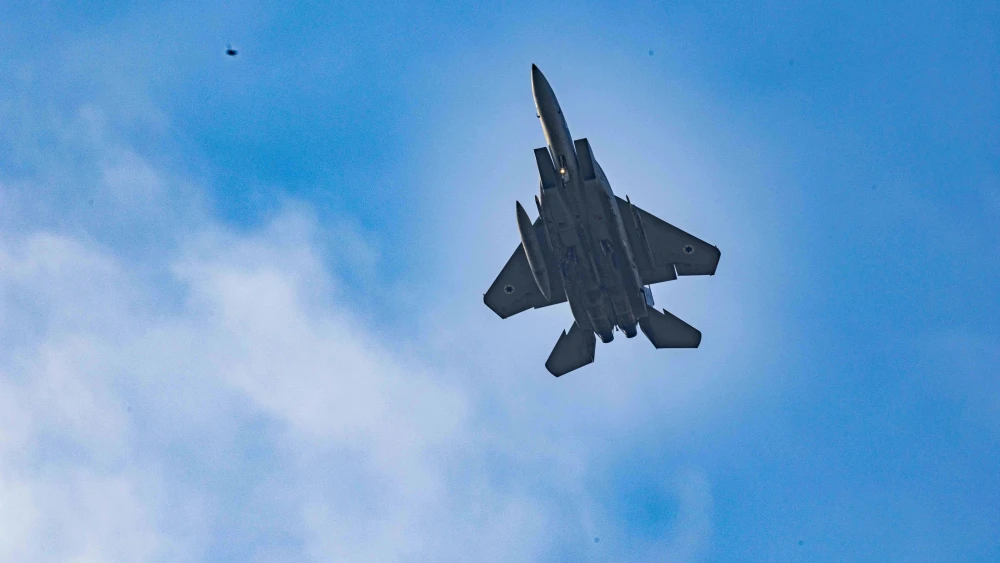
The Israel Defense Forces launched a wave of attacks on Hezbollah targets in Lebanon late on Sunday night, targeting multiple military sites and weapons storage facilities, the military stated.
“A short time ago, the IDF attacked several military sites, storage and production infrastructure for strategic arms, and a rocket launch site belonging to the Hezbollah terror organization in the Beqaa [Valley] region and Southern Lebanon,” the military said.
“The presence of these weapons and the activities of the Hezbollah terrorist organization in the area constitute a blatant violation of the understandings between Israel and Lebanon,” the statement continued, referencing Jerusalem’s November ceasefire deal with Beirut.
“The IDF will continue to operate to eliminate any threat to the State of Israel,” it concluded.
The IDF assault on Hezbollah terrorist infrastructure came mere hours before Tom Barrack, the U.S. envoy who delivered Secretary of State Marco Rubio’s roadmap for Hezbollah disarmament, was due back in Beirut, where he is expected to receive Lebanon’s response.
Lebanon’s L’Orient Today reported on Sunday afternoon that Hezbollah has delayed conveying its position to government representatives, as well as to its own ally in parliament, Speaker Nabih Berri. Meanwhile, Lebanese President Joseph Aoun, Prime Minister Nawaf Salam and Berri have declared their commitment to bringing all arms under state control.
On Nov. 26, 2024, Jerusalem and Beirut signed a ceasefire deal aimed at ending more than a year of cross-border clashes between the IDF and Hezbollah. The Iranian-backed group began attacking the Jewish state in support of Hamas following the terror group’s massacre on Oct. 7, 2023.
Since the truce, Jerusalem has carried out frequent operations aimed at preventing Hezbollah from reestablishing its capabilities in Southern Lebanon.
Hezbollah Secretary-General Naim Qassem on Sunday seemed to reject the possibility of disarmament due to what he described as “Israeli threats,” warning of a “confrontation.”
“We are committed to our rights, and if required to attain our rights, it is required that we are martyred or achieve victory, we are ready for either of the two good outcomes. But there is no room for surrender,” he said.
Hezbollah will only discuss “national security and defense strategy” after the Israel Defense Forces fully withdraws from Lebanon, stops “aggression,” releases all terrorists taken prisoner during last year’s fighting and allows for the rebuilding of Southern Lebanon, he said.
In April, Hezbollah declared its readiness to conduct talks with Beirut on a “national defense strategy” following the fighting with Israel, with experts warning that the terror group would leverage its remaining power to integrate its operatives into the Lebanese state apparatus.


