


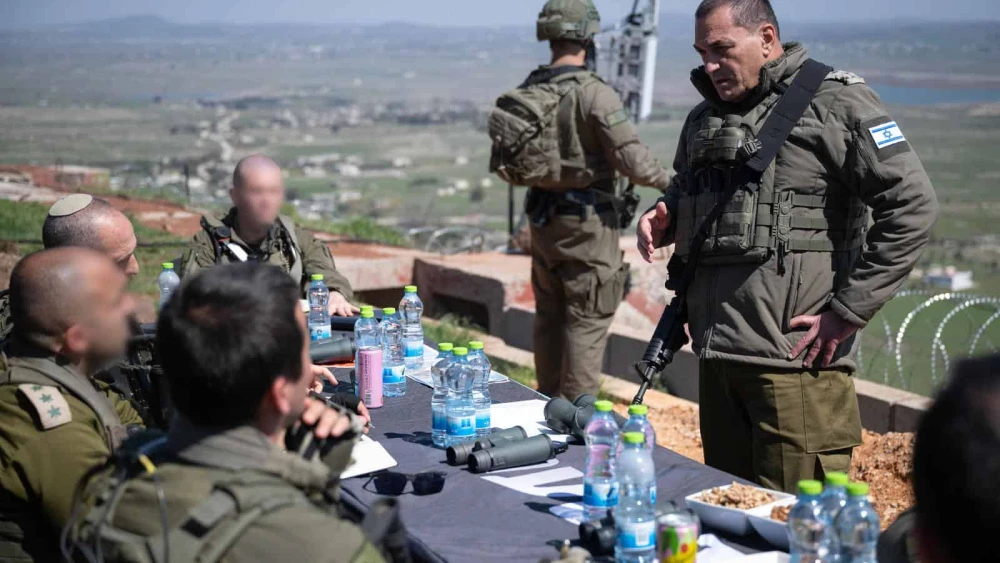
The Israel Defense Forces attacked the Tadmur base at the Palmyra military airport and the nearby T-4 airbase in central Syria early on Saturday morning.
The military targeted “strategic capabilities that remained” following the overthrow of longtime dictator Bashar Assad by Al-Qaeda-linked forces on Dec. 8, the IDF said.
T-4 is Syria’s largest airbase and has been linked to Iran’s Islamic Revolutionary Guard Corps. There have been several strikes on the base in recent years attributed to Israel.
“The IDF will continue to act in order to remove any threat posed to the citizens of the State of Israel,” the army said.
צה"ל תקף לפני זמן קצר יכולות אסטרטגיות צבאיות שנותרו במרחב הבסיסים הצבאיים הסורים תדמור ו-T4.
— צבא ההגנה לישראל (@idfonline) March 21, 2025
צה״ל ימשיך לפעול על מנת להסיר כל איום על אזרחי מדינת ישראל pic.twitter.com/NQzQXJjz7f
On Tuesday, the IDF attacked artillery positions in the Khan Arnabah area in southern Syria, close to the border with Israel. “The IDF will not allow a military threat to exist in southern Syria and will act against it,” said the army.
On Monday night, the IDF also targeted command centers containing weapons and military vehicles in southern Syria. The sites belonged to the “old Syrian regime” led by Assad and were being refurbished for use.
On March 13, the Israeli Air Force carried out a strike on the headquarters of the Palestinian Islamic Jihad terrorist organization in Damascus.
Three days earlier, Israeli fighter jets struck radars and other detection equipment in southern Syria. Additionally, the IAF targeted command positions and sites containing weapons belonging to the former Assad regime.
Last month, Israeli Foreign Minister Gideon Sa’ar called for more “realistic expectations” regarding the new Syrian government, which he described as “a terrorist group from Idlib.”
Speaking at a press conference with E.U. officials in Brussels, Sa’ar said, “I hear talks of regime transition in Syria. This is ridiculous.”
The government of Ahmed al-Sharaa, a former Al-Qaeda terrorist known also as Abu Mohammed al-Jolani, “is a jihadist Islamist terror group from Idlib, that took Damascus by force,” he said.
After the fall of Assad in December, Israel seized the U.N.-patrolled buffer zone in the Syrian Golan Heights set up under a 1974 ceasefire agreement. Syria’s new authorities and U.N. officials have called for Israel to withdraw.
Israeli Prime Minister Benjamin Netanyahu said that Jerusalem would not allow al-Sharaa’s army or other insurgent groups to “enter the area south of Damascus.
“Take note: We will not allow HTS forces or the new Syrian army to enter the area south of Damascus,” said Netanyahu, referring to Syria’s new regime as well as Hayat Tahrir al-Sham, the group headed by al-Sharaa.



