


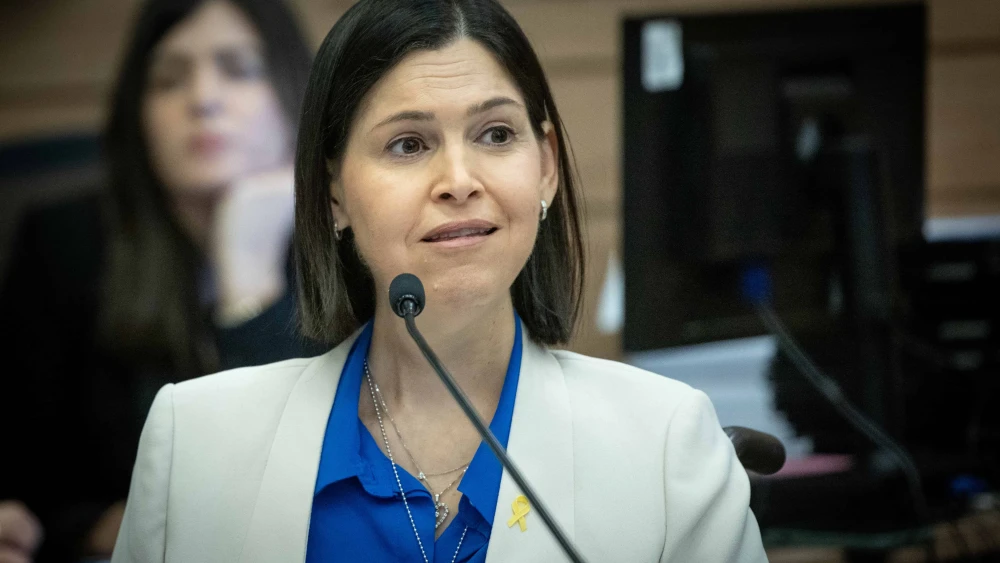
An Israeli opposition lawmaker has introduced a bill aimed at easing the process for families of soldiers who die by suicide to receive state recognition and benefits.
The bill, submitted by Yesh Atid lawmaker Karine Elharrar, would amend the Fallen Soldier’s Families (Pensions and Rehabilitation) Law, 1950, creating an additional pathway for recognizing “exceptional cases.”
Under current law, an Israel Defense Forces soldier or discharged servicemember can be recognized if they die from an injury or illness sustained during and as a result of IDF service—a designation that can entitle surviving family members to state support.
The legislation is scheduled to be brought before the Knesset plenum for an initial vote next week, following its presentation to the Ministerial Committee on Legislation on Sunday.
The explanatory notes to Elharrar’s bill cite a rise in suicides in recent years among soldiers in both regular and reserve service, attributing it to “difficult combat situations” and “intense” military service during the Redemption War, which followed Hamas’s Oct. 7, 2023, massacre.
“In many cases, crisis situations and symptoms develop and are only discovered after military service and not during it, which may also make it difficult to prove the conditions for recognition ... and to provide assistance to family members under the law,” the notes state.
Elharrar told JNS on Tuesday that she had been moved by the stories of the family of Roi Wasserstein, 24, from Netanya, who committed suicide after serving more than 300 days in reserve duty, and of U.S.-born Josh Boone, 32, who also died following an extended period of reserve service.
“At the end of the day, there is no difference between a physical wound and a psychological wound. The difference is only in the way it is recognized,” Elharrar told JNS.
“If someone was physically wounded, hospitalized, and his body gives in 200 days after his release from the army, he will still be recognized as a soldier who fell for his country. If a soldier was psychologically wounded and carries that wound for 200 days after his release until giving in, the army will not recognize him,” she said.
“In my opinion, it’s a mistake that we cannot accept,” she added.
Addressing claims that some soldiers may have been mentally vulnerable before enlisting, Elharrar said the IDF provides soldiers with weapons and expects them to fight.
“If a person was not fit, they would not have been enlisted. We can’t ignore the fact that this soldier served hundreds of days of reserve duty required by the nation. The country sent him to war, he saw difficult things. It’s hard for him to continue in life—he can’t turn back time or ignore what he saw, and the country needs to take responsibility,” she said.
“It is not possible to take him in, send him to fight on behalf of the country, and then throw him aside,” she continued.
“If the mental wound occurred as a result of his service, he deserves to be paid all the respect that other IDF soldiers receive posthumously. There needs to be a committee that examines each case individually, because I am not saying it is obvious, but it should be done,” she added.
The legislation would create an exceptions committee empowered to recommend to the rehabilitation officer—the military official responsible for determinations under the law—that a soldier be recognized even if they do not meet all existing criteria.
The bill proposes that Israeli Defense Minister Israel Katz would set regulations governing the committee’s composition and procedures.
If a soldier had a preexisting mental health condition, it must be specifically demonstrated, rather than using it to dismiss all cases outright, said Elharrar.
The lawmaker said she has reached out to the military but has not received a response. According to the IDF, the Almoz Committee was established last year specifically to address mental health issues, but according to Elharrar it does not adequately address the problem.
Currently, soldiers who succumb to psychological trauma sustained during military service are buried in civilian ceremonies rather than military ones.
Elharrar said she does not yet know how coalition lawmakers are responding to the legislation she introduced, but expressed hope that they would support it.
“The soldiers are everyone’s soldiers. This has nothing to do with opposition or coalition,” she said.


