


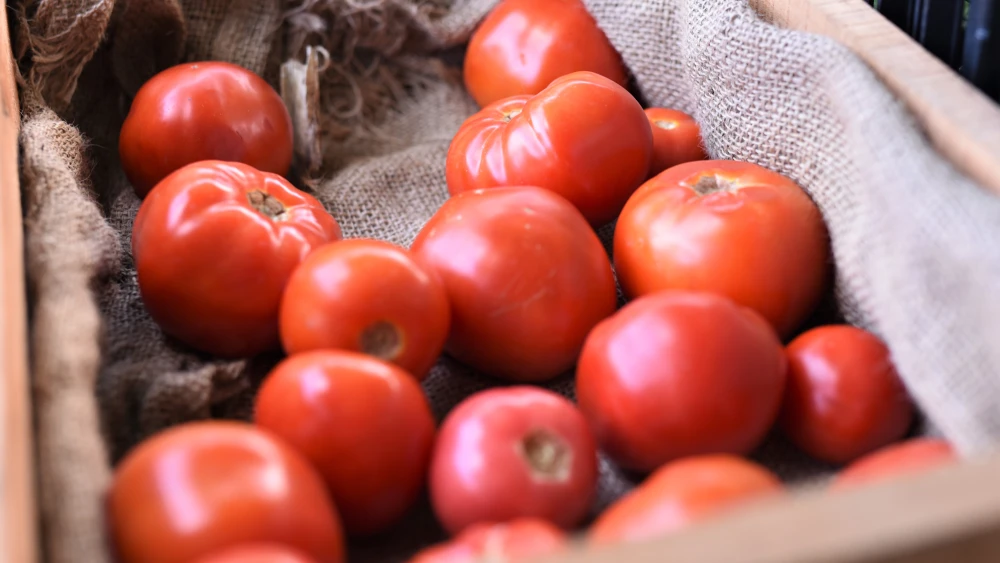
Jordan refuses to export tomatoes to neighboring Israel, even after the Israeli Health Ministry reinstated produce imports under certain conditions, Ynet reported on Tuesday. The imports were suspended last month over concerns about cholera.
The ministry’s National Food Services requested a halt to shipments of some fresh fruits and vegetables from Jordan after they tested positive for the cholera bacteria, in runoff from the Yarmuk River, the largest tributary of the Jordan River.
Sources in Israel’s Agriculture Ministry said that “the Jordanians were offended by the unilateral announcement and are awaiting an apology from the Health Ministry.”
According to the sources, Amman could be using the incident as an excuse to “punish” Jerusalem over its prolonged conflict with terror groups in Gaza and Lebanon.
“With a global shortage of tomatoes and rising demand, Jordanian growers have no issue finding alternative markets,” the sources added.
Israel turned to Jordan for tomatoes after Turkish President Recep Tayyip Erdoğan banned exports to the Jewish state in support of Ankara’s Hamas allies.
Turkey’s boycott and a drop in domestic crop yields due to extreme heat this past summer are contributing to a tomato shortage in Israel.
Israel’s Ministry of Agriculture and Food Security said on Monday that it would open an additional import quota for 5,000 tons of tariff-free tomatoes effective until December. A similar 5,000-ton quota was approved in mid-August by the Health Ministry, with 2,500 tons already entering Israel, mostly from Poland.
Despite the tariff exemptions, prices are steep due to a global shortage and high demand in Israel, with regular tomatoes selling in most stores at 12 shekels (just over $3.00), and up to 15 shekels ($4.00) in some stores and cluster tomatoes going up to between 25 ($6.50) and 45 shekels ($12.00) per kilogram (2.2 pounds), contributing to a 10% increase in the Consumer Price Index.
Israelis consume around 14,000 tons of tomatoes per month on average. Local production usually meets most of the demand, supplemented by imports, but this year it’s not the case.
Jordan, with a predominately Palestinian population ruled by the Hashemite kingdom, has displayed open hostility to Israel since the Hamas-led attacks on Oct. 7., including demonstrations in the capital of Amman.
Mass rallies were held throughout Jordan over the weekend in support of terrorist Maher al-Jazi, a Jordanian truck driver who carried out the shooting attack at the Allenby Crossing earlier this month, in which Yochanan Shchori, 61, Yuri Birnbaum, 65, and Adrian Marcelo Podsmesser, 57, were murdered.
Despite Israeli Prime Minister Benjamin Netanyahu’s insistence that the attacks in Lebanon are against Hezbollah and not the Lebanese people, Jordanian King Abdullah II spoke against the Israeli operation in a phone call on Monday night with Lebanese Prime Minister Najib Mikati.
Abdullah said “Jordan stands with Lebanon in facing Israel’s war against it” and warned of “Israeli escalation.” He also said that “stopping the escalation in the region starts with ending the war in Gaza.”


