Knesset House Committee members voted 9-to-2 on Tuesday to advance a bill seeking to deport families of terrorists living in Israel under certain circumstances.
The proposed law is meant as a deterrent. Israel’s National Security Council and the Israel Defense Forces have shown in studies that suicide bombers’ only concern is what would happen to their families after an attack, according to the explanatory section of an early iteration of the bill.
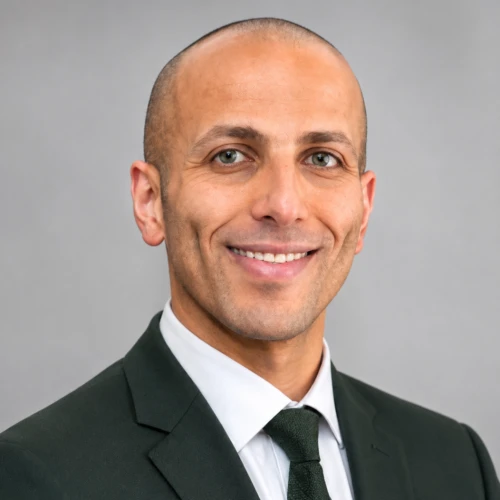
“It’s not only suicide bombers, but other attackers as well,” Lt. Col. (res.) Maurice Hirsch, director of the Initiative for Palestinian Authority Accountability and Reform in the Jerusalem Center for Security and Foreign Affairs, told JNS.
Hirsch, who helped draft the bill, served as the director of the Military Prosecution for Judea and Samaria. He also served as the head of the Advisory Committee to the interior minister for subjects related to the Law of Citizenship, including the cancellation of citizenship.
Terrorists want to “enjoy the fruits” of their attack, he said, meaning to receive stipends from the Palestinian Authority’s “Martyrs Fund,” which pays terrorists and their families, including Arab citizens of Israel, who carry out attacks against Jews.
Families of terrorists not only receive payments, but also enjoy higher status in Palestinian society, which glorifies terrorism, he said.
“In most societies, people involved in terrorism are spewed out and condemned. In Palestinian society, it’s a mark of honor, of success that you are the family member of a terrorist,” he said.
The bill strikes at the heart of these incentives, he explained, adding, “If the family is deported, it can’t enjoy the benefits or the glory.”
While the bill’s title, “A bill to revoke the citizenship or residency of those who encourage or incite terrorism,” suggests the granting of blanket powers to revoke citizenship, in fact the proposed legislation takes a measured approach, said Hirsch.
Though the bill empowers the interior minister to eject terrorists holding Israeli citizenship or permanent residency within Israel, his powers are limited in scope.
For example, the bill only applies to first-degree family members, i.e. parents, siblings, spouses, who either knew about the planned attack and didn’t inform the authorities, or expressed support, or incited for similar acts of terrorism, he said.
The bill takes into account the 1961 Convention on the Reduction of Statelessness, which seeks to prevent people being stripped of citizenship. Even though the convention has a provision for canceling the citizenship of those who engaged in acts of disloyalty to the state, the bill allows the deported individuals to retain citizenship.
Deportation is also not permanent under the bill. For Israeli citizens, it’s seven to 15 years, while for those with permanent residency, it’s 10 to 20 years.
Herzl Hajaj, head of Choosing Life-Forum of Bereaved Families, an organization of several hundred families who have lost loved ones to terror, and whose group was active in pushing the bill forward, told JNS that the legislation was critical.
“The terrorist weighs on the scales, ‘Should I carry out an attack or shouldn’t I?’ He will do the math. He will realize that he shouldn’t. He will be hurt. His family will be hurt,” said Hajaj.
Hajaj, whose daughter, IDF Lt. Shir Hajaj, was murdered in a terror attack in Jerusalem in 2017, said that 20 family members of Shir’s killer have lived in Jerusalem for 20 years.
They’re neither permanent residents nor citizens, but hold temporary residence permits, which need to be renewed annually.
“They support terrorism, some more, some less,” he said. “One was in jail for two months. We don’t know the details. It’s secret. [The Israel Security Agency] hides it,” he said. “We tried to expel them. We were in court for six-and-a-half years.”
A judge finally agreed to cancel the residency permits of the terrorist’s family. The family appealed and a district court judge reversed the decision. That experience led Hajaj to push for the current bill.
“This law will have a major impact. The most important thing for them is the benefit of being here, working here, getting social security,” he said.
During the legal battle, all 20 would show up to court, he said, “and we’re not talking about the Supreme Court with large halls. These are tiny rooms.”
It is for this reason that the proposed legislation will be effective, he said.
“Precisely because you see how important it is to them, you understand how much this can prevent the next terrorist. It won’t stop everyone, but there will be a reduction. Will it be 50%? 10%? That’s another 10% of families who won’t be bereaved,” he added.
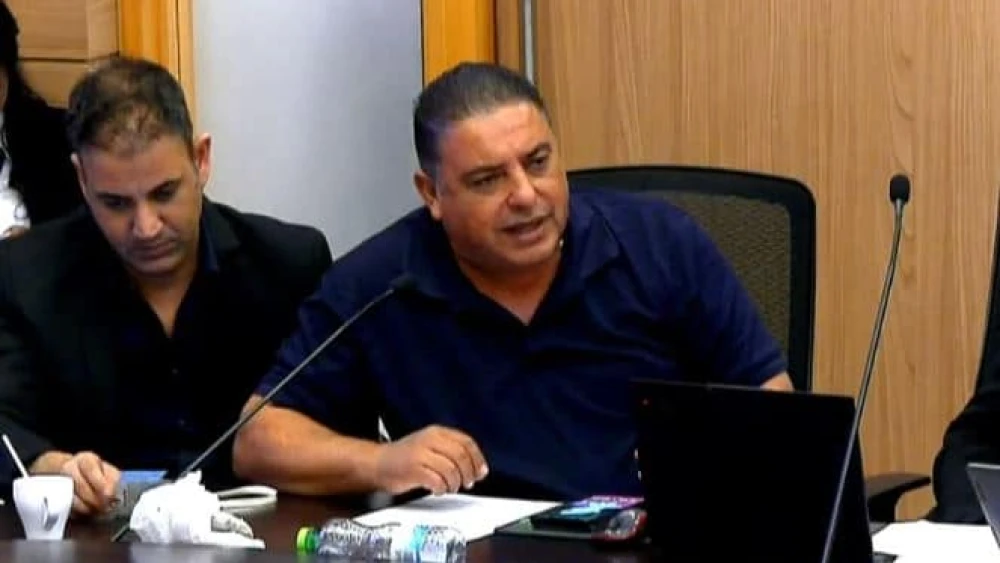
The bill enjoys support from both coalition and opposition parties. Among its co-sponsors are Knesset members Hanoch Milwidsky of the Likud, Oded Forer of Israel Beiteinu, currently an opposition party, and Almog Cohen of Otzma Yehudit.
Milwidsky, at the start of Tuesday’s Knesset committee meeting, said that he expects the bill to pass its second and third readings as early as next week. (Bills require three readings in the Knesset plenum to become law.) It passed its first reading in July.
Almog said that he expects more than 80 members of the 120-member Knesset to vote in support. It indicates “a public consensus,” he said, because Israelis understand that terrorists don’t care “who their victims voted for or what their political opinions are.”
Israeli National Security Minister Itamar Ben Gvir said he “expects Prime Minister Benjamin Netanyahu, along with all Likud lawmakers, to support this law in order to pass it.”
The bill’s biggest battle may come after it’s passed, however. The Attorney General’s Office has pushed back on several aspects of the legislation. According to Hirsch, the attorney general’s office had suggested additional criteria that would essentially “cut the legs off the law.”
For example, they argued that a one-time expression of support for terrorism wouldn’t be enough to trigger the law. “But what if that one-time expression involves a family member standing in front of 1,000 people, saying, ‘It’s great that my son took part in the Oct. 7 massacre?’” said Hirsch, referring to Hamas’s cross-border invasion of southern Israel on Oct. 7, 2023.
The attorney general is “disconnected from the Israeli public, from the Israeli street, from the ability to fight terrorism, to recognize what actually drives the terrorism,” he said.
Hajaj agreed that the legal advisers and attorney general have tried to undermine the law. “They want to make a law that actually has no teeth, where no one is evicted,” he said.
His explanation for their resistance is that “they want quiet. They are afraid. They don’t want there to be unrest.” From their point of view, evicting terrorists’ families will lead to more disturbances, he said.
Hajaj credited Milwidsky and Almog, along with Likud MK Ofir Katz, head of the Knesset House Committee, for standing firm against pressure to weaken the bill.
“They said, ‘No, we pass the law in its entirety. If the Supreme Court wants to disqualify it, it will have to be the one to disqualify it. We pass it in the way we think it will be effective,’” he said.