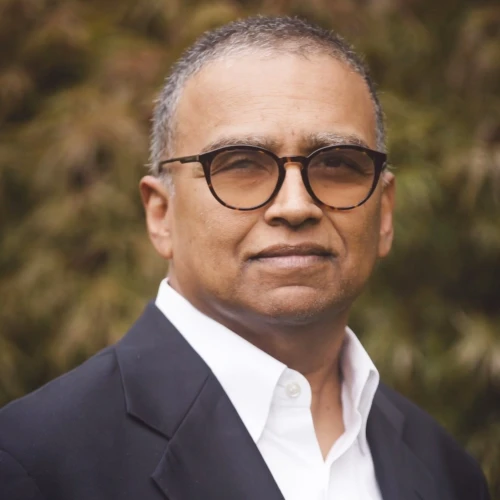
Mark Berlin, the only Jewish trustee of the Canadian Museum for Human Rights, a federal institution in Winnipeg, resigned on Monday over what he called a “one-sided” exhibit scheduled to address the “nakba,” the term some use for the “catastrophe” of the founding of the modern Israeli state.
“The controversy surrounding this exhibit, and my unsuccessful efforts to fight against what I believe to be institutional anti-Zionism and to bring a more balanced perspective to the exhibit’s development, has undermined my confidence in the museum as a place the Canadian public can trust to present an accurate historical exhibit, replacing trust with ideology,” the board member of more than eight years wrote in his resignation letter.
A legal scholar and human rights expert, Berlin submitted the letter to Marc Miller, Canadian minister of identity and culture.
He wrote that he stayed on the board after Oct. 7 due to his “false hope” that he “could assist management and some of my board trustees in developing their wider understanding of the complexities of the Middle East and this particular historical episode.”
That hope is now lost, he wrote in the resignation letter.
“Presenting the Palestinian displacement of 1948 without its proper historical and political context offers a narrow, one-sided argument of history that can only deepen the distrust and animosity that currently exists between Jews and Muslims in this country,” he stated.
“The museum loses its legitimacy when it presents as historical truth a narrative that erases a crucial part of the history,” Berlin added. “A museum that purports to tell stories about history does not get to change history.”
The exhibit, slated to open on June 27, “explores the human rights violations related to the ongoing forced displacement and dispossession of Palestinians,” per the museum website.
It features personal testimonies from Palestinian Canadians “reflecting on their ongoing struggle for justice and human rights” and revealing “enduring patterns of loss and resistance,” the museum states.
Berlin wrote that in the two years since the museum began developing the exhibit, it repeatedly rebuffed requests from the Jewish community to be consulted in a meaningful way, despite consultations occurring ahead of prior exhibits.
Several members of the Palestinian Content Advisory Network, the group with which the museum consulted while developing the show, have made “deeply hostile statements publicly about Israel and Zionists,” he stated.
Noah Shack, CEO of the Centre for Israel and Jewish Affairs, the advocacy arm of the Jewish Federations of Canada-UIA, stated that the resignation of the museum’s only Jewish board member is “a clear indictment against the museum’s handling of the controversial ‘nakba’ exhibit.”
“The lack of transparency in the exhibit’s development, including the prominent role played by political activists, one of whom has described our community’s identity as ‘a disease to be destroyed’, has severely undermined confidence in a publicly funded institution and ultimately left its sole Jewish board representative feeling compelled to resign,” Shack stated.
Shack cited Canadian Prime Minister Mark Carney’s recent warning during a speech at Toronto;s Holy Blossom Synagogue that “Canada’s civic compact is failing Jewish Canadians. If that covenant fails for one of our communities, it fails us all.”
“That is precisely what is happening here,” Shack stated. “A national, public institution appears to be applying standards to the Jewish community that would never be tolerated for others.”
He called on the Canadian heritage minister to “hold the museum’s leadership accountable and ensure that national institutions are not weaponized against Canadians to serve a one-sided political agenda.”
B’nai Brith Canada released a statement supporting Berlin and said that it tried to intervene in the exhibit but was similarly rebuffed.
“We have, on numerous occasions, expressed alarm at the lack of transparency during the curation process, as well as the apparent lack of professional and credible historians in the development of the exhibit,” B’nai Brith stated.
“We have further urged the Canadian Museum for Human Rights to reconsider the framing of such an exhibit during this time of unprecedented geopolitical uncertainty, rising levels of antisemitism and concerns about the use of anti-Zionist rhetoric to demonize Jewish people,” he stated.
B’nai Brith released a list of requests to the museum on June 18, including suspending and deferring the exhibit opening and committing to a “meaningful consultation process” with the nonprofit and the broader Jewish community about the exhibit.
Simon Wolle, CEO of B’nai Brith Canada, stated that Berlin’s resignation should lead to the end of “finger pointing” and to the Canadian government holding “itself and its stakeholders accountable.”
“It is the government’s job to step in when a trustee resigns and speaks out about a federal crown corporation’s internal governance, its work and its impact on the Canadian public,” Wolle stated.
A legal scholar and professor of practice at McGill University’s Institute for the Study of International Development, Berlin was appointed to the museum’s board of trustees in 2018.
He previously served as director general of international legal programs for Canada’s Department of Justice and as a special adviser on the Middle East to the minister of justice.
“The decision to proceed with this exhibit in its current form represents an undeniable rupture between the museum and the Jewish community,” he stated. “It represents a betrayal of the museum to its Jewish audiences.”
“The question Canadians should ask is simple: If this can happen to one community today, which community will it be tomorrow?” he wrote.