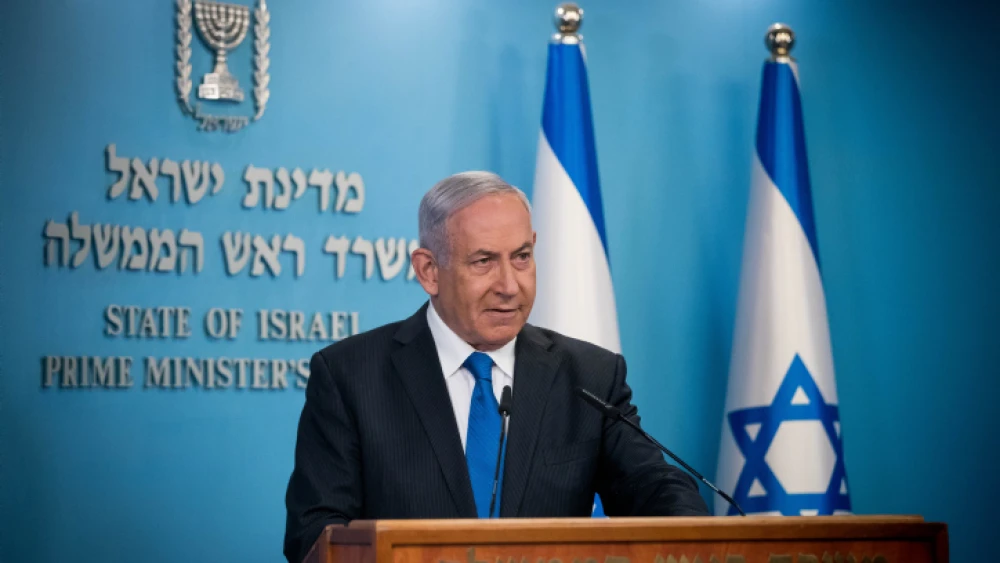
Israeli Prime Minister Benjamin Netanyahu slammed a report in The New York Times that suggested he did not oppose the U.S. sale of F-35 fighter jets and radar-blocking planes to the United Arab Emirates as part of the normalization deal between the two countries.
“Repeating a false allegation against Prime Minister Netanyahu does not make it true,” the Prime Minister’s Office said in a statement. “At no point in the talks with the United States leading to the historic breakthrough with the United Arab Emirates on Aug. 13 did the prime minister give Israel’s consent to the sale of advanced weapons to the Emirates.”
On Thursday, the Times published a report that said Netanyahu had privately gone along with a plan by the Trump administration to sell the advanced weapons to the UAE, despite later publicly stating later that he opposed the arms deal. In addition to the advanced jets, the deal would also include radar-blocking EA-18G Growler jets and Reaper drones.
The report further stated that the Emiratis were “stunned” when Netanyahu made a public disavowal of a potential sale.
While the UAE is a close ally, the United States has long refused to sell F-35s to the Emiratis. Additionally, under U.S. law, any arms sales to Middle Eastern countries must not weaken Israel’s military edge in the region, also known as the qualitative military edge (QME). As such, Congress has the power to review all arms sales in the region.
While some in Israel, including opposition leaders, defense officials and Defense Minister Benny Gantz, have raised alarm about F-35 sales to UAE, others have noted that the jets would not erode Israel’s edge as they would be used to defend the UAE against a common enemy: Iran.
Despite the questions over the arms sales, Israel and the Emiratis further cemented the process towards normalization this week. An El Al plane from Tel Aviv to Abu Dhabi became the first commercial flight between the two countries. The flight, which carried several senior U.S. and Israeli officials, also made history by flying over Saudi airspace.