Newsletter
Newsletter Support JNS

Record employment for Israeli ultra-Orthodox men

Rising mortgage payments force some to enter the workforce.

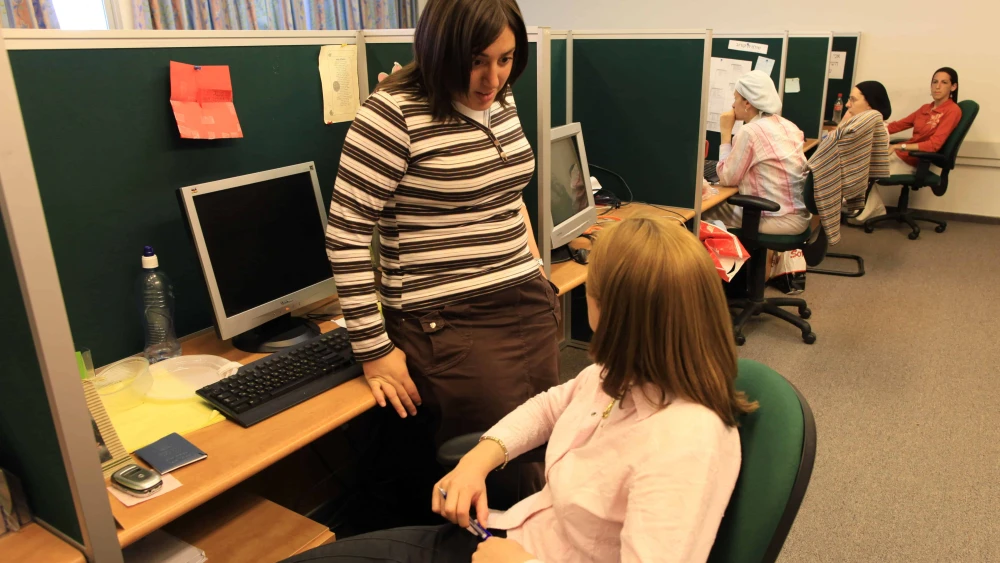
Haredi women work at the Malam Group office in Beitar Illit, south of Jerusalem, Aug. 19, 2009. Photo by Nati Shohat/Flash90.

The employment rate for ultra-Orthodox men in Israel has reached an all-time high of 55.8% amid a soaring cost of living and rising interest rates, according to a report by the Central Bureau of Statistics.

The figure for the second quarter of 2023 that was released last week is still far below the employment rate of non-ultra-Orthodox Jewish men, which stands at 87%, and ultra-Orthodox women, nearly 80% of whom work.

The proportion of haredi men employed had hovered just above 50% in recent years.

Some of the increase in employment by ultra-Orthodox men is attributed to rising interest rates, which are driving up mortgage payments.

Many haredi men in Israel study Torah full-time while getting by financially on charity, state subsidies and salaries earned by their wives.

The employment rate among Arab men was 77.6% in the first half of 2023, while 44.75% of Arab women worked outside the home.

The promotion of one of the president’s most partisan and hard-nosed lieutenants to one of the most powerful jobs in Washington may signal how Trump intends to respond to his party’s defeat in the midterms.
“It’s an evolving trend that shows greater signs of permanence than temporary quality,” Dan Diker of the Jerusalem Center for Foreign Affairs told JNS.
The president is continuing consultations with the newly elected factions scheduled through Thursday evening.
The move comes amid a sharp increase in Holocaust denial and distortion around the globe following the October 7, 2023 Hamas-led attack on southern Israel.