Newsletter
Newsletter Support JNS

Shas Party spiritual leader Shimon Baadani dies at 94

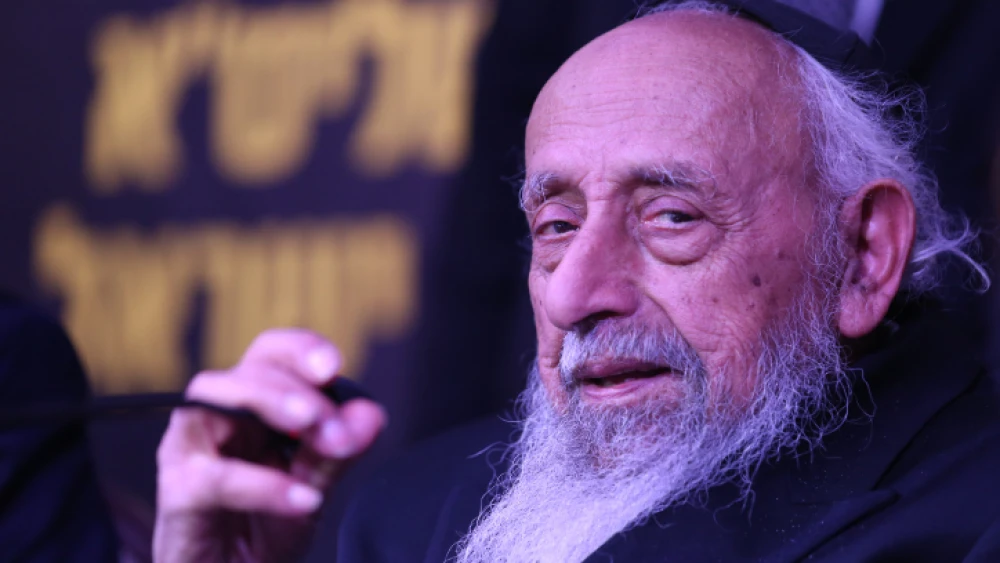
Rabbi Shimon Baadani was elected a member of the Council of Torah Sages of Shas with the party’s founding in 1984.

Rabbi Shimon Baadani attends a campaign event of the Shas party in Tiberias, Feb. 27, 2020. Photo by David Cohen/Flash90.

Rabbi Shimon Baadani, the president of the Shas Party’s Council of Torah Sages, died on Wednesday morning at Sheba Medical Center (Tel Hashomer Hospital) in Ramat Gan at the age of 94.

Baadani suffered from pneumonia and was hospitalized several times before his death.

Badaani was elected a member of Shas’s Council of Torah Sages with the party’s founding in 1984.

He rose to become the supreme authority in the Shas movement following the death of Rabbi Shalom Cohen in August 2022.

Badaani was born in Hadera in 1928 to parents of Yemenite origin and was one of the pioneers of Shas, a Sephardic ultra-Orthodox movement.

In a statement on Badani’s passing, the Shas Party said it was stunned by the loss, calling him a “model of his generation” who worked with dedication for the movement.

The Israeli envoy in Washington told JNS that he thinks that “the shared interest in freeing that country from Hezbollah is ultimately going to win the day.”
Rep. Debbie Wasserman Schultz told JNS that it was “really important” to pass the measure, “given the explosive rise in antisemitism,” including violent attacks.
“I want to destroy their nuclear programs, their ballistic missile program, their drone programs and their terrorist proxy programs,” the congressman said of Iran. “But that said, you can’t leave the United States Congress in the dark any longer.”
The judge on the U.S. District Court for the District of Columbia ruled that Francesca Albanese, who is not a U.S. citizen or resident, is protected by the First Amendment.
Dan Sohail faces a maximum penalty of up to three years in prison and mandatory restitution, according to the U.S. Department of Justice.
The award “is a personal recognition and does not imply support or opposition to any policy or country,” the U.S. Embassy to the Holy See said.
