


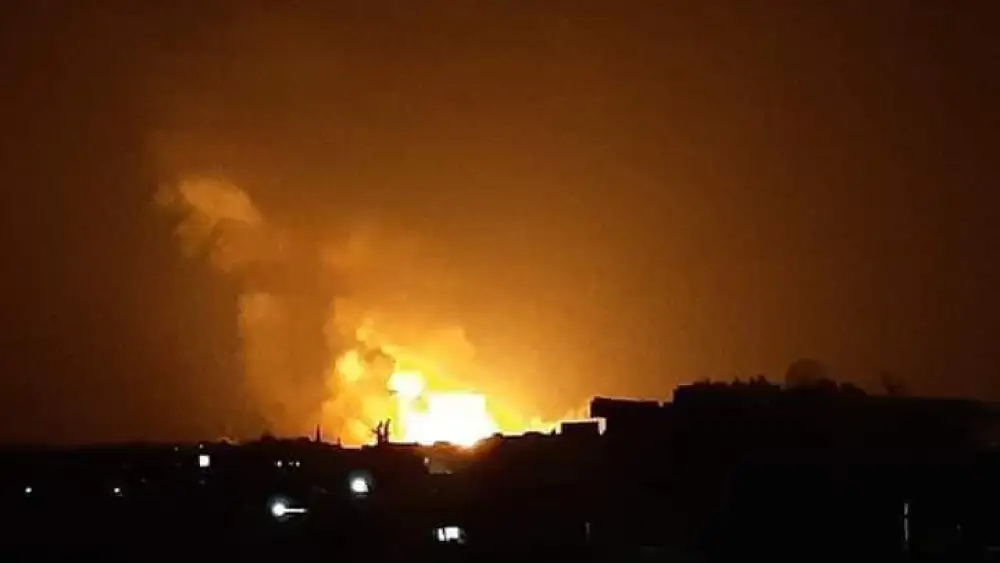
The Israeli military launched a missile attack against a target south of Damascus on Wednesday, according to official Syrian media.
Two missiles were fired from the direction of the Golan Heights shortly before 1 a.m., the Syrian Arab News Agency (SANA) reported. There were no reports of casualties.
The Syrian Observatory for Human Rights (SOHR), a U.K.-based group with sources on the ground in Syria, confirmed the report but was unable to identify the target of the strike. However, according to SOHR, the targeted area is known to house facilities belonging to Iran-backed militias, including Lebanon’s Hezbollah.
On Nov. 15, SOHR reported that Hezbollah had transported a shipment of weapons and ammunition from the western Euphrates region to its positions on the Syria-Lebanon border, though whether there is any connection to Wednesday’s strike is unknown.
The strike is the latest in a series of attacks in Syria attributed to Israel. According to SOHR, this was the 25th Israeli strike in Syria since the beginning of the year.
The most recent was on Nov. 8, when Syrian media claimed that two soldiers had been wounded by Israeli strikes on targets in the Tartus and Homs regions. According to SOHR, among the targets of those strikes was the Al-Shayrat military airfield. Al-Shayrat is known to house Lebanese Hezbollah and other Iran-backed militias, according to SOHR, and has been used by Syrian and Russian forces during Syria’s civil war.
The United States struck the airfield with more than 50 tomahawk missiles in 2017 in retaliation for a chemical attack launched from the site by the Syrian regime.



