Newsletter
Newsletter Support JNS

US seeks $373 million acquisition of Israel’s Iron Dome missile-defense system

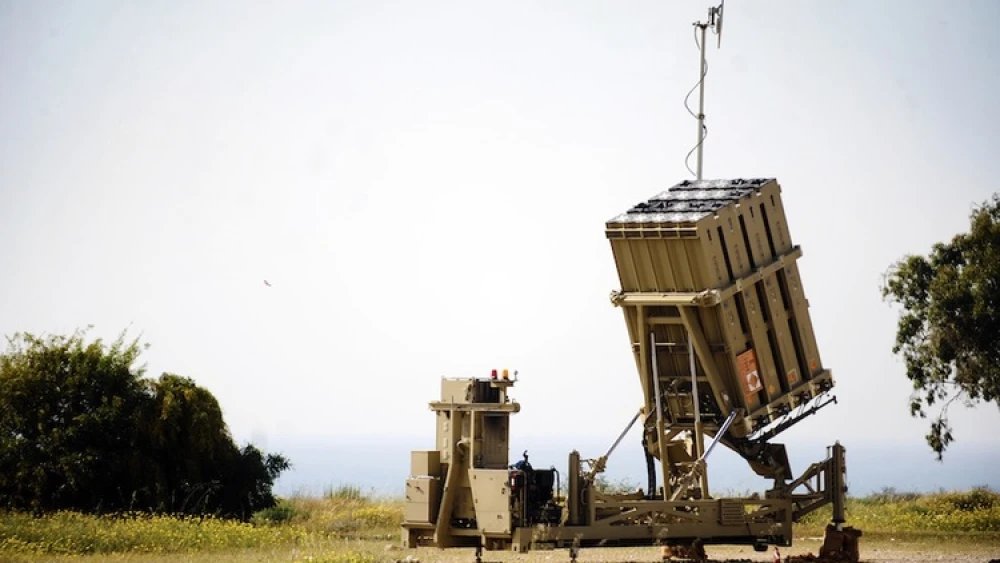
The Iron Dome, a short-range missile interceptor, was developed by Rafael Advanced Defense Systems.

The Iron Dome air-defense system in Ashkelon. Credit: Israel Defense Forces.

The United States army has sent Congress a 14-page document requesting approval of $373 million towards purchasing a few of Israel’s widely acclaimed Iron Dome missile-interception systems.

It has sought to receive by 2020 two Iron Dome batteries with 12 launchers, 240 interception missiles, two battle-management systems and two radar systems to enable U.S. ground forces’ protection against artillery, rockets, cruise missiles, mortars and unmanned air vehicles in conflict areas globally, according to Inside Defense.

“Based on an analysis of cost, schedule and performance, the Army [has decided to]: field two interim IFPC batteries of Iron Dome in [fiscal year] 2020,” stated the document.

The Iron Dome, a short-range missile interceptor, was developed by Rafael Advanced Defense Systems. It is the first component of Israel’s three-part missile-defense arsenal that also includes the medium-range David’s Sling interceptor and the long-range Arrow missile-defense system.

Reportedly, the United States has been searching for a mechanism to shield American ground forces from threats in numerous conflict areas over the past several years, having tried to create their own interceptor systems.

The U.S. president ordered a third consecutive night of strikes against the Islamic Republic.
“I knew I was gonna be fighting antisemitism,” Inna Vernikov, a Republican, told JNS. “I didn’t see politicians doing that on a big scale. I just saw a lot of pandering on both sides.”
Prosecutors said that fingerprint, surveillance footage and key-card records link the suspect to more than 20 threatening campus messages.
U.S. Secretary of State Marco Rubio says Washington will press allies to withdraw from the Hague-based court while weighing sanctions, visa bans and other measures against its officials.
Dinaw Mengestu wrote on Instagram that he left because of an “ongoing failure to defend free expression fairly and equitably.”
“Whoever ends up getting this seat, they’re not going to have as much foreign policy experience as Lindsey Graham,” Christopher Cooper, a political science professor at Western Carolina University, told JNS.