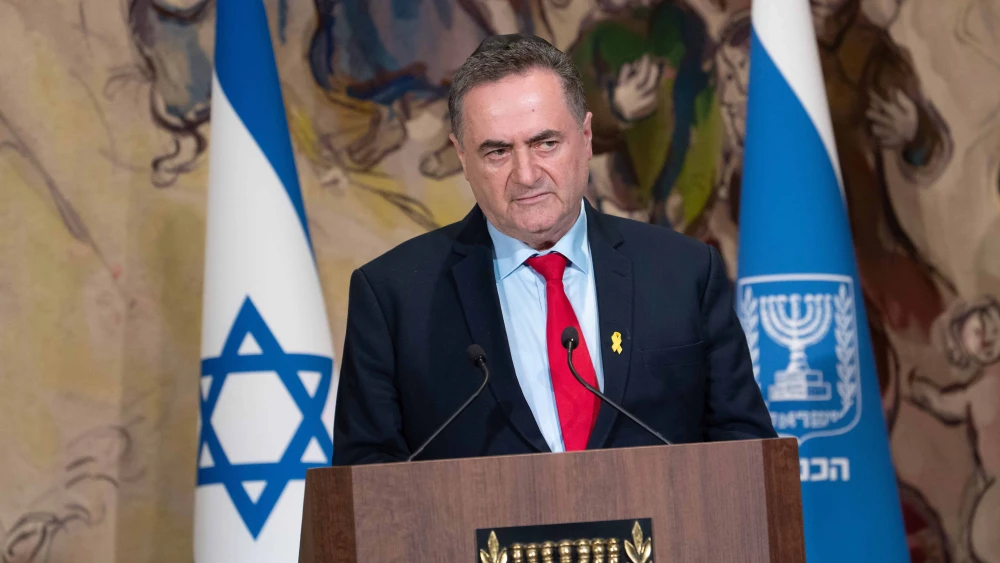
Israeli Defense Minister Israel Katz warned on Sunday that if Hamas refuses to release the 48 hostages from Gaza immediately, the Israel Defense Forces “will once again step up the intensity of fire.”
“We now expect the first phase [of the Trump peace plan] to be carried out in the near future, including the immediate release of all the hostages,” Katz said during a ceremony marking the 52nd anniversary of the 1973 Yom Kippur War.
“The IDF is in the heart of Gaza City and is ready for any possibility,” he continued. “If Hamas refuses to free the hostages, the IDF will once again step up the intensity of fire until its defeat and all captives are freed.”
The Prime Minister’s Office (PMO) clarified in a Sunday press briefing that Israeli Prime Minister Benjamin Netanyahu, in an agreement with the U.S. administration, has limited the duration of talks “to a few days maximum, with no tolerance” for delays by Hamas.
A 72-hour deadline will go into effect “from the moment all details are solidified with Hamas,” PMO spokeswoman Shosh Badrosian said.
The agreement is contingent on the release of all 48 hostages at once—the 20 still alive, and 28 deceased. It is the first thing that needs to happen before anything else takes place. “There is no exception to that,” Badrosian said.
Netanyahu instructed a team led by Strategic Affairs Minister Ron Dermer to finalize the technical details of the hostages’ release. The Israeli team will leave for Egypt on Sunday night with talks to begin Monday morning.
“The prime minister is in regular contact with President Trump, who stressed Hamas must move quickly, or else all bets will be off,” the spokeswoman said.
A possible sticking point is that Hamas claims it does not have all the hostages’ bodies and would need time to locate them, some of which have been buried, or are in areas controlled by Israel’s military.
While the details are ironed out, the Israeli Defense Forces have taken a defensive position in the Gaza Strip, with orders to fire when fired upon. The IDF has also suspended certain bombings, but no official ceasefire is in place, Badrosian told JNS.
Netanyahu said on Saturday that Jerusalem expects the release of the hostages as early as this week.
Israel hopes that “already during the Sukkot holiday, we can announce the return of all the hostages, with the IDF remaining in the depths of the Gaza Strip in various areas,” Netanyahu said in a televised address, speaking in the wake of Hamas’s response to the U.S. proposal.
During the first phase, Israeli forces will continue to hold the areas that they captured during the almost 24-month-long war in Gaza, he said.
“During the second phase, Hamas will be disarmed and demilitarized; this will happen either diplomatically, through Trump’s plan, or through military action,” the premier added.
Netanyahu’s office announced overnight on Friday that Jerusalem was preparing to carry out the first phase of Trump’s plan to end the war.
The decision followed Hamas’s response to the American proposal. The terrorist group said it accepts parts of the plan, including the release of all 48 remaining hostages under the formula, “provided the field conditions for the exchange are met,” as part of ending the war sparked by the Oct. 7, 2023, Hamas onslaught on Israel.