


Days after former IDF chief of staff and head of the Israel Resilience Party Benny Gantz told Druze leaders that he would “change” the controversial nation-state law, which the Druze argue makes them second-class citizens, Justice Minister Ayelet Shaked said on Friday that Israel would do no such thing.
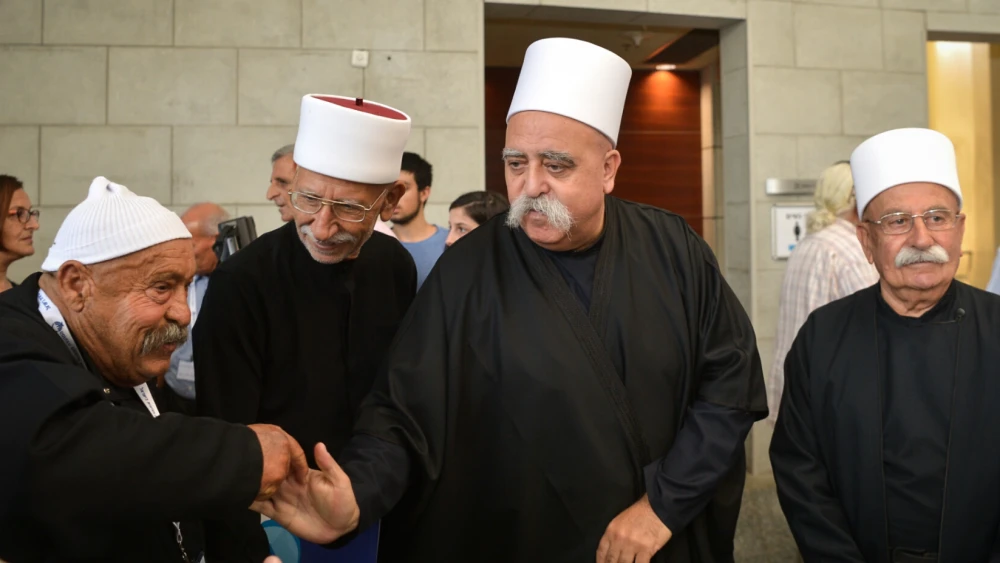
In a meeting with Druze citizens who held a protest outside her home, led by Brig. Gen. (res.) Amal Assad and former MK Shachiv Shnaan—whose police officer son was killed in a terrorist shooting at the Temple Mount compound in the summer of 2017—Shaked expressed her sympathy with the pain of the Druze, but stressed that the nation-state law was vital and would not be changed.
Shaked said that as justice minister, she had worked on behalf of full equality for Israel’s Druze community.
She said that a Druze woman had been made a judge, that more qadim (“judges”) had been appointed to the Druze Shariah court, and that she had worked to increase the amount of money the government invests in the Druze community.
“The Druze are our brothers and the flesh and blood of the State of Israel,” she said. “The nation-state law does not hurt equality between the Jews and the Druze in Israel. It says what is obvious and comprises an interpretive tool for the courts that will balance out the problematic interpretation given to the Basic Law: Human Dignity and Liberty.
“The feelings of the [Druze] people are clearly genuine,” said Shaked. “In the next government, we will need to find a way to address that feeling, without changing the nation-state law.”


