Newsletter
Newsletter Support JNS

Israel plans 80 billion shekel investment to increase solar-energy use

More than 80 percent of the country’s electricity would be provided for by solar power, according to the plan

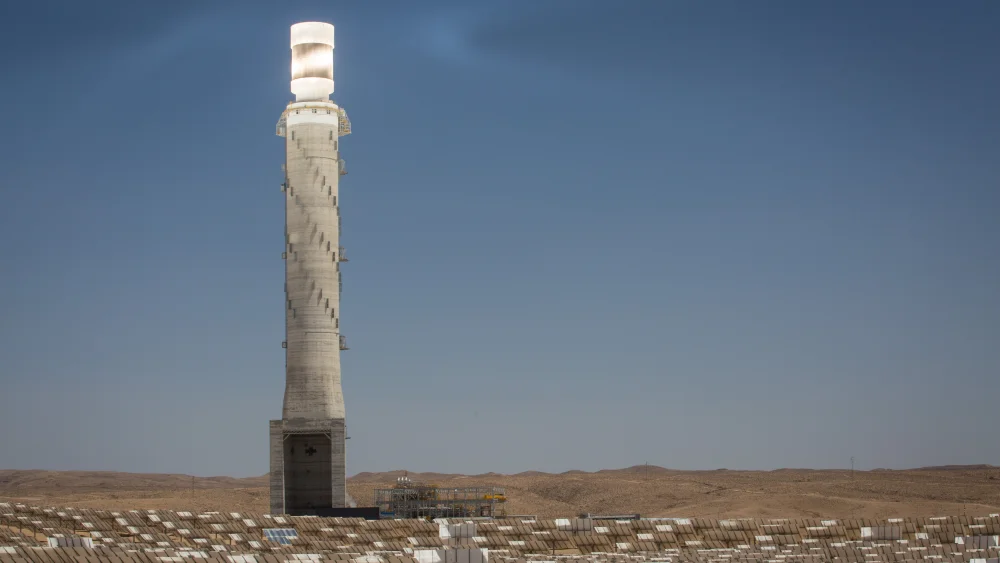
A view of the Ashalim solar-power station in the Negev Desert, June 19, 2018. Photo by Miriam Alster/Flash90.

Israel Energy Ministry Yuval Steinitz announced an 80 billion shekel ($22.8 billion) plan to increase solar power use during the next 10 years.

The goal is to have solar-power production grow 30 percent by 2030, Steinitz said according to a Reuters report on Monday. The plan is estimated to cut air pollution by 93 percent compared to 2015.

“This is a move that will change the face of the State of Israel, and it will be carried out by the private sector. There is a great deal of room for growth, innovation and enterprise,” said Steinitz, reported Globes.

The new target, said Steinitz, is to outpace rising demand and have solar-power production grow to 30 percent by 2030, or about 16,000 megawatts. That is roughly the same as total energy production today.

He said that most of the funds would pay for building solar-energy facilities and other money would go to upgrading the national grid and energy storage.

More than 80 percent of the country’s electricity would be provided for by solar power according to the plan, noted the report.

The senior counsel appointment gives him a “green light” to develop new policies and initiatives, including a national antisemitism awareness tour, the longtime civil-rights attorney told JNS.
Police charged the man with three counts of malicious mischief after a witness provided photos and videos allegedly showing him vandalizing multiple cars.
“Policymakers should ask whether the hotline is translating into tangible support for victims, or simply redirecting people to organizations that are already doing that work,” the director of the American Jewish Committee’s Seattle office told JNS
Across the countries Pew examined, a median of 67% of adults hold an unfavorable view of Israel while just 25% have a favorable view.
“Platforms must invest in proactive moderation, expert-informed guardrails and consistent enforcement,” the executive director of the online watchdog group stated.
“The use of looted antiquities for illicit finance and terror-funding is a serious national security concern,” the Pennsylvania senator stated.