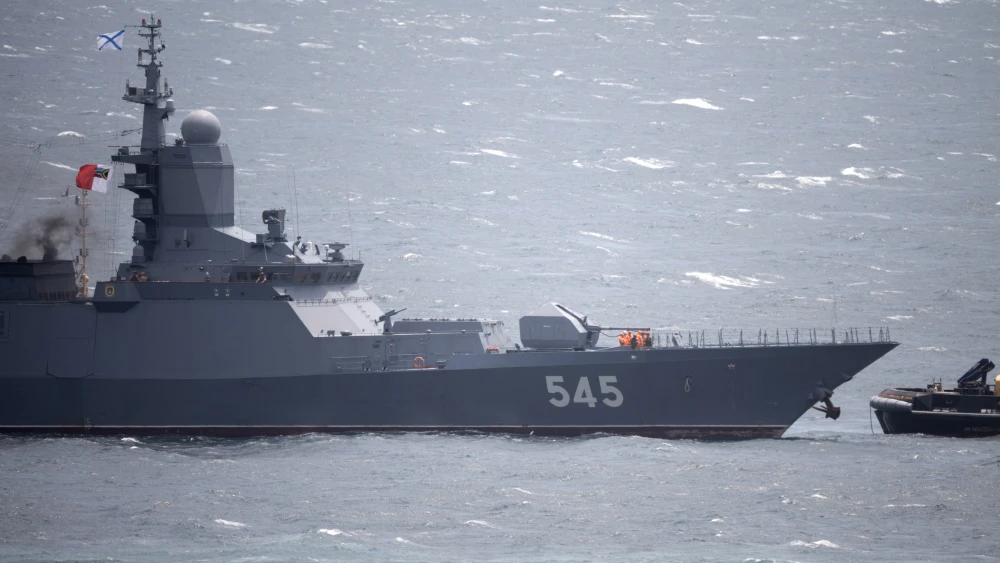
An Israeli strike on Iranian naval infrastructure at the Bandar-e Anzali port on the Caspian Sea one week ago targeted a Russian-Iranian smuggling route, The Wall Street Journal reported on Tuesday.
The supply route links Russian and Iranian ports and allows the countries to swap weapons, drones, ammunition, oil and foodstuffs, according to the report.
“The route has become especially important for transferring Iran’s Shahed drones—now made in both countries—which Russia has used to bombard Ukrainian cities and Tehran has used to strike airports, energy facilities and U.S. bases across the Persian Gulf,” the Journal said.
“The most important goal of this strike was to limit Russian smuggling and show the Iranians that they don’t have sea defenses in the Caspian,” Eliezer Marum, a former commander of the Israeli Navy, told the paper.
In a statement on March 19, the Israel Defense Forces listed the targets of the strike as Ianian Navy vessels, a port command center and infrastructure for vessel repair and maintenance.

As wheat is also supplied through the Caspian route, the attack put pressure on Iran’s food supply, the Journal said, noting the attack came the same day an attack took place in Iran’s section of the South Pars Field in the Persian Gulf. Israel has not taken credit for that attack, which hit natural gas facilities used by Iran for domestic power generation and fertilizer.
Analysts said that while the Caspian Sea attack was significant, it would only disrupt Iran-Russia trade temporarily.
Russia’s Foreign Ministry condemned the attack, saying it affected Russian economic interests.
“This largest Caspian harbor is an important trade and logistics center, which is proactively used to support Russian-Iranian trade, including in foods,” said Russian Foreign Ministry Spokeswoman Maria Zakharova.
Russia and Iran have drawn closer since the start of the Ukraine war in Feb. 2023, when Russia opened its large-scale offensive. (Ukraine first identified Iranian-made Shahed-136 drones in Russian attacks still earlier, in the fall of 2022, during a period of lower-intensity conflict between the countries.)
On Jan. 17, 2025, Russian President Vladimir Putin and Iranian President Masoud Pezeshkian of Iran signed a Treaty on Comprehensive Strategic Partnership.
The treaty covered “all areas, including defense, the fight against terrorism, the energy sector, finances, transport, industries, agriculture, culture, science and technology,” Russia’s TASS News Agency reported at the time.