


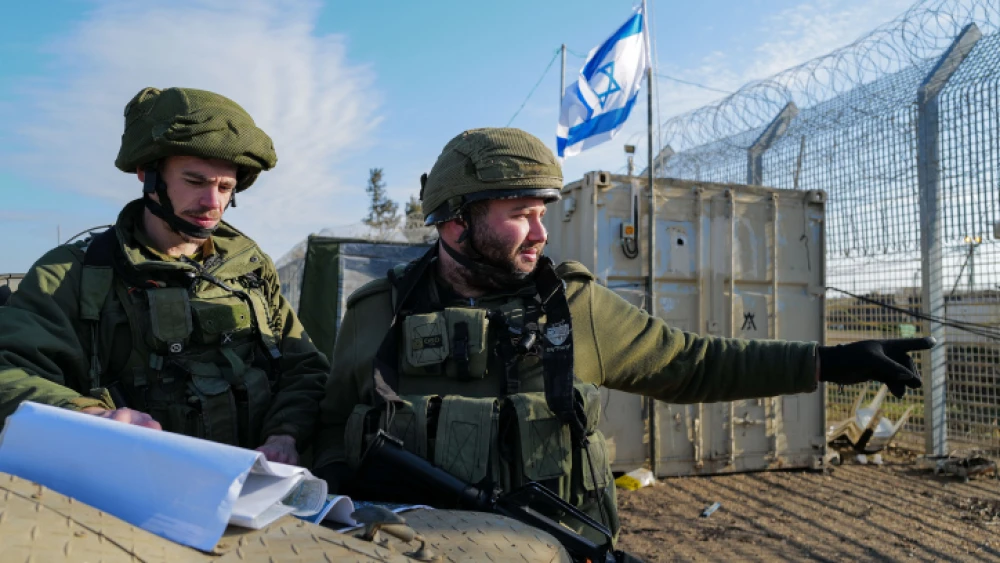
Israel Defense Forces commandos raided a key Iranian Revolutionary Guard Corps weapons facility in the Masyaf area of northwestern Syria on Sunday night, unconfirmed Arabic reports claimed on Thursday.
At least 14 people were killed and dozens wounded in a series of Israeli airstrikes in northwestern Syria late Sunday, according to state media.
Syria’s SANA news agency reported that the Israeli Air Force targeted several military sites around Masyaf.
According to Reuters, which cited two regional intelligence sources, among the sites hit was the Scientific Studies and Research Center, known as CERS or SSRC, a major military base that is believed to be responsible for research and development of nuclear, biological, chemical and missile technology and weapons.
The center is thought to house a team of Islamic Revolutionary Guard Corps military experts and provides logistical support to Iran-backed Hezbollah terrorists.
Thursday’s reports claimed that Israeli forces had boots on the ground during the large-scale operation. According to the reports, the facility’s access roads were targeted by fighter jets to prevent the approach of Syrian troops before helicopters carrying IDF special forces operators arrived in the area, with air support from gunship helicopters and attack drones.
The troops reportedly entered an unspecified arms depot, removed equipment and sensitive documents and then set off explosives to destroy the facility. During the heavy fighting, two to four Iranian operatives were said to have been captured by the Israeli soldiers.
Jerusalem rarely admits to attacks on Syrian territory, although in February it revealed that it had attacked more than 50 targets belonging to Hezbollah and other Iran-backed terror groups in Syria since Oct. 7.
The same month, Reuters reported that Iran removed senior IRGC officers from Syria following a series of deadly aerial attacks by Israel.
Between Oct. 7 and May 15, Tehran’s Syrian proxies launched at least 40 projectiles across the border with Israel, according to official IDF data.
On April 1, seven members of Iran’s Islamic Revolutionary Guard Corps, including the leader responsible for Syria and Lebanon, were killed in an attack on a building adjacent to the Iranian embassy in Damascus.
Israel did not officially take responsibility for the attack, but four Israeli officials told The New York Times that the IAF carried out the strike.
Thirteen days later, the Islamic Republic launched an unprecedented combined attack on Israel involving more than 300 drones and missiles in what Tehran claimed was retaliation for the Damascus incident.


