Newsletter
Newsletter Support JNS

10,000 Israeli pilgrims expected in Uman for Rosh Hashanah

Despite warnings that Ukraine is not safe, the faithful are determined to pray at the tomb of Rabbi Nachman of Breslov.

The tomb of Rabbi Nachman of Breslov in Uman, Ukraine. Credit: Nahoum Sabban via Wikimedia Commons.

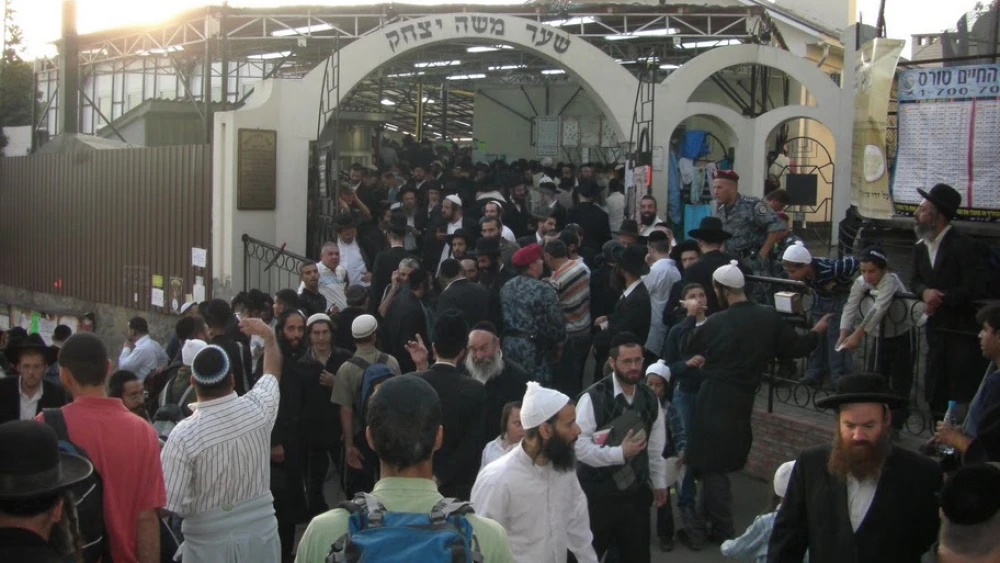
More than 2,000 Israelis have already arrived at the Ukrainian city of Uman for New Year’s prayers at the tomb of Rabbi Nachman of Breslov, and thousands more are expected.

Approximately 10,000 Israelis are expected to gather in the Ukrainian city, despite multiple warnings to stay away due to dangers posed by the Russian war in Ukraine, Israeli officials said.

They have warned that it would be very difficult to provide assistance to citizens in Ukraine in an emergency situation, despite a heightened state of alert by Foreign Ministry personnel and by Israeli embassy staff and Israel Police representatives in Kyiv.

In recent days, an adviser to Ukrainian President Volodymyr Zelenskyy, Mykhailo Podolyak, said he was concerned that Moscow might fire missiles at Uman during Rosh Hashanah, which begins on Sunday evening, in order to cause global shockwaves.

The Israeli Foreign Ministry and the Ukrainian government have called on Jewish pilgrims not to go to Uman this year due to the war.

Podolyak said that Ukraine could not physically prevent the pilgrims from arriving, adding that they are responsible for their lives.

Cairo has taken on the role of mediator, but local media is clearly leaning toward Tehran.
There was never a question whether bar and bat mitzvahs were going to continue, says Rabbi Marla Hornsten at Temple Israel, despite the havoc that had teachers and children evacuate the building.
“We will not rest in the mission to stop the spread of radical Islam,” Texas Gov. Greg Abbott stated.
The panel conducts research on antisemitic activity and works with public and private entities on statewide initiatives on Holocaust and genocide education.
“If it’s something that families are attuned to, then I think it may be a good way to engage the kids on that level,” Rabbi Steven Burg, of Aish, told JNS.
“I was a little surprised at the U.K. to be honest with you,” U.S. President Donald Trump told reporters at the White House. “They should have acted a lot faster.”