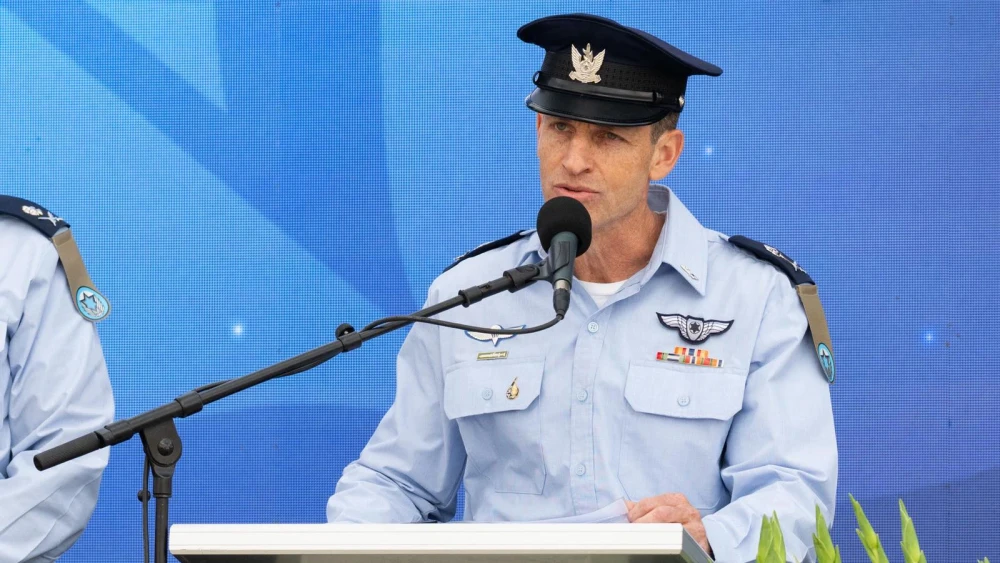
Jerusalem had prepared a large-scale strike on Iran that was canceled just one hour before takeoff, Israeli Air Force Commander Maj. Gen. Omer Tishler revealed in a letter to IAF personnel on Tuesday.
The sequence followed an earlier strike in Dahiyeh, a Hezbollah stronghold in southern Beirut, after which Iran launched dozens of missiles toward Israel. The IAF responded with strikes deep inside Iran, hitting dozens of targets and damaging air defenses and regime assets.
Tishler then described a second, far larger operation that had been fully prepared for the following day.
“The next day, in the afternoon, the entire air force was ready to take off for a broad strike sortie. Hours before the order to take off, while shortening the alert period, demonstrating exceptional flexibility, arming the entire air force, planning, preparing and being ready for takeoff to strike hundreds of targets in the heart of Iran, the strike was stopped while we were briefing the squadrons,” he wrote.
Tishler noted that a memorandum of understanding between the United States and Iran coincided with the decision to halt the operation, though he did not specify who issued the final order. Reports in Israel said the cancellation followed coordinated diplomatic pressure aimed at preventing escalation.
These reports claimed that Israeli Prime Minister Benjamin Netanyahu and U.S. President Donald Trump were involved in urging de-escalation, leading to the cancellation of the planned strike amid broader efforts to stabilize the situation.
The Israeli military previously said operations followed pre-approved contingency plans after Iranian missile fire, while reports in Israeli media indicated U.S. diplomatic pressure, including intervention by Trump, contributed to de-escalation.
“It is too early to know how global moves will affect the security reality, but our mission was and remains to protect the security of the State of Israel and act on its behalf,” wrote Tishler.