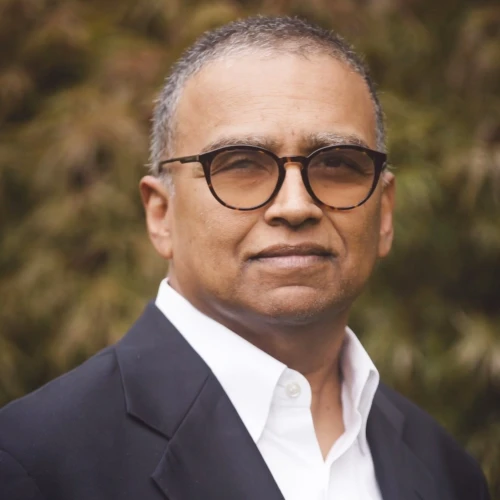
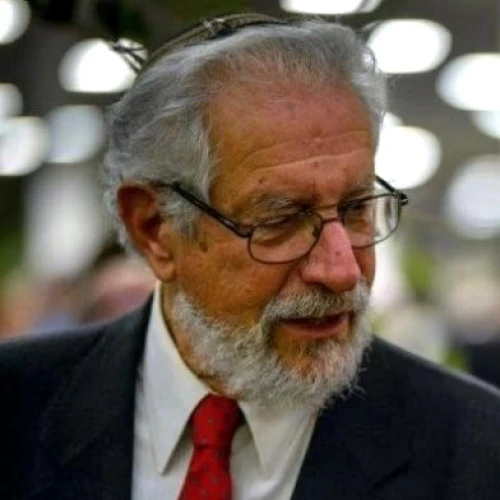
Panelists at the Jerusalem News Syndicate’s International Policy Summit on Tuesday outlined various visions for Gaza’s future post-Oct. 7, 2023, but were in broad agreement that the Hamas terrorist organization cannot remain in power.
Hamas remains an extension of the Muslim Brotherhood and poses an ongoing threat to Israel, said Amir Avivi, founder of the Israel Defense and Security Forum.
“Hamas must be eradicated in Gaza,” said Avivi, speaking on the summit’s final day at the Waldorf Astoria in Jerusalem. “An organization that committed a massacre as they did cannot exist.” He warned that Hamas is rebuilding itself and that the Israel Defense Forces “has prepared decisive plans to eradicate them.” At some point Israeli forces will have to finish the job in Gaza by destroying Hamas, he said. Absolute victory on all fronts—Iran, Hezbollah and Hamas—"will enable a new era of peace agreements.”
The “Gaza: Next Steps” panel was moderated by JNS Features Editor Steve Linde.
Dr. Jason M. Olson, director of deradicalization for the Gaza Board of Peace, described plans for postwar governance and reconstruction in Gaza under the newly formed international body. He said the organization is focused on creating conditions for Hamas to disarm while rebuilding Gaza’s economy and integrating it into the broader region. “The biggest challenge is Hamas and its refusal to disarm,” he said, adding that years of terrorist rule have left Gaza isolated from the region and the world.
“The United States is right alongside our ally the State of Israel and we are going to complete this mission together,” said Olson.
Samer Sinijlawi, a Palestinian political activist advocating reform and coexistence, emphasized the need for Palestinian-led governance and gradual disarmament. He called for the immediate establishment of a national committee to assume control in Gaza and urged a broader focus on deradicalization, democratization and development alongside demilitarization.
“Disarmament of Hamas in Gaza will not be a one-day event, it’s a process, and it needs to be done by Palestinian hands,” he said.
He also called for the full integration of Israel into the Middle East, calling the country an “integral part” of the region and arguing that changing from conflict to partnership with Israel is in the national interests of the Palestinians. “It’s a win-win situation for us and for the whole region,” he said.
The Palestinians must convince the Israelis that there is a partner for peace on the other side, said Sinijlawi. “We are now I believe in a post-Abbas and post-Hamas era. There is a young generation from the Palestinians that are mobilizing, and I’m one of them, into a new political stream, new political party called New Path,” he continued. “We need to show everybody that there is a new path that is not based on pressuring Israel using violence and trying to mobilize diplomatically the whole world. By persuading, by convincing, by talking to the Israelis, by creating channels, building bridges ... we need reconciliation, we need to fix hearts, not only homes because the damage in the hearts is bigger.”