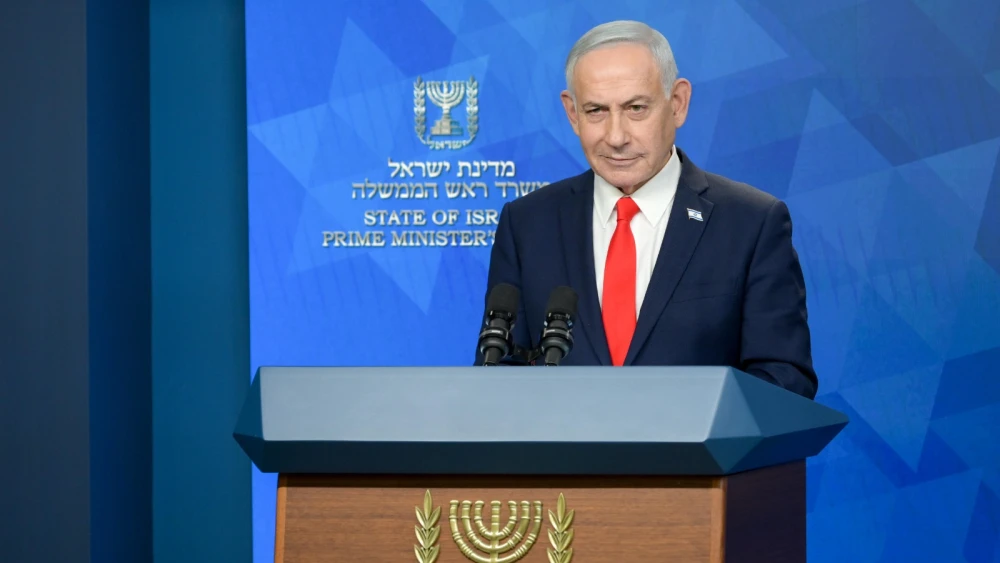
Prime Minister Benjamin Netanyahu on Sunday rejected accusations that Israel is in a permanent state of war in the Middle East.
“I myself, with President Trump, we brought forth four peace deals,” the premier said on Fox News, referring to the Abraham Accords, which were initiated in 2020 and normalized relations with several countries, including the United Arab Emirates, Bahrain and Morocco.
Netanyahu told Fox News “The Sunday Briefing” co-anchor Jacqui Heinrich that with the weakening of the Islamic Republic of Iran through joint American-Israeli military action, more peace deals will be signed.
“Countries would like to align with us and to protect their future, and also their prosperity. Israel is a powerhouse. It’s an engine of innovation, of AI, of quantum, just of everything.”
He said that the recent Lebanon agreement has demonstrated that “we have more cards to play,” saying that the Land of the Cedars “would like to free itself of Hezbollah, these Hezbollah terrorists who are making their lives miserable.”
Not only the Lebanese Christians are asking for Israeli protection, Netanyahu said, “it’s the Druze, it’s Muslims, the Sunni Muslims and quite a few of the Shi’ite Muslims too. They’d like to free Lebanon. I hope we can get more peace deals. If you want to have peace, you better be able to protect yourself against those who want to annihilate you. We do that. But in defending ourselves, we’re defending a common civilization. The people who chant ‘Death to America.’”