The failure of a bill aimed at identifying Jewish American service members buried under incorrect religious markers was not the result of opposition to the legislation itself, according to advocates, but rather a casualty of a broader congressional fight over surveillance authorities.
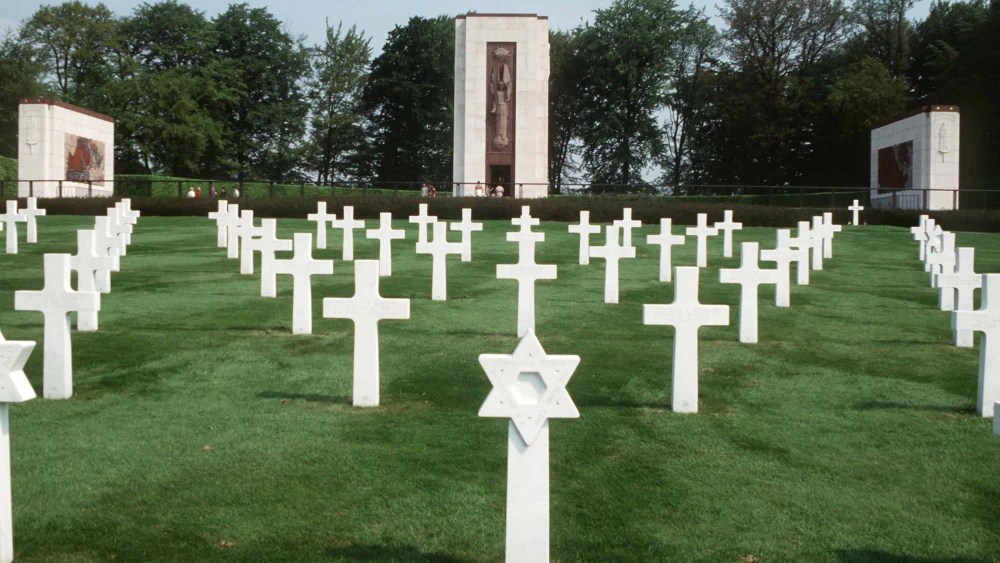
The Fallen Servicemembers Religious Heritage Restoration Act would create a program within the American Battle Monuments Commission to identify Jewish American service members buried overseas under incorrect religious markers. Supporters estimate that nearly 900 Jewish soldiers killed in World War I and World War II may have been buried beneath Latin Crosses rather than Stars of David.
The measure had already passed both the House and Senate by voice vote. However, the chambers approved different versions of the legislation, including differences over the program’s duration and funding structure, which will require further action to reconcile the bills.
At the same time, Congress was grappling with the pending expiration of Section 702 of the Foreign Intelligence Surveillance Act, which authorizes the targeted collection of communications involving foreign nationals located outside the United States.
Efforts to extend the provision collapsed after U.S. President Donald Trump named Bill Pulte, director of the Federal Housing Finance Agency, to serve as acting director of national intelligence. Democrats and some Republicans objected to the appointment, citing his lack of intelligence experience and concerns about his handling of confidential information.
After negotiations over a FISA extension stalled, Republican leaders turned to an alternative legislative vehicle. They took the House-passed version of the veterans measure and replaced its text with the Foreign Intelligence Accountability Act and other unrelated provisions.
That amended measure failed in the Senate on June 5 by a vote of 52-47.
Paul Marcone, a federal lobbyist who has worked on behalf of Operation Benjamin, a nonprofit that seeks to identify and correct the grave markers of Jewish American war dead, told JNS that the setback is unlikely to derail the effort.
The vote “not going to stop the underlying bill from eventually becoming law,” Marcone said, noting that lawmakers can still advance the original legislation separately.
Marcone said leaders of the House and Senate veterans’ affairs committees are expected to revive the measure as part of a broader package of bipartisan veterans bills.
“We’re pretty optimistic that either before the August recess or soon after Labor Day, they’ll come back and pass the long-term version of the bill,” Marcone told JNS.
The legislation would establish the Fallen Servicemembers Religious Heritage Restoration Program within the American Battle Monuments Commission to identify the nearly 900 Jewish American service members killed during World War I and World War II and mistakenly buried in U.S. military cemeteries overseas under Latin Crosses, not Stars of David.
Under the Senate version, the commission would receive authorization for up to $500,000 annually for 10 years to contract with qualified nonprofit organizations to research cases, locate descendants and help facilitate corrections. The House version authorized the same annual funding level for five years, one of the differences that remained unresolved between the two chambers.