
When Iran fired missiles at Israel earlier this week, the question before Jerusalem was not academic. It was not symbolic. It was not another argument for diplomats to polish beneath television lights. It was the question that has followed the Jewish state since the first day of its rebirth: Will Israel be permitted to defend itself before the next attack or only mourn afterward with the world’s condolences?
U.S. President Donald Trump urged Israeli Prime Minister Benjamin Netanyahu not to strike back. The request may have been framed as strategy, diplomacy or de-escalation. But for Israel, restraint is never an abstraction. It has a geography. It has stairwells, shelters, hospital corridors, intercepted missiles, frightened children and soldiers waiting for orders while enemies study the hesitation of the free world.
This is the part that too many foreign capitals refuse to understand. Israel does not live beside a normal adversary. It lives beside an Iranian war system built patiently over years, armed through proxies and designed to surround the Jewish state with pressure points. Hezbollah in Lebanon. Hamas in Gaza. The Houthis from Yemen. Militias across the region. Iran doesn’t need every attack to carry its flag for the message to be clear.
Tehran built the fire. Israel is then lectured for refusing to stand quietly inside it.
No serious nation would accept this standard for itself. If missiles were fired at American cities by forces armed and encouraged by a hostile regime, no president would tell the American people that the highest virtue was to absorb the blow. If drones crossed into Europe from a terror network protected by a foreign capital, European self-defense would not be treated as the true danger. Yet when Israel is struck, the world’s first reflex is often not outrage at the attacker, but anxiety over the Jewish response.
That is not diplomacy. That is a double standard wearing a suit.
The United States is Israel’s ally. That truth matters. America has stood with Israel in ways that should not be erased by one moment of tension or one disagreement between leaders. The alliance has saved lives. It has strengthened deterrence. It has given Israel weapons, intelligence and diplomatic cover in hostile international forums.
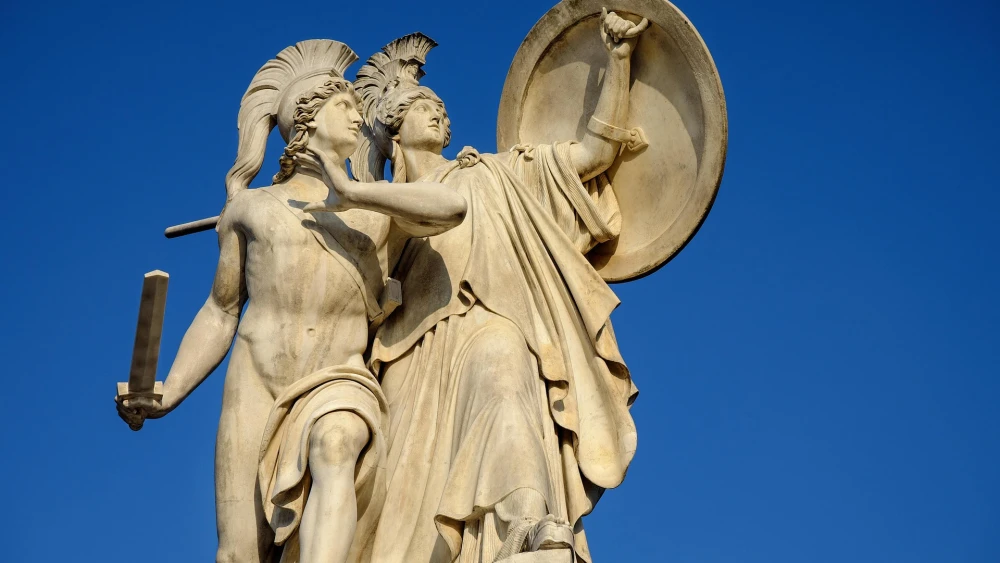
But gratitude is not subordination. Friendship is not command. An ally may advise Israel. An ally may warn Israel. An ally may place a steadying hand on Israel’s shoulder. But an ally may not close its hand around Israel’s sword while missiles are flying toward Jewish homes.
That is the line being tested now.
The danger is not only that Israel may be restrained but that Iran learns that fact. Enemies listen closely to the language of hesitation; they study the gaps between attack and response. They watch Washington, Brussels and the United Nations to see how much pressure can be placed on Jerusalem after Israeli civilians are targeted. They do not only measure Iron Dome but also political will.
Every time Israel is told to pause after being struck, Tehran receives a lesson. Fire first, then wait for the world to restrain the Jews. Attack through proxies, then let diplomats debate proportionality. Escalate through the shadows, then accuse Israel of escalation when it turns toward the source of the fire.
That lesson is deadly.
Peace cannot be built on a formula that rewards aggression and disciplines self-defense. A ceasefire that leaves Iran’s war machine intact is not peace. It is a clock. A pause that allows Hezbollah, Hamas or Tehran to reload is not stability. It is preparation. A diplomatic process that requires Israel to mute its response while its enemies keep their infrastructure of war is not balance. It is pressure placed on the wrong side of the battlefield.
Israel should act with discipline. It should calculate carefully. It should choose targets, timing and objectives with sobriety, because power without judgment becomes its own danger. But there is a difference between discipline and paralysis. There is a difference between counsel and control. There is a difference between asking Israel to be wise and asking Israel to teach Iran that Jewish survival requires foreign permission.
That permission must never be requested.
Israel was not restored to become a nation that waits for approval while its enemies surround it. It was not built so Jewish mothers could rush their children to shelters and then listen to the world debate whether their government has the right to stop the next missile. It was not reborn so that the old condition of exile could return in modern form, with others deciding when Jews may fight for Jewish life.
The world keeps calling for calm. Israel keeps being asked to carry the cost of that calm in its own flesh. But calm without deterrence is not peace. Calm without consequence is not justice. Calm that leaves the aggressor educated and the victim restrained is only the quiet before the next siren.
A true ally should understand this. Israel does not need permission to survive. It needs the freedom to ensure that survival is not left to the mercy of men who mistake restraint for weakness and diplomacy for delay.
The ally’s hand may steady Israel’s shoulder. But it must never hold Israel’s sword.