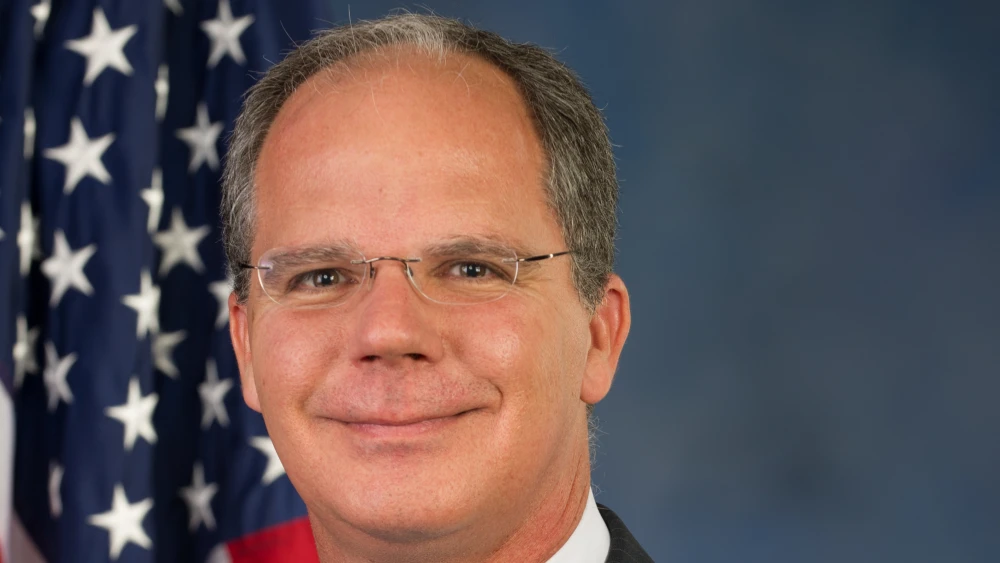
Rep. Brett Guthrie (R-Ky.), chairman of the House Committee on Energy and Commerce, wrote to Columbia University earlier this week, telling the private school, which he said received more than $690 million in National Institutes of Health grants in the 2024 fiscal year, that he has concerns about how it has responded to Jew-hatred.
The letter comes “amid growing concerns” that Columbia has “repeatedly failed to protect Jewish students, faculty and patients from antisemitic harassment and discrimination, even though Columbia is required to do so as a recipient of federal funds and under the July 2025 agreement with the U.S. government,” the congressman’s office said.
The congressman’s office said that some of the “most glaring examples of deficiencies” in the Manhattan school’s response to Jew-hatred include having withheld “information from a court-appointed federal resolution monitor,” a failing grade in a December 2025 campus Jew-hatred report and a “broader culture of antisemitism potentially exacerbated by New York City Mayor Zohran Mamdani’s recent reversal of the city’s adoption of the International Holocaust Remembrance Alliance definition of antisemitism.”
“The committee is troubled by recent reports and allegations raising questions about Columbia University’s willingness to uphold its commitments to protect Jewish students, faculty and staff,” Guthrie stated. “The fact that Columbia receives hundreds of millions of dollars from the U.S. Department of Health and Human Services and its sub-agencies, coupled with the serious concerns regarding its compliance with federal anti-discrimination laws, demonstrates that further oversight is needed.”
Among the things about which the House panel is asking Columbia are “specific reporting of how many complaints involved antisemitism and how many were related or connected to individuals or institutions at Columbia that received NIH-funded grants” since January 2023 and “information on how Columbia protects and supports victims of violations of federal anti-discrimination laws, including anonymous complainants, and whether tenure can be revoked for substantiated violations of federal anti-discrimination laws.”