Armed men seized a commercial vessel near the coast of the United Arab Emirates and the port of Fujairah, about 80 miles outside the Strait of Hormuz, and begun steering the ship toward Iran’s territorial waters, the United Kingdom Maritime Trade Operations (UKMTO) system reported on Thursday.
The identity or ownership of the vessel was not disclosed.
Meanwhile, Iranian Foreign Minister Abbas Araghchi said that, as far as Tehran was concerned, the strait is open to shipping. “From our perspective, the Strait of Hormuz is open to all commercial vessels, but they must cooperate with our naval forces,” Araghchi said.
UKMTO WARNING 057-26
— UKMTO Operations Centre (@UK_MTO) May 14, 2026
Click here to view the full warning⤵️https://t.co/N1gbo3TWeM#MaritimeSecurity #MarSec pic.twitter.com/liGiL7L1WG
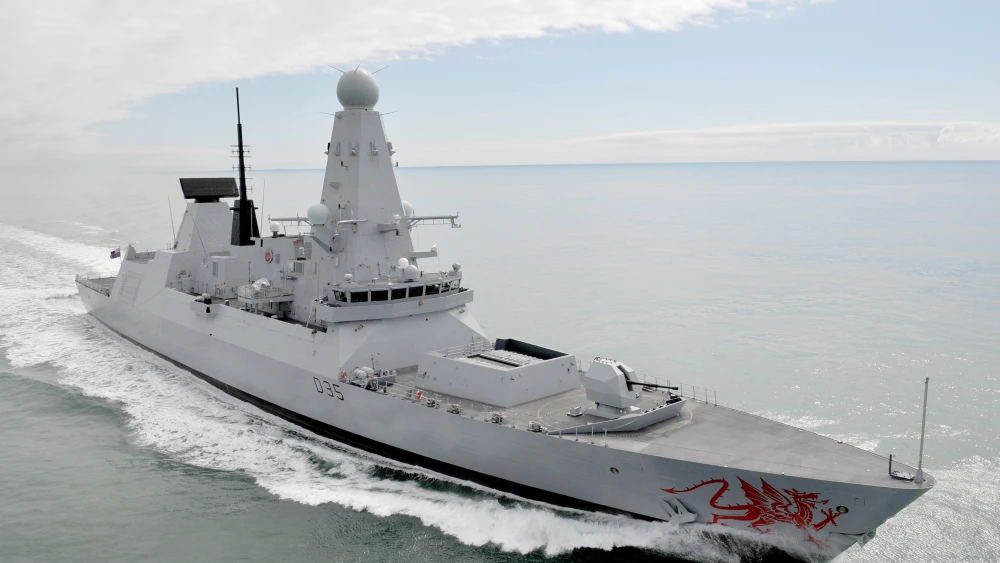
Britain announced on Tuesday that it would contribute autonomous mine-hunting equipment, Typhoon fighter jets and the warship HMS Dragon to a multinational defensive mission aimed at securing navigation through the Strait of Hormuz.
British Defense Secretary John Healey told the media: “Together with our allies, this multinational mission will be defensive, independent and credible. The mission will receive £115 million [about $155 million] in funding from a special budget allocated for it.”
HMS Dragon is the fourth of the Type 45, or Daring-class, air-defense destroyers built for the Royal Navy. It was launched in November 2008 and entered service on April 20, 2012. It is equipped with cruise missiles, anti-ship missiles and an array of air-defense missiles designed to counter aircraft and ballistic missiles.
Originally published by Israel Hayom.